Fossil Fuel Consumption: A Global Perspective
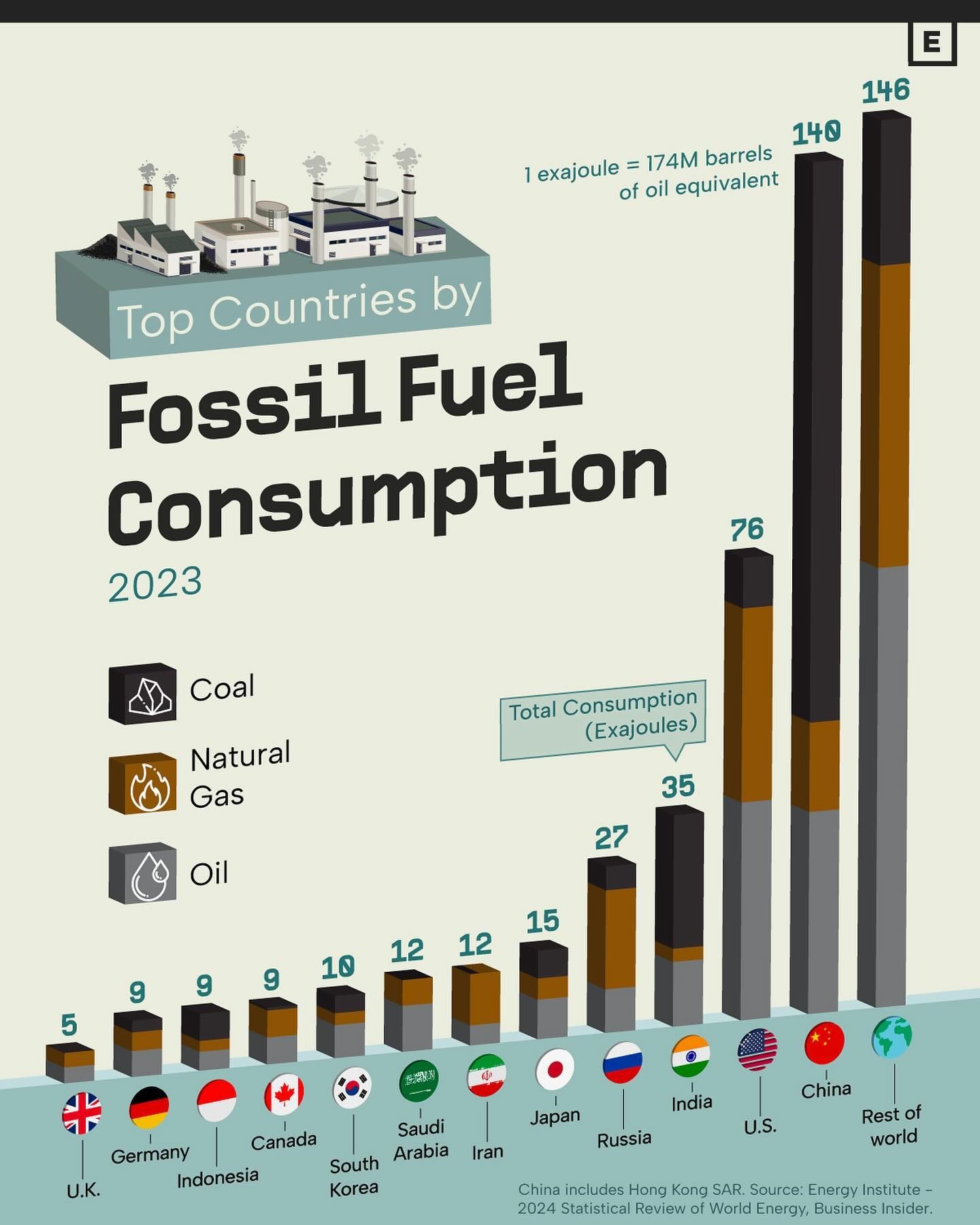
Fossil fuels remain a dominant source of global energy, with gas, oil, and coal constituting 81.5% of the energy mix in 2023. This slight decline from 82% the previous year reveals a slow shift in the global energy landscape. The top 12 countries driving this consumption are heavily influenced by China and the U.S., which together account for nearly half of all fossil fuel usage. Let's dive into the data to understand the consumption patterns of these key players and what it means for the energy sector.
Why This Matters
Understanding fossil fuel consumption patterns is crucial for several reasons. It helps in formulating energy policies, assessing environmental impacts, and planning for a transition to renewable energy sources. The data from the 2024 Statistical Review of World Energy by the Energy Institute provides a comprehensive view of how different countries are contributing to global fossil fuel consumption.
Main Discussion
The Top Consumers
China and the United States lead the list of the top fossil fuel consumers. China, which includes Hong Kong SAR, has the highest consumption, driven by its rapid industrialization and urbanization. The U.S. follows closely, with significant consumption across various sectors, including transportation and industry. These two countries alone are responsible for nearly 50% of global fossil fuel use, highlighting their influence on global energy dynamics.
Coal, Natural Gas, and Oil: The Breakdown
The consumption of coal, natural gas, and oil varies significantly among the top countries. Here’s a breakdown of their consumption patterns:
- Coal: China and India are the largest consumers of coal, primarily due to their extensive use in power generation. Coal remains a critical energy source for both countries, despite efforts to reduce reliance on this high-emission fuel.
- Natural Gas: The U.S. and Russia are the top consumers of natural gas. The U.S. benefits from abundant domestic supplies, while Russia’s position is bolstered by its vast natural gas reserves and export capabilities.
- Oil: Both China and the U.S. are significant consumers of oil, driven by their transportation and industrial sectors. Iran and Saudi Arabia, major oil producers, also feature prominently due to their domestic energy needs.
The Role of Other Major Consumers
Other countries, such as India, Russia, and Germany, also contribute significantly to global fossil fuel consumption. India’s rapid economic growth and industrialization have increased its reliance on fossil fuels, particularly coal. Russia’s extensive natural gas resources and coal production make it a major player in the global energy market. Germany, while transitioning towards renewable energy, still relies heavily on coal and natural gas for its energy needs.
The Concept of Exajoules
One exajoule is equivalent to 174 million barrels of oil. This unit of measurement provides a standardized way to compare different types of energy consumption. It helps in understanding the scale of energy use across various countries and fuels, facilitating a more accurate assessment of global energy trends.
Practical Tips
For Policy Makers
Policy makers can use this data to formulate strategies for reducing fossil fuel consumption and promoting renewable energy. Implementing policies that incentivize the adoption of clean energy technologies and reducing dependence on fossil fuels can help mitigate environmental impacts.
For Energy Companies
Energy companies can leverage this information to identify opportunities for diversification and innovation. Investing in renewable energy sources and developing technologies for efficient fossil fuel use can position them better in a shifting energy landscape.
For Consumers
Consumers can play a role by adopting energy-efficient practices and supporting renewable energy initiatives. Making conscious choices about energy use can contribute to a more sustainable future.
Important Takeaways
- China and the U.S. are the top consumers of fossil fuels, accounting for nearly half of global consumption.
- Coal, natural gas, and oil are the primary sources of fossil fuel, with varying consumption patterns across countries.
- The data highlights the need for a transition towards renewable energy sources and more sustainable practices.
Conclusion
The data from the 2024 Statistical Review of World Energy by the Energy Institute provides valuable insights into global fossil fuel consumption. Understanding the consumption patterns of the top countries can help in formulating policies, promoting renewable energy, and driving a sustainable energy transition. As the world continues to evolve, so too must our approach to energy, balancing current needs with future sustainability.
Watch the Reel
Questions readers ask
Which countries are the top consumers of fossil fuels in 2023?
China and the United States are the leading consumers of fossil fuels in 2023, together accounting for nearly half of all global usage. Following these are countries like India, Russia, and Japan, which also significantly contribute to global fossil fuel consumption.
How does fossil fuel consumption in 2023 compare to previous years?
In 2023, fossil fuels constitute 81.5% of the global energy mix, showing a slight decrease from 82% in the previous year. This minor decline suggests a gradual shift in the global energy landscape, with renewable energy sources potentially increasing their share.
What factors drive fossil fuel consumption in the top countries?
The high consumption of fossil fuels in countries like China and the United States is primarily driven by industrialization and urbanization. These processes require substantial energy to support manufacturing, transportation, and infrastructure development.
Why is it important to track global fossil fuel consumption trends?
Tracking global fossil fuel consumption trends is vital for formulating energy policies, assessing environmental impacts, and planning for a transition to renewable energy sources. It helps stakeholders understand the current energy landscape and make informed decisions for the future.
Which fossil fuels are most commonly consumed globally in 2023?
Gas, oil, and coal remain the dominant fossil fuels consumed globally, with these three sources constituting 81.5% of the energy mix in 2023. Each of these fuels serves different purposes, from powering industries to fueling transportation and heating homes.
What role do the top fossil fuel consuming countries play in global energy dynamics?
The top fossil fuel consuming countries, particularly China and the United States, significantly influence global energy dynamics. Their consumption patterns and energy policies can impact global energy markets, prices, and the pace of transition to renewable energy sources.
What are some of the implications of high fossil fuel consumption for these countries?
High fossil fuel consumption has several implications, including environmental impacts such as air and water pollution, and contributions to climate change. Additionally, reliance on fossil fuels can lead to energy security concerns and economic vulnerabilities, making it crucial for these countries to diversify their energy sources.
Related deep dives
Similar reads based on topic and creator.


Recent articles
Fresh deep dives from the latest Reels we unpacked.




Comments
Be the first to comment.