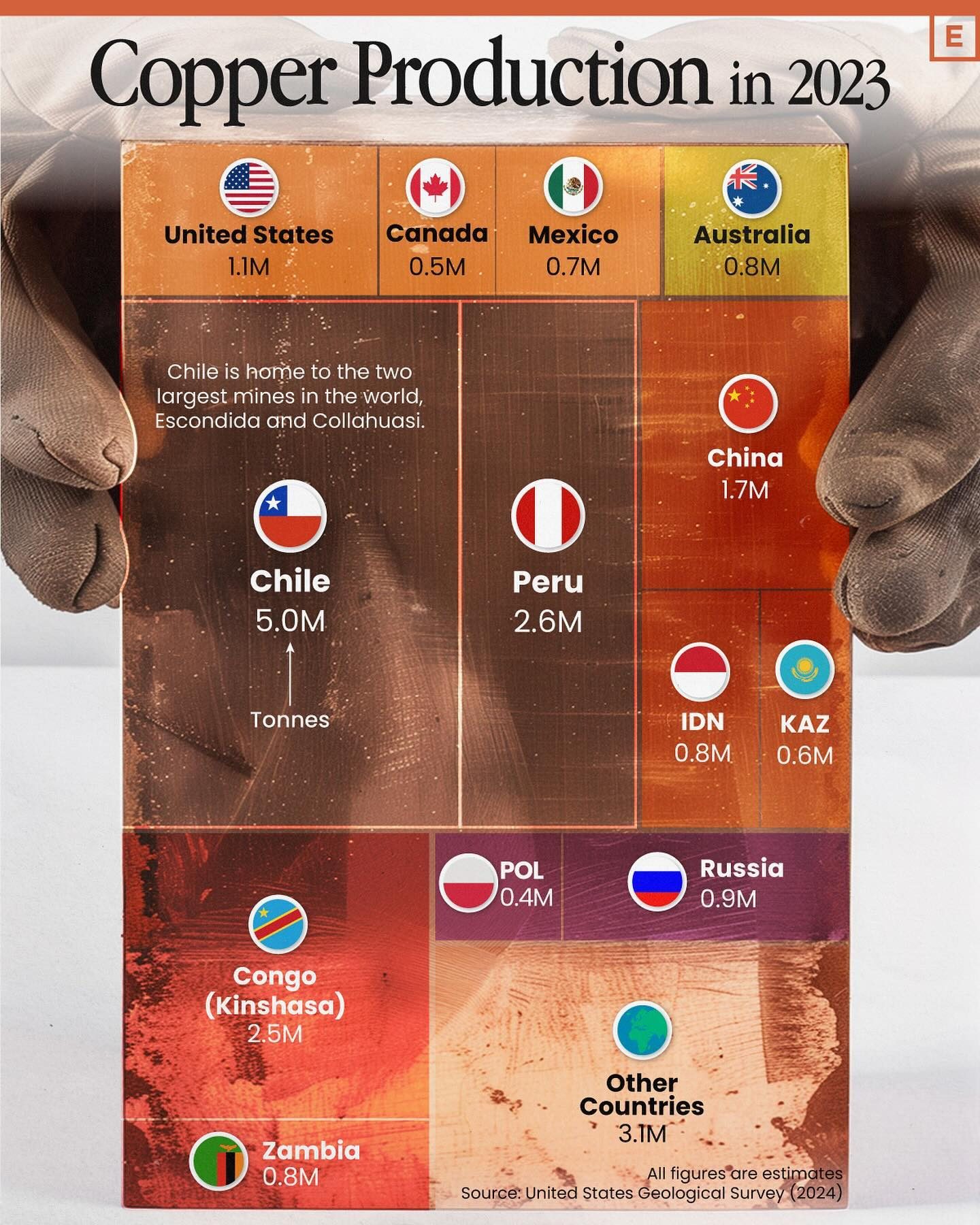
Copper Production in 2023
Copper is indispensable for the clean energy transition, and understanding its global production is vital. Chile and Peru lead the way, contributing one-third of the world's copper supply, while other countries strive to meet the rising demand.
The Global Copper Landscape
Copper is more than just a metal; it's a critical component in the infrastructure of modern societies. Its exceptional conductivity makes it essential for electrical systems, renewable energy technologies, and various electronic devices.
Given its importance, governments and companies worldwide are actively seeking to expand copper production. The race to secure and develop new copper resources is driven by the growing demand for clean energy solutions. The United States, Canada, Mexico, Australia, China, Congo (Kinshasa), Peru, and other countries are major players in the global copper production sector.
In 2023, the United States produced 1.1 million tonnes, while Canada contributed 0.5 million tonnes. Mexico and Australia followed with 0.7 million and 0.8 million tonnes, respectively. China, a significant player in the copper industry, produced 1.7 million tonnes. Among the top producers, Chile stood out as the largest, with an impressive 5.0 million tonnes. Other notable producers include Peru (2.6 million tonnes), Congo (Kinshasa) (2.5 million tonnes), and Zambia (0.8 million tonnes).
The Role of Chile and Peru
The copper industry in Chile and Peru is a key driver of the global economy. Chile, in particular, is home to some of the world's largest copper mines, including Escondida and Collahuasi. These mines are not only significant in terms of production but also in their technological advancements, which have set new benchmarks for efficiency and sustainability. Peru, too, plays a critical role, contributing a substantial portion of the global supply.
Key Mines and Production Figures
- Escondida (Chile): The largest copper mine in the world, Escondida has been a cornerstone of Chile's mining industry. Its production alone significantly boosts Chile's overall output, making it the top producer globally.
- Collahuasi (Chile): Another major mine, Collahuasi, contributes significantly to Chile's status as a leading copper producer. Its large-scale operations ensure a steady supply of copper to meet global demand.
Other Global Players
While Chile and Peru dominate the global copper market, other countries also play crucial roles. China, for instance, is the second-largest producer, with 1.7 million tonnes. The United States, with 1.1 million tonnes, is also a significant contributor. Mexico (0.7 million tonnes), Australia (0.8 million tonnes), and Congo (Kinshasa) (2.5 million tonnes) round out the top producers. Zambia (0.8 million tonnes) and other countries further diversify the global supply.
Future Prospects and Challenges
The future of copper production is both promising and fraught with challenges. The demand for copper is expected to rise as the world transitions to renewable energy sources. This shift will necessitate the development of new mines and the expansion of existing ones. However, environmental concerns and regulatory frameworks pose significant hurdles. Companies and governments must balance the need for copper with sustainable mining practices.
Technological Innovations
Technological advancements are transforming the copper mining industry. Automated mining equipment, data analytics, and advanced extraction techniques are making operations more efficient and environmentally friendly. These innovations not only increase production but also reduce the environmental impact of mining activities.
Why Copper Matters for the Clean Energy Transition
Copper is a linchpin in the clean energy transition, essential for the functioning of renewable energy systems. Its high electrical conductivity makes it ideal for use in solar panels, wind turbines, electric vehicles, and energy storage systems. As the world shifts towards cleaner energy sources, the demand for copper will continue to rise, underscoring the importance of maintaining a robust and sustainable supply.
Renewable Energy and Copper
Renewable energy technologies, such as solar and wind power, rely heavily on copper. The metal is used extensively in the wiring, cables, and components of these systems. As more countries invest in renewable energy, the demand for copper is likely to increase, driving further development in the mining sector.
Without copper, the dream of a sustainable energy future would be nearly impossible. Its versatility, conductivity, and durability make it an indispensable material for the technologies that will power our world in the coming decades.
Practical Tips for Investors and Enthusiasts
For those interested in the copper industry, whether as investors or enthusiasts, staying informed about global production trends is crucial. Here are some practical tips:
Stay Informed
Keeping up-to-date with the latest developments in the copper industry can provide valuable insights. Follow industry publications, attend conferences, and engage with experts to stay informed about the latest trends and innovations.
Diversify Investments
Investing in copper can be a smart move, given its essential role in the clean energy transition. However, diversifying investments across different projects and countries can help mitigate risks. Look for companies with strong environmental and social governance (ESG) practices to ensure long-term sustainability.
Consider Technologies
Technological advancements are reshaping the copper mining industry. Investing in companies that prioritize innovation and sustainability can yield significant returns. Look for projects that employ advanced extraction techniques and sustainable practices to ensure long-term viability.
Monitor Regulatory Changes
Regulatory frameworks can significantly impact the copper mining industry. Stay informed about changes in policies and regulations that could affect production and supply. This knowledge can help you make more informed investment decisions.
Important Takeaways
The global copper production landscape is dynamic and vital to the clean energy transition. Key takeaways include:
The Importance of Chile and Peru
Chile and Peru are the backbone of the global copper supply. Their large-scale mines and technological advancements ensure a steady flow of copper to meet global demand.
Global Production Figures
Understanding the production figures from major copper-producing countries is essential. From the United States (1.1 million tonnes) to China (1.7 million tonnes) and Chile (5.0 million tonnes), these figures highlight the global reach of the copper industry.
The Role of Technology
Technological innovations are transforming the copper mining industry, making it more efficient and environmentally friendly. Investing in companies that prioritize these advancements can yield significant benefits.
Conclusion
Copper is a critical component in the infrastructure of the modern world, and its importance will only grow as we transition to cleaner energy sources. Understanding the global copper production landscape, from the top-producing countries to the key mines and production figures, is essential for anyone interested in the industry. By staying informed, diversifying investments, and considering technological advancements, investors and enthusiasts can navigate this exciting and essential sector with confidence.
Watch the Reel
Questions readers ask
Why are Chile and Peru the top copper producing countries in 2023?
Chile and Peru have substantial copper reserves and well-established mining industries. Their geology and long history in mining make it easier to extract and process copper efficiently. Additionally, these countries have invested in infrastructure and technology to support large-scale mining operations, helping them maintain their leading positions in global production.
What role does copper play in modern infrastructure and clean energy?
Copper's exceptional conductivity makes it indispensable for electrical systems, essential for the functioning of clean energy technologies. It is a key component in wind turbines, solar panels, and electric vehicles, all of which are crucial for the transition to renewable energy sources.
Which countries are the major contributors to global copper supply besides Chile and Peru?
Besides Chile and Peru, the United States, Canada, and Mexico are significant contributors to the global copper supply. These countries have substantial copper reserves and active mining industries, which help meet the rising global demand for copper.
Why is there an increased focus on expanding copper production worldwide?
The growing demand for clean energy technologies and the expansion of modern infrastructure drive the need for increased copper production. Governments and companies are investing in new copper resources to secure a stable supply for various applications, from electrical systems to electronic devices.
What challenges might countries face in increasing their copper production?
Countries may face several challenges in ramping up copper production, including environmental regulations, community opposition, and the need for significant capital investments. Additionally, the geopolitical landscape and fluctuations in copper prices can impact the feasibility of new mining projects.
How does the United States contribute to the global copper supply?
The United States has substantial copper reserves and a well-established mining industry, particularly in states like Arizona, Utah, and Nevada. The country's advanced technology and skilled workforce enable it to contribute significantly to the global copper supply, meeting both domestic and international demands.
What factors influence the global copper landscape in 2023?
The global copper landscape in 2023 is influenced by factors such as the demand for copper in clean energy technologies, the supply from major producing countries, and the geopolitical dynamics. Additionally, technological advancements and investments in new mining projects play a crucial role in shaping the global copper market.
Recent articles
Fresh deep dives from the latest Reels we unpacked.




Comments
Be the first to comment.