Convenience Chains Lead in Global Retail Expansion
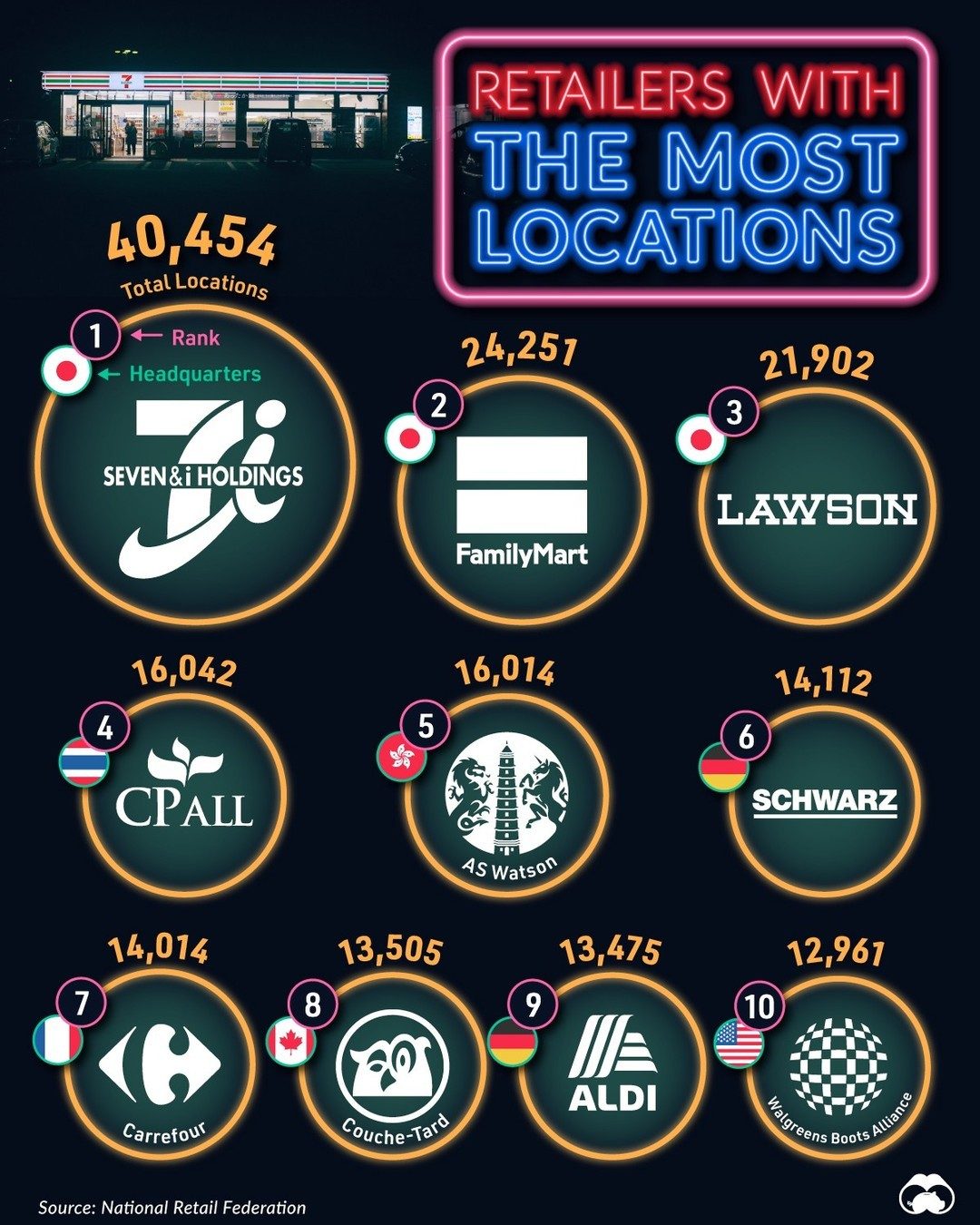
Convenience stores dominate the global retail landscape in 2023, with Japan's Seven & I Holdings leading the charge. The company boasts an impressive 40,454 store locations worldwide, setting a benchmark for other global retailers. This dominance is part of a broader trend where convenience chains outpace other retail sectors in terms of physical storefronts.
Why This Matters
The sheer number of locations held by these convenience chains has significant implications for the retail industry and consumer behavior. These stores are not just about convenience; they are strategic assets that enable these retailers to penetrate markets deeply and establish a strong presence in both urban and rural areas.
Convenience Chains Dominate
Seven & I Holdings
At the forefront is Seven & I Holdings, with a staggering 40,454 locations globally. This includes well-known brands like 7-Eleven, which are synonymous with convenience and accessibility. The extensive reach of these stores allows Seven & I Holdings to leverage economies of scale, optimizing supply chains and reducing operational costs.
FamilyMart and Lawson
Following closely are two other Japanese brands: FamilyMart and Lawson. FamilyMart operates 16,042 locations, while Lawson has 21,902. Both of these brands boast a robust presence, especially in the Asian market, where convenience stores are integral to daily life. Their extensive networks enable them to offer a wide range of products, from fresh food to everyday essentials, ensuring that customers can find what they need conveniently.
CPALL and AS Watson
CPALL and AS Watson also make the top list, with 14,014 and 13,505 locations, respectively. CPALL, based in Thailand, has a strong presence in Southeast Asia, while AS Watson, headquartered in Hong Kong, operates a variety of retail formats, including convenience stores, health and beauty stores, and supermarkets, providing a diversified retail strategy.
Other Major Players
The list of top retailers continues with Schwarz (12,961 locations), ALDI (13,475), Couche-Tard (14,112), Carrefour (12,961), and Walgreens Boots Alliance. These retailers represent a mix of formats, from grocery stores to pharmacies, but they share a common strategy of expanding through physical storefronts to maximize market reach.
Strategic Expansion and Market Penetration
Geographical Distribution
The geographical distribution of these retailers is a critical factor in their success. For instance, Japanese convenience chains like Seven & I Holdings, FamilyMart, and Lawson have a significant presence in Asia, where urbanization and a high population density create a strong demand for convenient shopping options. In contrast, European retailers like Schwarz and ALDI leverage their extensive networks to dominate the market in regions where cost-efficiency and accessibility are key.
Product Diversity and Customer Experience
One of the key strategies for these retailers is the diversification of products. Convenience stores offer a wide array of items, from groceries and beverages to personal care and household goods. This variety ensures that customers can fulfill multiple shopping needs in one visit, enhancing the overall customer experience. The ability to provide a diverse product range is further supported by advanced inventory management systems and efficient supply chains.
Technological Integration
Technology plays a crucial role in the success of these retailers. From self-checkout kiosks to mobile apps for ordering, convenience stores are increasingly adopting technology to streamline operations and enhance customer service. The integration of technology not only improves efficiency but also allows these stores to remain competitive in a rapidly evolving retail landscape.
Sustainability and Social Responsibility
Many of these retailers are also focusing on sustainability and social responsibility. Initiatives such as waste reduction, energy-efficient operations, and community engagement are becoming integral to their business models. This aligns with the growing consumer demand for environmentally friendly and socially responsible practices, further solidifying their market position.
Practical Tips for Retailers
For retailers aiming to expand their footprint, there are several practical strategies to consider:
-
Market Research: Conduct thorough market research to understand consumer needs and preferences in different geographical areas. This will help in tailoring product offerings and store formats to suit local demands.
-
Efficient Supply Chain: Invest in a robust supply chain management system to ensure timely delivery of products and minimize operational costs. This is crucial for maintaining the high availability of goods in stores.
-
Technology Integration: Embrace technology to enhance the customer experience. This could include implementing self-checkout systems, using data analytics for inventory management, and leveraging mobile apps for customer engagement.
-
Local Partnerships: Collaborate with local vendors and suppliers to build a strong and reliable supply chain. This can also foster goodwill within the community and support local economies.
-
Sustainability Initiatives: Implement sustainable practices, such as reducing plastic use, promoting recycling, and sourcing products ethically. These efforts can attract environmentally conscious consumers and build a positive brand image.
Important Takeaways
The dominance of convenience chains in the retail landscape underscores the importance of physical storefronts in today’s market. These retailers leverage their extensive networks to provide convenience, accessibility, and a diverse range of products. By integrating technology, focusing on sustainability, and understanding local markets, retailers can achieve significant growth and remain competitive. For aspiring retailers, the key lies in strategic expansion, efficient supply chain management, and a strong commitment to customer service and sustainability.
Conclusion
Convenience chains are setting the standard for global retail expansion, with Japanese brands leading the way. The extensive physical presence of these retailers not only provides consumers with easy access to essential goods but also establishes a strong market position. By focusing on product diversity, technological integration, and sustainability, these retailers continue to thrive in a constantly evolving market. For those looking to enter or expand in the retail sector, understanding and adapting to these strategies can pave the way for success.
Watch the Reel
Questions readers ask
Which retailer has the most convenience stores globally?
Seven & I Holdings is the world's largest convenience retailer, with an extensive network of 40,454 stores across the globe. This vast store count allows them to cater to a wide range of consumers in both urban and rural areas.
How do convenience stores impact market penetration?
Convenience stores play a crucial role in market penetration due to their extensive reach. By establishing numerous locations, they can effectively serve local communities, making products and services readily available and fostering brand loyalty.
What are some of the familiar convenience store chains worldwide?
Some of the most recognizable convenience store chains globally include Seven & I Holdings, Lawson, and Seven Eleven. These brands have a significant presence in the global market and are known for their wide range of products and services.
How do convenience stores compare to other retail sectors in terms of physical storefronts?
Convenience stores often outpace other retail sectors in the number of physical storefronts. This advantage enables them to have a broader market reach and greater visibility, making them a dominant force in the retail landscape.
What is the significance of having many convenience store locations?
Having a high number of convenience store locations allows retailers to establish a strong presence in both urban and rural areas. This extensive network enables them to cater to diverse consumer needs and preferences, driving broader market engagement and sales.
Which convenience store chain has the second largest number of stores worldwide?
The second largest convenience store chain globally is Lawson, which is well-known for its extensive network of stores. While exact numbers can vary, Lawson follows closely behind Seven & I Holdings with a significant global footprint.
Do convenience stores effectively cater to diverse consumer needs?
Yes, convenience stores are designed to cater to a wide range of consumer needs. By offering a variety of products and services, they ensure that customers can find what they need quickly and efficiently, enhancing the overall shopping experience.
Recent articles
Fresh deep dives from the latest Reels we unpacked.




Comments
Be the first to comment.