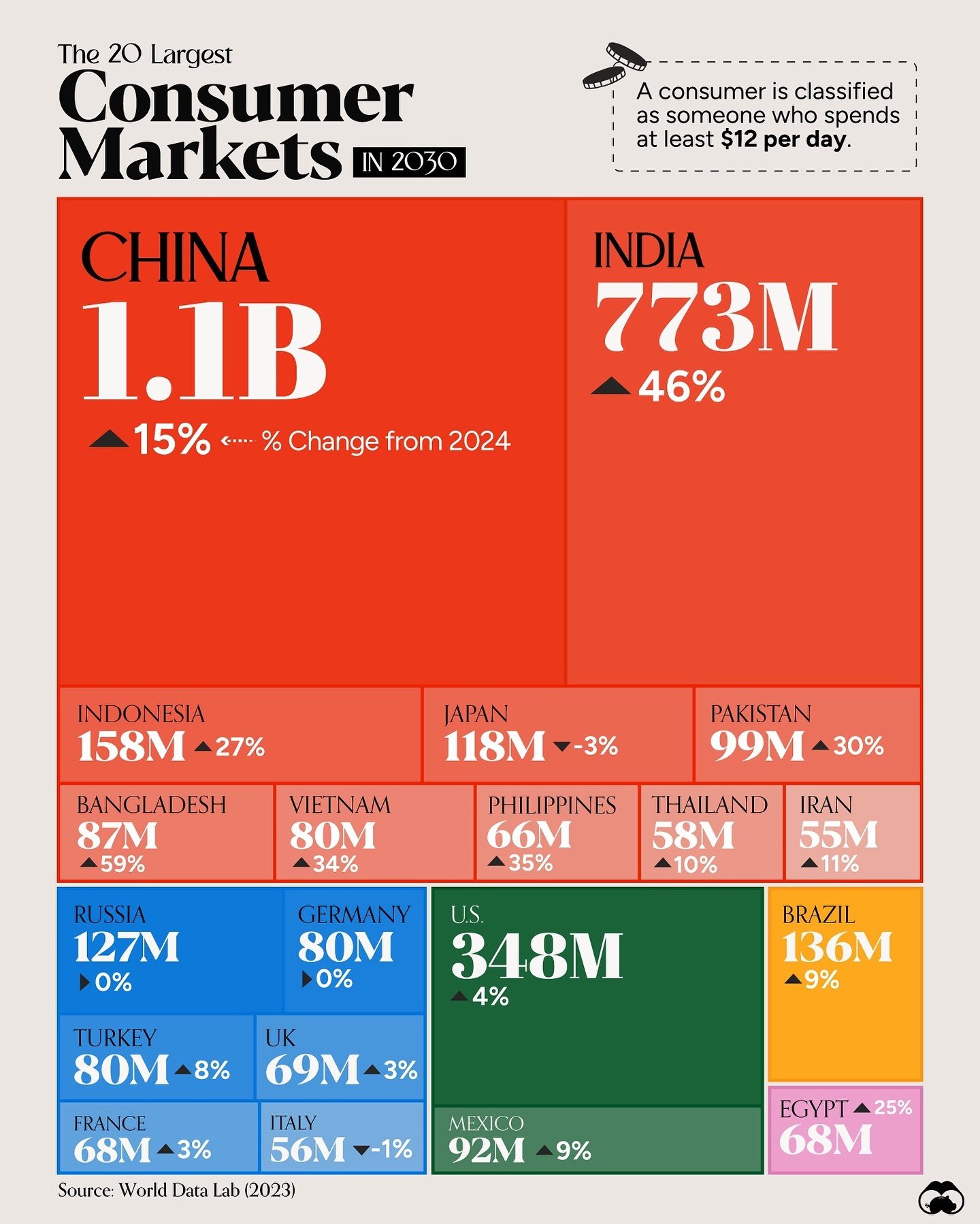
The 20 Largest Consumer Markets in 2030
Consumer markets play a pivotal role in the global economy, influencing market dynamics and dictating demand trends. But where are the largest consumer markets and how are they evolving? This post delves into the 20 largest consumer markets in 2030, based on projections from World Data Lab, an enterprise focused on global consumer spending projections. These markets are projected to be the powerhouses of global consumer spending, with significant growth trends that will shape the economic landscape over the next decade.
Why this matters
Understanding the largest consumer markets is crucial for businesses, investors, and policymakers alike. Identifying these markets can help in strategic planning, resource allocation, and making informed decisions. By examining the 20 largest consumer markets in 2030, we gain insight into where the future economic opportunities lie and how market dynamics might shift in the coming years.
Main discussion
The infographic visualizes the 20 largest consumer markets in 2030, highlighting the top consumer markets globally. The data provides a comprehensive view of major consumer markets, their populations, and growth trends. The data includes countries such as China, India, Vietnam, and the United States, among others.
Top Five Largest Consumer Markets
-
China:
- Population: 1.1 billion
- Growth: -3%
- China remains the largest consumer market in the world, despite a slight decline of 3% from 2024 to 2030. This significant market size ensures China's dominance in global consumer spending, making it a crucial market for businesses worldwide.
-
India:
- Population: 773 million
- Growth: 46%
- India shows a remarkable 46% growth, driven by its rapidly growing economy and expanding middle class. With a current population of 773 million, India is poised to become one of the largest consumer markets globally, offering substantial opportunities for businesses.
-
Vietnam:
- Population: 773 million
- Growth: 46%
- Vietnam is one of the fastest-growing economies in Southeast Asia. Its consumer market is growing rapidly, driven by urbanization and a rising middle class, making it a key market to watch in the coming years.
-
United States:
- Population: 127 million
- Growth: 0%
- The United States, with a population of 127 million, remains a significant player in the global economy. Despite no growth in consumer numbers, it maintains its status as a major consumer market due to high spending power.
-
Russia:
- Population: 80 million
- Growth: 10%
- Russia's consumer market is expected to grow by 10%, driven by a mix of factors including a recovering economy and increasing consumer confidence. The 80 million strong consumer base in Russia offers a stable market for global businesses.
Other Significant Markets
-
Bangladesh:
- Population: 87 million
- Growth: 59%
- Bangladesh's consumer market is projected to grow significantly, with a 59% increase. This growth is driven by economic development and a rapidly urbanizing population. Bangladesh's potential as a key consumer market is increasing.
-
Japan:
- Population: 69 million
- Growth: -3%
- Japan, with 69 million consumers, shows a slight decline in consumer numbers. However, the country remains a major player in consumer markets with high disposable incomes.
-
Iran:
- Population: 66 million
- Growth: 27%
- Iran's consumer market is expected to grow by 27%, driven by economic reforms and increasing consumer spending. This growth makes Iran a market to watch in the coming years.
-
Thailand:
- Population: 58 million
- Growth: 10%
- Thailand is projected to see a 10% growth in its consumer market, benefiting from a robust tourism sector and economic growth.
-
Pakistan:
- Population: 99 million
- Growth: 30%
- Pakistan's consumer market is expected to grow by 30%, driven by demographic changes and economic development. This growing market presents significant opportunities for businesses.
Practical tips
When considering market penetration, it is crucial to understand local consumer behavior and preferences. Here are some practical tips for engaging with these markets:
- Conduct thorough market research to understand consumer needs and preferences.
- Develop tailored marketing strategies that resonate with local audiences.
- Invest in infrastructure and logistics to ensure smooth market access and product availability.
Important takeaways
Understanding the consumer markets of the future is crucial for sustainable economic progress. The top 20 consumer markets in 2030 show significant growth potential, driven by various factors including economic development, urbanization, and technological advancements. Businesses and investors must take note of these trends and adapt their strategies to capitalize on future opportunities. By focusing on these key markets, organizations can position themselves for success in the evolving global economy.
Conclusion
The 2030 landscape of consumer markets presents a dynamic and promising future. Markets like China, India, and Vietnam will continue to dominate, while others like Brazil, Pakistan, and Iran offer substantial growth potential. Businesses and investors should keep a close eye on these trends and adapt their strategies to capitalize on the evolving opportunities.
Watch the Reel
Questions readers ask
Which countries are expected to be the largest consumer markets by 2030?
By 2030, the largest consumer markets are projected to include countries like China and India, which will continue to dominate global spending. Other notable markets include the United States, Indonesia, and Brazil, contributing significantly to global consumer trends.
What is driving the growth in emerging consumer markets like Vietnam?
Emerging markets like Vietnam are expected to experience significant growth due to factors such as increasing disposable incomes, a growing middle class, and rapid urbanization. These trends are likely to drive consumer spending and shape future global consumer trends.
How will the top consumer markets in 2030 influence the global economy?
The top consumer markets in 2030 will play a crucial role in shaping the global economy. These markets will dictate demand trends, influence market dynamics, and drive innovation. Understanding these markets can help businesses and investors make informed decisions.
Which regions are expected to see the most growth in consumer markets by 2030?
Asia, particularly countries like China, India, and Vietnam, is expected to see the most significant growth in consumer markets. The region's rapid economic development, increasing urbanization, and a burgeoning middle class will drive consumer spending trends.
What insights can businesses gain from analyzing the top consumer markets of 2030?
By analyzing the top consumer markets of 2030, businesses can gain valuable insights into where to allocate resources, develop products, and tailor marketing strategies. This analysis helps in strategic planning and staying ahead of market shifts to maximize opportunities in the global market.
What are the key trends to watch for in the global consumer market by 2030?
Key trends to watch for include the rise of digital commerce, increased demand for sustainable products, and the growing influence of e-commerce platforms. Additionally, the shift towards health and wellness products, and the rise of personalization and customization in consumer goods are expected to shape global consumer markets by 2030.
How reliable are the projections for the 20 largest consumer markets in 2030?
The projections are based on data from World Data Lab, a reputable enterprise focused on global consumer spending projections. While these projections provide a robust forecast, it's important to consider various factors such as economic policies, technological advancements, and geopolitical events that could influence actual outcomes.
Recent articles
Fresh deep dives from the latest Reels we unpacked.




Comments
Be the first to comment.