Commodity Market Performance: A Decade in Review
Predicting the top-performing commodities can be a challenging endeavor, especially in the face of market turbulence. For those invested in the commodities market, understanding the past decade's performance can offer valuable insights. From 2013 to 2022, a variety of commodities have experienced significant fluctuations, shaped by global events, supply and demand dynamics, and economic policies. This article explores the performance of key commodities, providing a comprehensive overview of how each has fared over the last ten years.
Why This Matters
Commodities play a crucial role in the global economy, serving as essential raw materials for various industries. Tracking their performance over time helps investors, economists, and policymakers make informed decisions. Whether you're an investor looking to diversify your portfolio or a business seeking to manage supply chains effectively, having a clear understanding of commodity market trends is vital. This review focuses on the performance of key commodities, including metals, energy resources, and precious metals, highlighting the significant trends and shifts that have occurred over the past decade.
Main Discussion
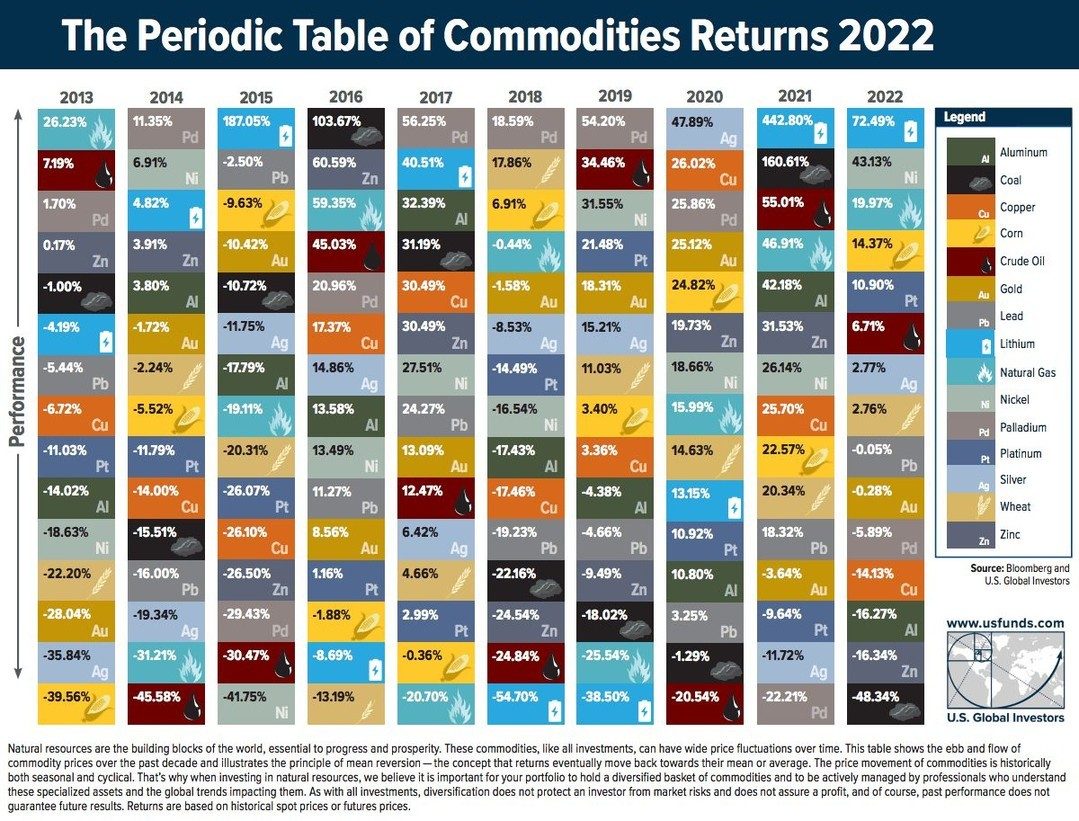
The Periodic Table of Commodities
The Periodic Table of Commodities Returns, curated by @usglobal, provides a visual representation of how different commodities have performed from 2013 to 2022. By examining the data, several key trends emerge, offering insights into the factors driving commodity performance.
Metal Market Performance
Metals have shown diverse performance across the decade. Let's break down some of the notable trends:
- Aluminum: Aluminum has experienced notable volatility, with significant peaks and troughs. The metal's performance has been influenced by fluctuations in supply and demand, as well as geopolitical factors.
- Copper: Known as the "metal of the future," copper has seen a steady rise in demand, driven by its use in renewable energy technologies and electric vehicles. This trend has pushed copper prices upward, making it one of the more stable performers.
- Gold: Gold has long been seen as a safe-haven asset, and its performance over the past decade reflects this status. While it experienced some volatility, gold generally maintained its value, making it a reliable investment during uncertain times.
- Silver: Silver's performance has been more volatile compared to gold, with its value influenced by both industrial demand and investor sentiment. The metal has seen significant price swings, making it a riskier investment.
- Nickel and Platinum: These metals have shown varied performance, with significant fluctuations influenced by supply disruptions and changing industrial uses. Both have seen periods of strong growth and decline.
- Lead and Zinc: These base metals have experienced a mix of performance. Zinc has seen a steady demand driven by construction and infrastructure projects, while lead has faced challenges due to environmental regulations and shifting industrial uses.
Energy Resources
Energy resources have been subject to significant volatility, largely influenced by geopolitical events and shifts in global energy policies.
- Crude Oil: Crude oil has experienced dramatic price swings, with periods of significant growth and decline. The supply and demand dynamics, coupled with geopolitical instability in major oil-producing regions, have been key drivers of its performance.
- Natural Gas: Natural gas has seen steady demand, driven by its use in power generation and industrial applications. However, its performance has been influenced by supply disruptions and fluctuating prices.
- Lithium: Lithium has emerged as a critical component in the transition to renewable energy, particularly in the production of batteries for electric vehicles. Its demand has surged, leading to significant price increases and making it one of the top performers in the energy sector.
Precious Metals
Precious metals have generally been seen as stable investments, with their performance influenced by factors such as inflation, economic uncertainty, and geopolitical risks.
- Gold: As mentioned earlier, gold has shown steady performance, making it a reliable investment in turbulent times.
- Palladium: Palladium has seen significant growth, driven by its use in automotive catalytic converters. Its performance has been robust, making it a standout in the precious metals category.
Practical Tips
When analyzing commodity market performance, several practical tips can help you make more informed decisions:
-
Diversify Your Portfolio: Diversification is key to managing risk. Incorporating a mix of metals, energy resources, and precious metals can help insulate your portfolio from significant volatility in any single commodity.
-
Stay Updated on Global Events: Geopolitical events, regulatory changes, and economic policies can significantly impact commodity prices. Staying informed about these events can help you anticipate market movements.
-
Consider Long-Term Trends: Historical performance can offer valuable insights into long-term trends. For example, the rise in demand for copper and lithium highlights the growing importance of renewable energy and electric vehicles.
-
Monitor Supply and Demand Dynamics: Understanding the supply and demand dynamics of different commodities can help you gauge future performance. Factors such as production levels, inventory changes, and changes in industrial use can all impact prices.
-
Use Visual Tools: Tools such as the Periodic Table of Commodities Returns provide a clear visual representation of performance, making it easier to identify trends and make informed decisions.
Important Takeaways
Understanding the past decade's commodity market performance offers several important takeaways:
- Volatility is the Norm: Commodities are subject to significant price volatility, driven by a range of economic, political, and environmental factors.
- Diversification is Key: A diversified portfolio can help mitigate risk and ensure steady returns.
- Economic Sentiment Matters: Investor sentiment and global economic trends play a crucial role in shaping commodity prices.
- Technology and Innovation Drive Demand: The rise of renewable energy and electric vehicles has increased demand for certain commodities, driving their performance.
Conclusion
The commodity market's performance over the past decade has been characterized by significant volatility and varied trends. By examining the performance of key commodities, from metals to energy resources and precious metals, investors can gain valuable insights into future market movements. Whether you're an investor, an economist, or a policymaker, understanding the historical performance of commodities can help you make more informed decisions in the ever-changing market landscape.
Watch the Reel
Questions readers ask
What were the top-performing commodities from 2013 to 2022?
The top-performing commodities from 2013 to 2022 varied, but notable top commodities to invest 2022 include energy sources such as oil and natural gas, as well as metals like gold, silver, and copper. These commodities experienced significant price trends 2013 2022, driven by supply and demand dynamics, economic policies, and geopolitical events. Specific commodity performance varies, so it's essential to analyze individual commodity returns 2013 2022.
What factors influenced commodity trends 2013 2022?
Commodity trends 2013 2022 were influenced by a mix of global events, economic policies, and market dynamics. Factors such as changes in supply and demand, geopolitical tensions, and economic growth in key markets like China and the United States played significant roles. Additionally, shifts in currency values, technological advancements, and regulatory changes contributed to commodity price trends 2013 2022.
How can investors use commodity performance analysis to make informed decisions?
Investors can use commodity performance analysis to identify patterns, trends, and potential opportunities. By examining the top commodities 2013 2022, investors can gain insights into which sectors are likely to perform well in the future. This analysis, along with a solid understanding of global commodity performance and market dynamics, can help investors develop effective commodity trading strategies and make informed investment choices.
What are some key considerations for investing in commodities 2013 2022?
When investing in commodities, consider the historical commodity performance, the impact of global events, and economic indicators. It's crucial to evaluate the potential risks and returns, including the influence of geopolitical factors, supply and demand dynamics, and regulatory changes on commodity performance. Diversifying your portfolio and staying informed about global commodity trends can help mitigate risks and enhance potential returns.
How can understanding commodity returns 2013 2022 help businesses and investors?
Understanding commodity returns 2013 2022 can help businesses and investors anticipate future price movements and market conditions. By analyzing the best performing commodities from 2013 to 2022, businesses can optimize their procurement strategies, manage costs, and make informed decisions about investments in raw materials. Investors can use this knowledge to develop effective commodity trading strategies and allocate resources to maximize returns.
Recent articles
Fresh deep dives from the latest Reels we unpacked.




Comments
Be the first to comment.