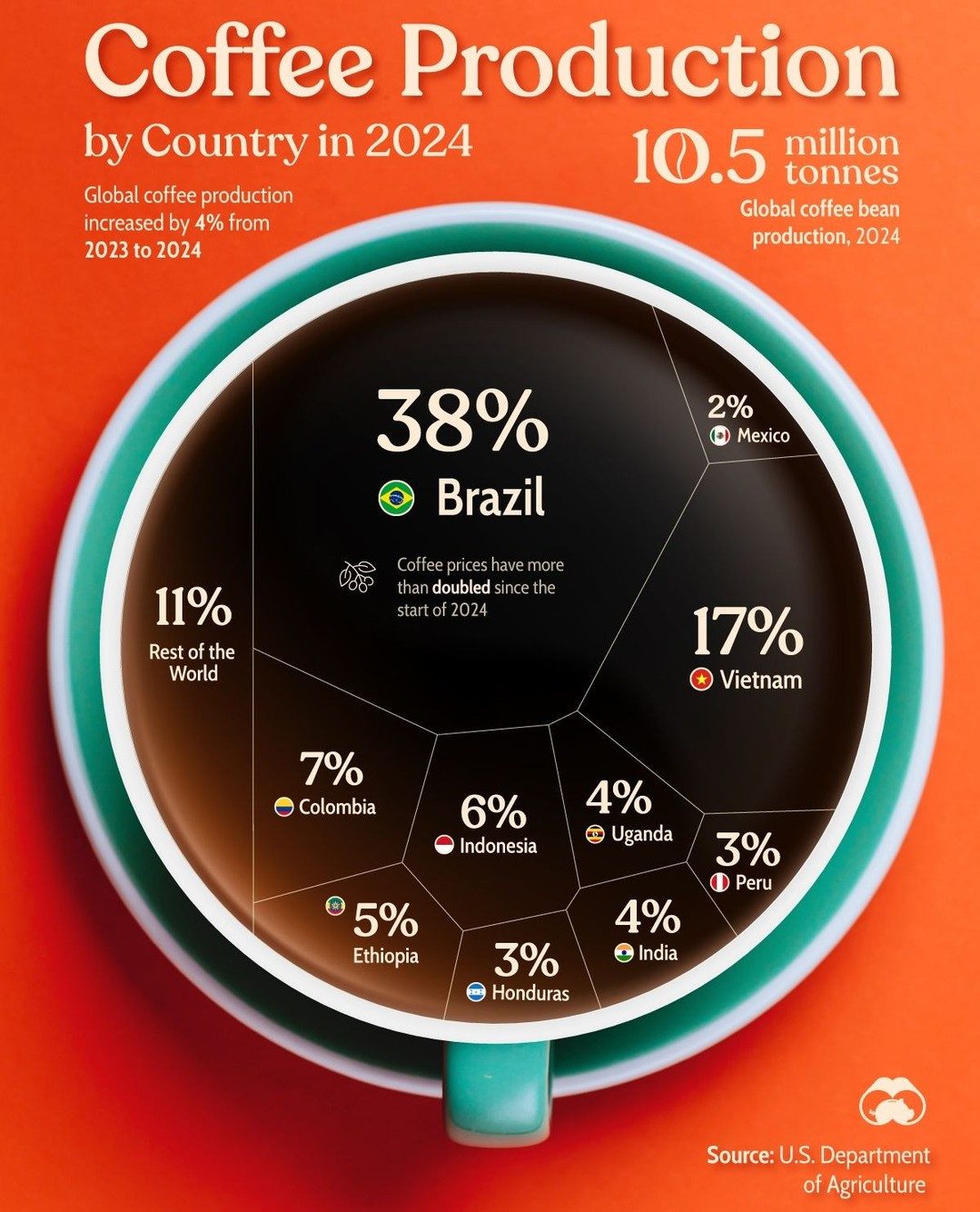
Coffee Production Statistics
Coffee is a globally beloved beverage, and understanding its production dynamics is essential for appreciating the complexities of this industry. Brazil and Vietnam together produce a staggering 55% of the world's coffee, contributing nearly 5.8 million tonnes annually. Brazil is renowned for its arabica beans, while Vietnam is a major producer of robusta, a more heat-tolerant variety. This article delves into the top 10 producers of unroasted (green) coffee beans, their shares of global production in 2024, and the factors influencing the coffee market. We rely on data from the U.S. Department of Agriculture to provide an up-to-date and comprehensive view of the global coffee landscape.
Why This Matters
Coffee is more than just a morning ritual; it's a global commodity with far-reaching economic and cultural implications. Understanding coffee production statistics helps stakeholders—from farmers to consumers—make informed decisions. Whether you're a coffee enthusiast, an investor, or a policymaker, knowing the top producers and their contributions can provide valuable insights into market trends, supply chains, and sustainability efforts. Further, the price volatility in the coffee market underscores the importance of staying informed.
Main Discussion
Top Coffee-Producing Countries
-
Brazil (38%): Brazil is the undisputed leader in global coffee production. Known for its high-quality arabica beans, Brazil's coffee industry is a cornerstone of its economy. The country's favorable climate and extensive farmlands make it ideal for coffee cultivation.
-
Vietnam (17%): Vietnam is the second-largest coffee producer, specializing in robusta beans. Robusta coffee is more resistant to pests and diseases, making it a hardy choice for growers. Vietnam's robusta beans are often used in instant coffee and espresso blends.
-
Colombia (11%): Colombia is famous for its premium arabica coffee. The country's unique growing conditions and rigorous quality standards have earned its coffee a reputation for excellence. Colombian coffee is a significant contributor to the country's agricultural exports.
-
Indonesia (7%): Indonesia's coffee industry is diverse, with a variety of beans grown across the archipelago. The country is known for its unique processing methods, which result in distinctive coffee flavors. Indonesian coffee is often used in blends for its rich, full-bodied taste.
-
Uganda (6%): Uganda is an emerging player in the global coffee market. The country's coffee beans, particularly the robusta variety, are gaining traction for their quality and flavor. Uganda's coffee industry is poised for growth, driven by increasing global demand.
-
Mexico (2%): Mexico's coffee production may be smaller compared to other top producers, but it plays a crucial role in the regional market. Mexican coffee beans are known for their balanced acidity and smooth taste, making them a favorite among specialty roasters.
Global Production and Market Trends
The global coffee bean production in 2024 is estimated to be 10.5 million tonnes, with various factors influencing this figure. Climate change, disease outbreaks, and market fluctuations all impact production levels. Brazil, Vietnam, and Colombia continue to dominate the market, but countries like Uganda and Peru are making strides in increasing their production and quality.
The Role of Climate and Disease
Climate and disease are significant factors in coffee production. The arabica bean, while prized for its flavor, is more susceptible to pests and diseases. This vulnerability can lead to reduced yields and higher prices. In contrast, the robusta bean is more resilient, making it a preferred choice for growers in regions with challenging climatic conditions.
Economic Impact
The coffee industry is a major economic driver for many countries. In Brazil, coffee is a significant export, contributing billions to the country's GDP. In Vietnam, the coffee industry provides employment and economic stability for rural communities. Understanding the economic impact of coffee production helps policymakers develop strategies to support farmers and promote sustainable practices.
Price Volatility
Coffee prices have more than doubled since the start of 2024, driven by supply chain disruptions and increased demand. This price volatility underscores the need for stability in the coffee market. Factors such as weather patterns, disease outbreaks, and global trade policies all play a role in price fluctuations. Coffee producers and consumers alike must navigate these changes to ensure a stable and sustainable market.
Practical Tips
For those looking to explore the world of coffee production, here are some practical tips:
For Coffee Farmers
-
Sustainable Practices: Adopt sustainable farming practices to protect the environment and ensure long-term productivity. This includes proper soil management, water conservation, and pesticide reduction.
-
Disease Management: Implement robust disease management strategies to protect crops from pests and diseases. Regular plant inspections and the use of organic pesticides can help maintain crop health.
-
Market Diversification: Diversify your production to include both arabica and robusta beans. This can help mitigate risks associated with market volatility and climate change.
For Coffee Consumers
-
Support Ethical Brands: Support coffee brands that prioritize ethical sourcing and sustainable practices. Look for certifications such as Fair Trade and Organic, which ensure that farmers receive fair wages and promote sustainable farming.
-
Explore Different Varieties: Try different coffee varieties to appreciate the unique flavors and characteristics of beans from various regions. This can enhance your coffee-drinking experience and support diverse coffee producers.
-
Stay Informed: Stay updated on market trends and production statistics to make informed purchasing decisions. Understanding the challenges faced by coffee producers can help you appreciate the value of your coffee.
Important Takeaways
- Brazil and Vietnam are the top coffee producers, contributing 55% of the world's supply. Their dominance is due to favorable climatic conditions and extensive farming practices.
- The global coffee market is influenced by factors such as climate change, disease outbreaks, and market volatility. These factors can lead to price fluctuations and supply chain disruptions.
- Coffee production has significant economic and cultural implications, impacting millions of people worldwide. Understanding these dynamics can help stakeholders make informed decisions and promote sustainable practices.
- The price of coffee has more than doubled since the start of 2024, driven by increased demand and supply chain disruptions. This underscores the need for stability in the coffee market.
Conclusion
The global coffee landscape is both complex and dynamic, with Brazil and Vietnam leading the charge in production. Understanding the top producers, their contributions, and the factors influencing the market is crucial for stakeholders. Whether you're a farmer, consumer, or investor, staying informed about coffee production statistics can provide valuable insights and help promote sustainable practices.
Watch the Reel
Questions readers ask
Which country leads in global coffee production in 2024?
Brazil is the leading coffee producer in 2024, accounting for a significant portion of the world's coffee supply, particularly known for its high-quality arabica beans.
What is the significance of Brazil and Vietnam in the global coffee market?
Brazil and Vietnam together produce 55% of the world's coffee, with Brazil focusing on arabica beans and Vietnam specializing in robusta beans. This dominance shapes global coffee prices and availability.
What is the total production of coffee beans in 2024?
Brazil and Vietnam alone produce approximately 5.8 million tonnes of coffee beans annually. The top 10 producers combined contribute a vast majority of the world's coffee supply.
Which other countries are significant producers of coffee besides Brazil and Vietnam?
Besides Brazil and Vietnam, other notable coffee-producing countries include Colombia, Indonesia, Ethiopia, and Uganda, each contributing to the diverse global coffee market.
Why is it important to track coffee production by country?
Tracking coffee production by country helps in understanding market trends, anticipating supply fluctuations, and appreciating the economic and cultural impacts of the coffee industry on various nations.
What types of coffee beans do Brazil and Vietnam primarily produce?
Brazil is renowned for its arabica beans, which are prized for their high quality and flavor. In contrast, Vietnam is a major producer of robusta beans, known for their strong taste and ability to thrive in different climates.
How does the coffee production in Colombia and Indonesia compare to Brazil and Vietnam?
Colombian and Indonesian coffee production is significant, but not on the scale of Brazil and Vietnam. Colombia is known for its high-quality arabica beans, while Indonesia produces a mix of arabica and robusta beans. These countries still play a crucial role in the global coffee market.
Related deep dives
Similar reads based on topic and creator.

Recent articles
Fresh deep dives from the latest Reels we unpacked.




Comments
Be the first to comment.