Carbon Emissions by Sector
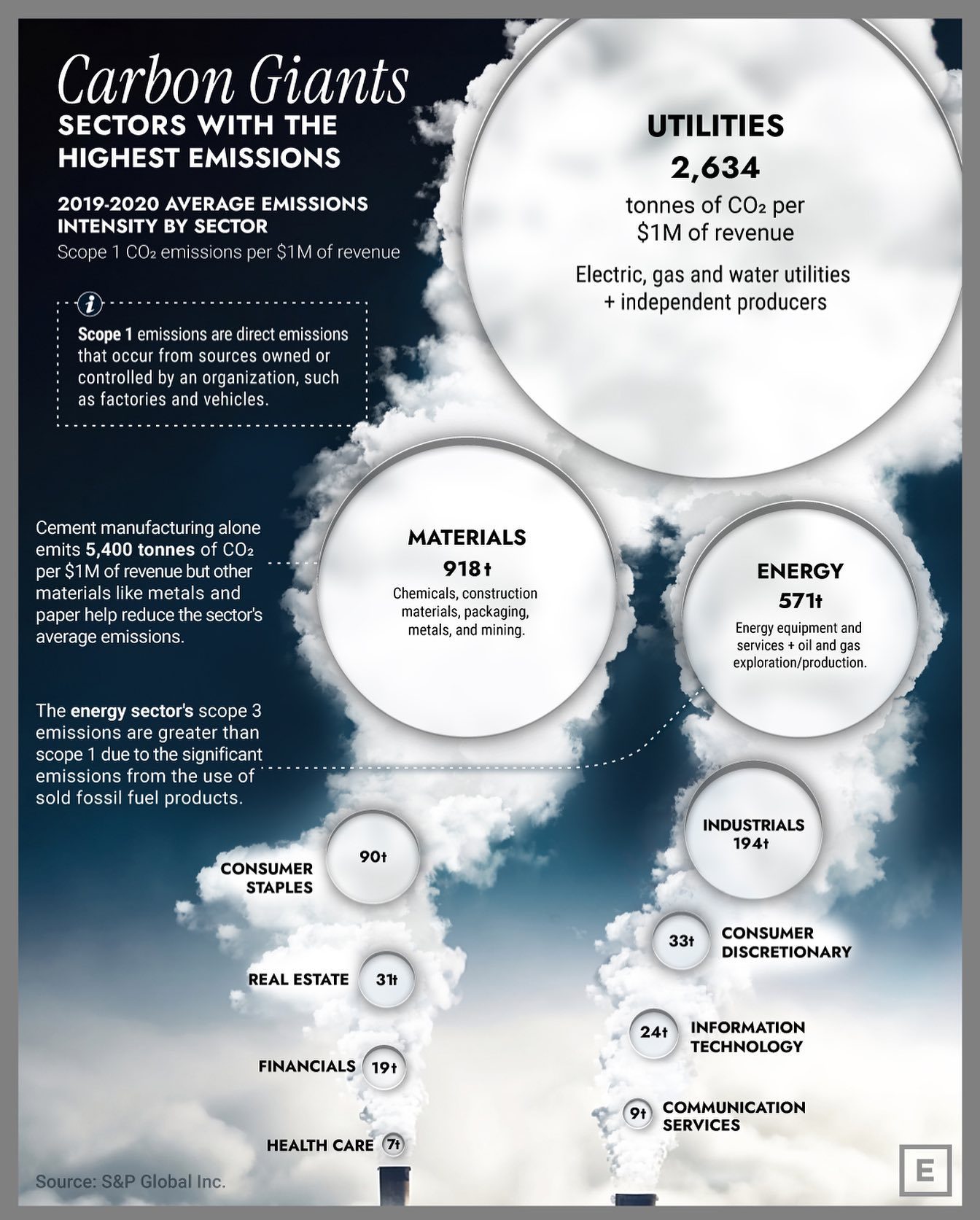
Carbon emissions are a critical issue affecting the environment, and understanding which sectors contribute the most can help guide policies and initiatives aimed at reducing overall emissions. The intensity of Scope 1 CO₂ emissions per $1 million of revenue across various industries offers a clear picture of how different sectors impact the environment.
Context / Why This Matters
Comparing emission intensities across sectors helps identify where efforts to reduce emissions can have the most significant impact. Understanding the top emitters provides a roadmap for policymakers, businesses, and consumers to make informed decisions that can lead to more sustainable practices and significant reductions in greenhouse gas emissions.
Main Discussion
Scope 1 Emissions and Their Significance
The infographic highlights that Scope 1 emissions are direct emissions from sources owned or controlled by an organization. These include factories, vehicles, and other operational activities. Scope 1 emissions are crucial because they reflect the immediate environmental impact of a sector's operations.
Cement Manufacturing
Cement manufacturing stands out as one of the highest emitters, with an average of 5,400 tonnes of CO₂ per $1 million of revenue. This high emission intensity is due to the energy-intensive processes involved in producing cement. However, the inclusion of other materials like metals and paper can help reduce the overall emissions of the sector.
Utilities
Electric, gas, and water utilities, along with independent producers, emit 2,634 tonnes of CO₂ per $1 million of revenue. This sector's emissions are significant because it encompasses the production and distribution of essential services that underpin modern society. Efforts to decarbonize the energy sector are essential for overall emission reduction.
Energy Sector
The energy sector, which includes energy equipment and services as well as oil and gas exploration and production, emits 571 tonnes of CO₂ per $1 million of revenue. However, the sector's Scope 3 emissions, which account for the emissions from the use of sold fossil fuel products, are even higher. This indicates that while the direct emissions from energy production are substantial, the indirect emissions from the use of fossil fuels are even more significant.
Other High-Emitters
-
Materials: This sector, which includes chemicals, packaging materials, metals, and mining, emits 918 tonnes of CO₂ per $1 million of revenue. The production of these materials involves energy-intensive processes, contributing to high emission levels.
-
Industrials: With 194 tonnes of CO₂ per $1 million of revenue, this sector encompasses a wide range of manufacturing and industrial activities. These activities often involve heavy machinery and energy-intensive processes, leading to significant emissions.
-
Consumer Staples: This sector emits 90 tonnes of CO₂ per $1 million of revenue. Consumer staples include essential goods like food and beverages, which are produced and distributed on a massive scale, contributing to significant emissions.
Significant Emitters with Lower Intensities
Real Estate
The real estate sector emits 31 tonnes of CO₂ per $1 million of revenue. While the emission intensity is relatively low, the overall impact of this sector is significant due to the energy consumption and materials required for construction and maintenance.
Industrials
Industrials emit 194 tonnes of CO₂ per $1 million of revenue. This sector encompasses a broad range of activities, including manufacturing and production, which are energy-intensive and contribute to significant emissions.
Other Sectors
Other sectors, such as financials, health care, information technology, and communication services, emit relatively lower amounts of CO₂ per $1 million of revenue. However, their overall contribution to emissions can still be substantial due to the scale of their operations and the energy consumption associated with their activities.
Practical Tips
Reducing carbon emissions from these sectors requires a multi-faceted approach. Here are some practical tips for different stakeholders:
For Policymakers
- Invest in Renewable Energy: Policies that incentivize the transition to renewable energy sources can significantly reduce emissions in energy-intensive sectors.
- Regulate Emissions: Implementing strict emission standards and regulations can encourage industries to adopt cleaner technologies and practices.
- Support Research and Development: Funding research into sustainable technologies and practices can lead to innovations that reduce emissions.
For Businesses
- Adopt Clean Technologies: Investing in energy-efficient technologies and processes can help reduce direct emissions.
- Supply Chain Management: Ensuring that suppliers and partners adhere to sustainable practices can help reduce Scope 3 emissions.
- Carbon Offsetting: Implementing carbon offset programs can help mitigate the impact of emissions from operations.
For Consumers
- Choose Sustainable Products: Opting for products from companies with strong sustainability practices can drive demand for cleaner goods.
- Reduce, Reuse, Recycle: Practicing the 3Rs can help reduce the demand for new products, lowering the overall emissions associated with production and distribution.
Important Takeaways
The analysis of carbon emissions by sector underscores the significant impact that different industries have on the environment. Cement manufacturing, utilities, and the energy sector are among the highest emitters, but efforts to reduce emissions should be industry-specific and tailored to the unique challenges of each sector.
Conclusion
Understanding the emission intensities of different sectors provides valuable insights into where efforts to reduce carbon emissions can have the most significant impact. By focusing on high-emitter sectors and implementing targeted strategies, policymakers, businesses, and consumers can work together to create a more sustainable and environmentally friendly future. The data from S&P Global Inc. serves as a crucial guide for these efforts, highlighting the importance of addressing emissions across all sectors to achieve meaningful progress.
Watch the Reel
Questions readers ask
What are the top CO₂ emitting sectors by emission intensity?
The top CO₂ emitting sectors by emission intensity include cement manufacturing, utilities, and energy. These sectors have the highest carbon emissions per $1 million of revenue, making them key areas to focus on for reducing overall greenhouse gas emissions. The unique challenges and opportunities in each sector can guide more effective sustainability initiatives.
Why is emission intensity an important metric for assessing environmental impact?
Emissions intensity measures the amount of CO₂ emissions generated per unit of revenue, making it a crucial metric for assessing a sector's environmental impact. This metric helps identify which industries have the greatest potential for reduction, thereby guiding targeted efforts in sustainability and policy-making. It also aids in understanding the relative efficiency of different sectors in managing their carbon footprint.
How does the cement manufacturing sector contribute to global CO₂ emissions?
The cement manufacturing sector is one of the highest emitting sectors due to the energy-intensive processes involved in production and the chemical reactions that release CO₂ as a byproduct. The sector's significant environmental impact makes it a critical area for sustainability initiatives aimed at reducing emissions. Understanding the unique challenges of cement manufacturing can help develop more effective strategies for lowering its carbon footprint.
What role do utilities play in CO₂ emissions, and why is sustainability in this sector important?
Utilities, including electricity and heat generation, contribute significantly to global CO₂ emissions, primarily due to the reliance on fossil fuels for energy production. Sustainability in this sector is crucial because it directly impacts the availability of clean energy. By reducing emissions, utilities can help mitigate climate change and support other sectors in transitioning to more sustainable practices.
How can understanding sector carbon footprints help in policy-making and sustainability initiatives?
Understanding sector carbon footprints provides a clear picture of which industries are the highest emitters, enabling policymakers and stakeholders to develop targeted strategies for reduction. By focusing on sectors with high emission intensities, initiatives can achieve more significant reductions in greenhouse gas emissions and drive progress toward sustainability goals.
What are the benefits of assessing CO₂ emissions by industry for businesses and consumers?
Assessing CO₂ emissions by industry helps businesses identify areas where they can improve their environmental sustainability and reduce costs associated with emissions. For consumers, this information can guide purchasing decisions, encouraging support for industries that prioritize reducing their carbon footprint. Overall, this knowledge fosters a more sustainable economy and environment.
What are some of the challenges faced by the energy sector in reducing CO₂ emissions?
The energy sector faces several challenges in reducing CO₂ emissions, including reliance on fossil fuels and the need for significant infrastructure changes. Transitioning to renewable energy sources requires substantial investment and innovation. However, addressing these challenges can lead to substantial reductions in emissions and promote a more sustainable energy landscape.
Related deep dives
Similar reads based on topic and creator.


Recent articles
Fresh deep dives from the latest Reels we unpacked.




Comments
Be the first to comment.