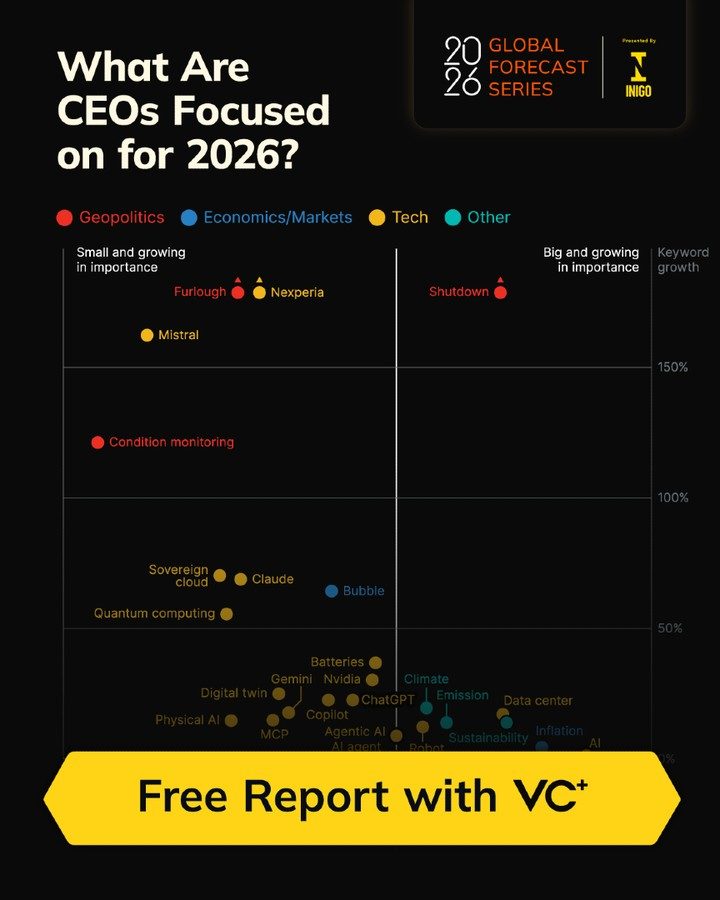
FORWARD THINKING: THE BUSINESS PRIORITIES OF 2026
CEOs are gearing up for 2026, and the trends shaping their strategies are both diverse and decisive. From navigating geopolitical risks to embracing new technologies, the business landscape is set to evolve in significant ways. What are the key priorities and trends that CEOs are focusing on as they approach 2026?
WHY THIS MATTERS
Understanding the trends that will dominate the business world in 2026 is crucial for strategic planning. Whether you're a CEO charting the course for your company or a professional looking to stay ahead, knowing what’s on the horizon can help you make informed decisions and prepare for the challenges and opportunities that lie ahead.
MAIN DISCUSSION
Geopolitical Risks and Climate Change
Geopolitical risks and climate change are at the forefront of CEOs' minds. These factors are not just peripheral concerns but core elements that will influence business strategies. Geopolitical risks encompass a range of issues, from trade disputes to political instability, which can disrupt supply chains and market access. Climate change, on the other hand, poses long-term challenges that require proactive measures, from sustainability initiatives to adapting to new environmental regulations.
Economy and Markets
Economic trends and market conditions are also high on the agenda. Inflation, for instance, is a critical concern, as it impacts everything from operational costs to consumer spending. CEOs are closely monitoring economic indicators and adjusting their financial strategies to mitigate risks and capitalize on opportunities.
Emerging Technologies
The technology sector is a hotbed of innovation, and several emerging technologies are set to reshape industries. Quantum computing, digital twins, and physical AI are just a few of the areas that CEOs are exploring. These technologies have the potential to revolutionize data management, operations, and customer interactions. For instance, quantum computing could solve complex problems that are currently beyond the reach of traditional computing, while digital twins provide a powerful tool for simulation and optimization in fields like manufacturing and healthcare.
Sustainability and Data Centers
Sustainability initiatives are gaining traction. CEOs are increasingly focused on reducing their companies' carbon footprints and enhancing their environmental stewardship. This includes everything from investing in renewable energy to implementing sustainable supply chain practices.
Data centers are another critical area, driven by the growing demand for AI and data processing. Ensuring that data centers are efficient, scalable, and environmentally friendly is a top priority. Innovations like sovereign cloud solutions and condition monitoring are helping to achieve these goals.
AI and Its Applications
Artificial Intelligence (AI) is a game-changer, and its applications are vast. From agentic AI and digital twins to specific tools like Mistral, Claude, Gemini, and ChatGPT, AI technology is being leveraged in various ways. CEOs are exploring AI's potential to improve decision-making, enhance customer experiences, and drive operational efficiency. For example, ChatGPT and similar tools are being used for automation, content generation, and customer support, while AI-driven analytics can provide valuable insights into market trends and consumer behavior.
The Role of Data Centers
Data centers are another critical focus. With the increasing use of AI and big data, the demand for data processing and storage is skyrocketing. CEOs are prioritizing investments in efficient and scalable data centers that can handle growing data volumes while mitigating environmental impacts. Innovations like sovereign cloud and condition monitoring are helping to achieve these goals, ensuring that data centers operate at peak efficiency while minimizing their carbon footprint.
Practical Tips
Stay Updated
Keep yourself informed about the latest trends and technologies. Subscribe to industry publications, attend conferences, and participate in webinars. This will help you stay ahead of the curve and be prepared for changes.
Invest in Research and Development
Invest in R&D to stay at the forefront of technological advancements. This could mean partnering with startups, collaborating with academic institutions, or investing in your own R&D initiatives.
Focus on Sustainability
Integrate sustainability into your business strategy. This includes reducing your carbon footprint, implementing sustainable supply chain practices, and investing in renewable energy.
Enhance Data Management
Optimize your data management practices. Invest in scalable and efficient data centers, and leverage AI for data analytics to gain valuable business insights.
Prepare for Geopolitical Shifts
Stay agile and adaptable in the face of geopolitical risks. Develop strategies to mitigate risks and capitalize on opportunities.
Important Takeaways
The business landscape of 2026 is set to be dynamic and challenging. CEOs are focusing on a range of factors, from geopolitical risks and climate change to economic trends and emerging technologies. By staying informed, investing in R&D, and prioritizing sustainability and data management, businesses can navigate these challenges and thrive in the coming years.
Conclusion
The trends and priorities that CEOs are focusing on for 2026 highlight a future that is both complex and full of opportunities. By staying ahead of these trends and adapting to the changing landscape, businesses can position themselves for success. Whether it’s through embracing new technologies, investing in sustainability, or navigating geopolitical risks, the future is set to be an exciting and transformative time for the business world.
Watch the Reel
Questions readers ask
What are the primary geopolitical risks that CEOs are focusing on in 2026?
In 2026, CEOs are concentrating on a range of geopolitical risks, including trade disputes, political instability, and regulatory changes. These risks can significantly impact global supply chains, market access, and operational costs. By proactively addressing these challenges, CEOs aim to safeguard their companies' interests and maintain business continuity.
How is climate change influencing CEO strategies in 2026?
Climate change is a major focus for CEOs in 2026, driving shifts towards sustainable practices. This includes investing in renewable energy, reducing carbon footprints, and integrating climate resilience into business models. Companies are also expected to disclose their environmental impact more transparently, aligning with stakeholder expectations and regulatory requirements.
What economic trends are CEOs preparing for in 2026?
CEOs in 2026 are strategically planning for economic trends such as inflation, interest rate fluctuations, and shifts in consumer behavior. By understanding and adapting to these trends, businesses can better manage financial risks, optimize resource allocation, and capitalize on emerging opportunities in the market.
Why are CEOs embracing quantum computing in 2026?
Quantum computing holds the promise of revolutionizing data processing and problem-solving capabilities. CEOs are investing in this technology to gain a competitive edge, enhance data security, and drive innovation. Early adoption of quantum computing can lead to breakthroughs in areas like drug discovery, financial modeling, and complex logistics.
What role does AI play in the business strategies of CEOs in 2026?
AI is central to the strategic plans of CEOs in 2026, enabling automation, predictive analytics, and personalized customer experiences. By leveraging AI, companies can improve operational efficiency, enhance decision-making, and create new revenue streams. AI is also being used to drive sustainability initiatives and manage geopolitical risks more effectively.
What are the key business landscape shifts that CEOs are anticipating in 2026?
CEOs are preparing for significant shifts in the business landscape, including the rise of remote work, the acceleration of digital transformation, and the increasing importance of ESG (Environmental, Social, and Governance) criteria. These changes require CEOs to adapt their strategies, invest in new technologies, and foster a more agile and resilient organizational culture.
How are top CEOs planning to integrate sustainability into their business models in 2026?
In 2026, top CEOs are integrating sustainability into their business models by focusing on resource efficiency, circular economy principles, and social responsibility. This includes setting clear sustainability goals, investing in green technologies, and measuring their impact through comprehensive reporting frameworks. By doing so, companies can enhance their brand reputation and attract environmentally conscious investors and customers.
Related deep dives
Similar reads based on topic and creator.


Recent articles
Fresh deep dives from the latest Reels we unpacked.




Comments
Be the first to comment.