Inflation in the U.S.
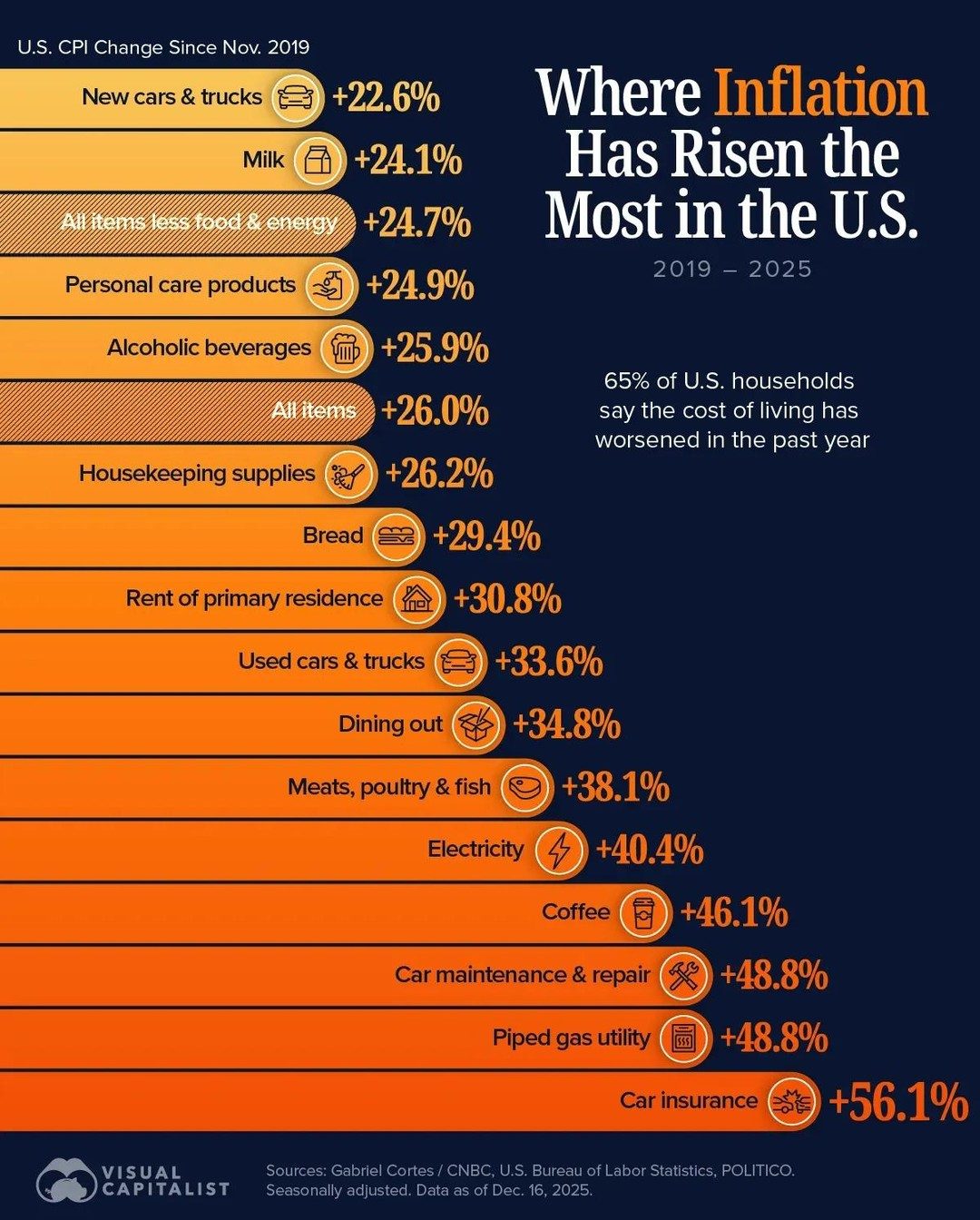
Since November 2019, the United States has witnessed a significant surge in inflation, affecting various sectors of the economy. Motor vehicle insurance has seen the most dramatic increase, rising over 56%. This steep increase stands out among major consumer categories. While the overall Consumer Price Index (CPI) has risen by roughly 26%, essentials like utilities, food, and rent have climbed even faster, significantly altering household budgets.
Context / Why this matters
Understanding the areas where inflation has risen the most is crucial for households and policymakers. This knowledge helps individuals make informed financial decisions and allows policymakers to address the most pressing economic issues. The data from CNBC, via Gabriel Cortes, the U.S. Bureau of Labor Statistics, and POLITICO provides a comprehensive view of how inflation has impacted different sectors from November 2019 to 2025.
Main discussion
Motor Vehicle Insurance
Motor vehicle insurance has experienced the steepest price increase, surging more than 56% since 2019. This significant rise is driven by several factors, including increased claim costs, higher repair expenses due to advanced vehicle technology, and a rise in the frequency of severe weather events that result in more accidents.
Utilities and Housing
Utilities and housing have also seen substantial increases. Electricity prices have risen, and piped gas costs have climbed as well. Rent, a significant portion of many households' budgets, has also increased, putting additional strain on consumers. The combined increase in these essential services and housing costs has reshaped household budgets, leaving many households with less disposable income.
Food and Beverages
Food and beverages have not been spared from inflation. Milk, bread, and meats have all seen notable price increases. For example, the cost of milk has risen significantly, impacting families who rely on dairy products. Dining out has also become more expensive, with prices for meals away from home increasing.
Transportation
The cost of transportation has also risen sharply. New cars and used cars have both seen significant price increases. Car maintenance and repairs have also become more expensive, adding to the financial burden on car owners. The cost of gasoline, while not explicitly mentioned, is also a factor in the overall increase in transportation expenses.
Other Goods and Services
Other goods and services have also seen price increases. For instance, coffee prices have risen by 46.1% since 2019. This reflects global trends in commodity prices and supply chain disruptions. The cost of dining out has also increased, impacting the restaurant industry and consumers alike.
Public Perception
The data shows that 65% of U.S. households believe the cost of living has worsened in the past year. This sentiment reflects the tangible impact of inflation on daily life, as households struggle to keep up with rising prices for essential goods and services. This perception is crucial for understanding the broader economic landscape and the challenges faced by many Americans.
Practical tips
Budgeting Strategies
Given the significant increases in essential goods and services, it is crucial for households to adopt effective budgeting strategies. This includes tracking expenses, prioritizing essential needs, and finding ways to cut back on non-essential spending. Creating a detailed budget can help individuals and families understand where their money is going and identify areas where savings can be made.
Seeking Alternatives
Exploring alternatives for expensive items can also help mitigate the impact of inflation. For example, buying generic brands instead of name-brand products can save money on groceries. Similarly, using public transportation or carpooling can reduce transportation costs. Additionally, shopping for used items or participating in community swap meets can help stretch the budget.
Financial Planning
Financial planning is essential in times of high inflation. This includes saving for emergencies, investing wisely, and planning for future expenses. Building an emergency fund can provide a financial cushion in case of unexpected expenses. Investing in assets that tend to perform well during inflationary periods, such as real estate or precious metals, can also be beneficial.
Important takeaways
Inflation has had a profound impact on various sectors of the U.S. economy, with motor vehicle insurance, utilities, food, and rent seeing the most significant increases. Households are feeling the pinch, with 65% reporting that the cost of living has worsened. Understanding these trends is crucial for making informed financial decisions and for policymakers to address the most pressing economic issues.
Conclusion
The surge in inflation since 2019 has reshaped household budgets across the country, with motor vehicle insurance, utilities, food, and rent seeing the most dramatic increases. By understanding where inflation has risen the most, individuals and policymakers can take steps to mitigate its impact. Whether through effective budgeting, seeking alternatives, or financial planning, there are strategies to navigate this challenging economic landscape.
Watch the Reel
Questions readers ask
Which sectors have been most affected by inflation in the U.S. since 2019?
Since November 2019, motor vehicle insurance has seen the most significant price increases, surging over 56%. Additionally, utilities, rent, and food have also experienced substantial price hikes, far outpacing the overall Consumer Price Index (CPI) increase of about 26%.
How has the increase in motor vehicle insurance impacted households?
The dramatic increase in motor vehicle insurance has forced many households to re-evaluate their budget plans. With prices rising over 56%, this category has seen the most significant impact on household expenditures.
What are the current trends in U.S. inflation according to the Bureau of Labor Statistics?
The Bureau of Labor Statistics (BLS) reports that since 2019, inflation trends have varied significantly across different sectors. Notably, essential categories like utilities, food, and rent have seen prices climb much faster than the overall average.
What strategies are households adopting to cope with the impact of inflation on food prices?
Households are implementing various strategies to manage the rising cost of food, such as budgeting more carefully, purchasing in bulk, and looking for discounts or sales. Some are also exploring home cooking and reducing dining out to alleviate the financial burden.
How can individuals adjust their budgets to accommodate rising insurance prices?
To manage the surge in insurance prices, consider comparing quotes from different providers to find the best rates. Additionally, reviewing coverage options and increasing deductibles can help reduce premiums, but it's important to ensure adequate protection.
What are the key takeaways from the November 2023 inflation rates in the U.S.?
The November 2023 inflation rates highlight that sectors like utilities, rent, and food continue to experience significant price increases. This data is crucial for households to make informed financial decisions and for policymakers to address these pressing economic issues.
What is the Consumer Price Index (CPI) and how does it relate to the recent inflation trends?
The Consumer Price Index (CPI) measures the average change over time in the prices paid by urban consumers for a market basket of consumer goods and services. Since 2019, the CPI has risen by roughly 26%, but certain sectors like motor vehicle insurance have seen much higher increases.
Recent articles
Fresh deep dives from the latest Reels we unpacked.




Comments
Be the first to comment.