Car Depreciation Analysis
The used-car market has been booming for the past three years, driven by disruptions in new car supply chains during the pandemic. This surge has led to a significant increase in secondhand vehicle prices. However, not all cars depreciate at the same rate. Understanding which models hold their value best can be crucial for buyers and sellers alike. Let's dive into the top 10 vehicles with the lowest depreciation rates over five years, based on data from iSeeCars.
Context: Why this matters
Car depreciation is a critical factor to consider when purchasing a vehicle. It refers to the loss in value that a car experiences over time. Understanding depreciation rates can help buyers make informed decisions, ensuring they get the best value for their money. Whether you're in the market for a new or used car, knowing which models retain their value best can save you thousands of dollars in the long run.
Main discussion
The Impact of the Pandemic on the Car Market
The pandemic significantly impacted the automotive industry, causing disruptions in supply chains and leading to a shortage of new cars. This scarcity drove up the prices of used cars, making the market highly competitive. As a result, many buyers turned to the secondhand market, seeking reliable vehicles at a more affordable price.
The Data: iSeeCars Analysis
iSeeCars analyzed over 1.1 million used cars from the 2018 model year, sold between November 2022 and October 2023. The analysis excluded models no longer in production as of the 2022 model year. The findings highlight the top 10 vehicles with the lowest depreciation rates, providing valuable insights into which models hold their value best.
Top 10 Vehicles with the Lowest Depreciation Rates
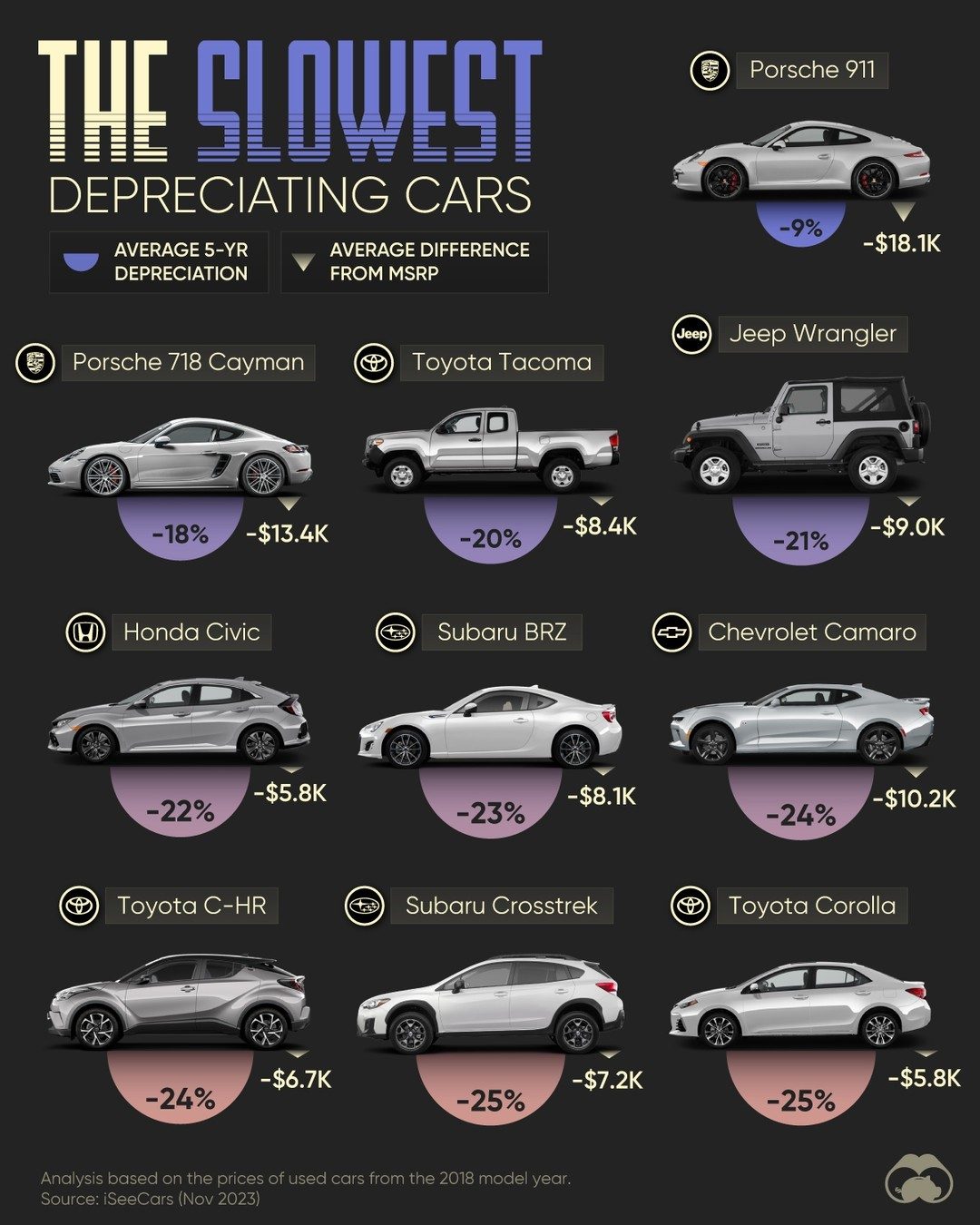
Let's take a closer look at the top 10 vehicles with the lowest depreciation rates over a five-year period:
- Porsche 718 Cayman: Depreciation rate of 9% and an average difference from the MSRP of $18,100.
- Toyota Tacoma: Depreciation rate of 18% and an average difference from the MSRP of $13,400.
- Jeep Wrangler: Depreciation rate of 20% and an average difference from the MSRP of $8,400.
- Honda Civic: Depreciation rate of 21% and an average difference from the MSRP of $9,000.
- Subaru BRZ: Depreciation rate of 22% and an average difference from the MSRP of $7,200.
- Chevrolet Camaro: Depreciation rate of 22% and an average difference from the MSRP of $5,800.
- Toyota C-HR: Depreciation rate of 22% and an average difference from the MSRP of $5,800.
- Subaru Crosstrek: Depreciation rate of 23% and an average difference from the MSRP of $8,100.
- Toyota Corolla: Depreciation rate of 24% and an average difference from the MSRP of $10,200.
- Toyota Corolla: Depreciation rate of 25% and an average difference from the MSRP of $7,200.
- Subaru BRZ: Depreciation rate of 25% and an average difference from the MSRP of $5,800.
Factors Influencing Depreciation
Several factors contribute to a car's depreciation rate, including reliability, popularity, and brand reputation. For instance, luxury models like the Porsche 718 Cayman tend to depreciate less than mainstream vehicles because they are often sought after by enthusiasts and collectors.
The Role of Brand Reputation
Brand reputation plays a significant role in a vehicle's depreciation rate. Models from reliable and reputable brands, such as Toyota and Honda, tend to hold their value better over time. Conversely, lesser-known brands or models with a history of reliability issues may depreciate faster.
Practical tips
Research and Compare
Before purchasing a used car, research the model's depreciation rate thoroughly. Compare different makes and models to find the one that best suits your needs and budget. Tools like iSeeCars provide valuable data to help you make an informed decision.
Consider Reliability and Maintenance
Reliability is a key factor in determining a car's depreciation rate. Models known for their reliability and lower maintenance costs tend to hold their value better. Look for vehicles with a proven track record of reliability and longevity.
Avoid High-Mileage Models
Cars with high mileage generally depreciate faster than those with lower mileage. When purchasing a used car, look for models with lower mileage to ensure better resale value in the future.
Regular Maintenance
Regular maintenance can help prolong the life of your vehicle and minimize depreciation. Keep up with routine maintenance tasks, such as oil changes, tire rotations, and brake inspections, to maintain the vehicle's value over time.
Important takeaways
Depreciation is an inevitable part of owning a car, but understanding which models hold their value best can help you make a more informed decision. By researching the market trends, considering brand reputation, and maintaining your vehicle, you can minimize depreciation and get the best value for your investment.
Conclusion
Car depreciation is a crucial factor to consider when purchasing a vehicle. With the used-car market booming, it's essential to understand which models hold their value best. By analyzing data from iSeeCars and considering key factors like reliability, brand reputation, and maintenance, you can make a more informed decision and maximize your investment. Whether you're in the market for a new or used car, knowing which models retain their value best can save you thousands of dollars in the long run.
Watch the Reel
Questions readers ask
Why is it important to consider a car's resale value before purchasing?
Considering a car's resale value helps you understand how much value it will retain over time. This is crucial for maximizing your return on investment, especially if you plan to sell the car in the future. Cars with high resale values depreciate slower, making them a wiser financial choice.
Which brands are known for having the best resale value over 5 years?
Brands like Toyota and Subaru are renowned for their strong resale value. Toyota, in particular, is known for the reliability and durability of its vehicles. Subaru is well-regarded for its all-wheel-drive systems and safety features, which contribute to better resale value.
How does the current used-car market affect the depreciation of new cars?
The used-car market has seen significant price increases due to supply chain disruptions, affecting the depreciation of new cars. With high demand and limited supply, new cars are holding their value better than in previous years, making them more attractive for buyers.
What makes Porsche models a good investment in terms of resale value?
Porsche models are known for their high performance, luxury features, and strong brand reputation. These factors contribute to their high resale value. However, they also tend to be more expensive initially, so it's important to consider the overall cost.
How can I find the most accurate data on car depreciation rates?
For the most accurate data on car depreciation rates, you can refer to reliable sources like iSeeCars. They provide detailed analyses based on real-world market data, which can help you make informed decisions when purchasing a car.
Which cars are included in the top 10 for resale value in 2023?
The top 10 cars for resale value in 2023 include models from brands known for their reliability and strong market demand, such as Toyota, Subaru, and Porsche. To find the exact list, you can refer to the article's detailed analysis.
How does understanding model depreciation rates help in buying a used car?
Understanding model depreciation rates helps you identify which used cars have held their value well over time. This information can guide you towards models that are likely to provide better value for your money, even as a used vehicle.
Related deep dives
Similar reads based on topic and creator.




Recent articles
Fresh deep dives from the latest Reels we unpacked.




Comments
Be the first to comment.