Arms Imports
Many nations allocate significant resources to their militaries to safeguard their national interests and maintain sovereignty. A substantial portion of these expenditures goes toward purchasing new arms and equipment, frequently from foreign suppliers, given the increasing specialization and sophistication of weapons manufacturing. The Stockholm International Peace Research Institute (SIPRI) provides valuable data on global arms imports, shedding light on the significant players in this arena. Here, we delve into the countries with the largest share of global arms imports between 2018 and 2022, highlighting the key trends and implications.
Why This Matters
Understanding global arms imports is crucial for several reasons. It provides insights into the geopolitical dynamics, regional security concerns, and the balance of power among nations. The data also reveals the dominant suppliers in the global arms market, which often reflect the technological and industrial capabilities of these countries. Moreover, tracking arms imports can help identify potential conflicts, as nations with substantial military acquisitions may be preparing for or reacting to regional tensions.
Main Discussion
The Biggest Arms Importers
Top Importers
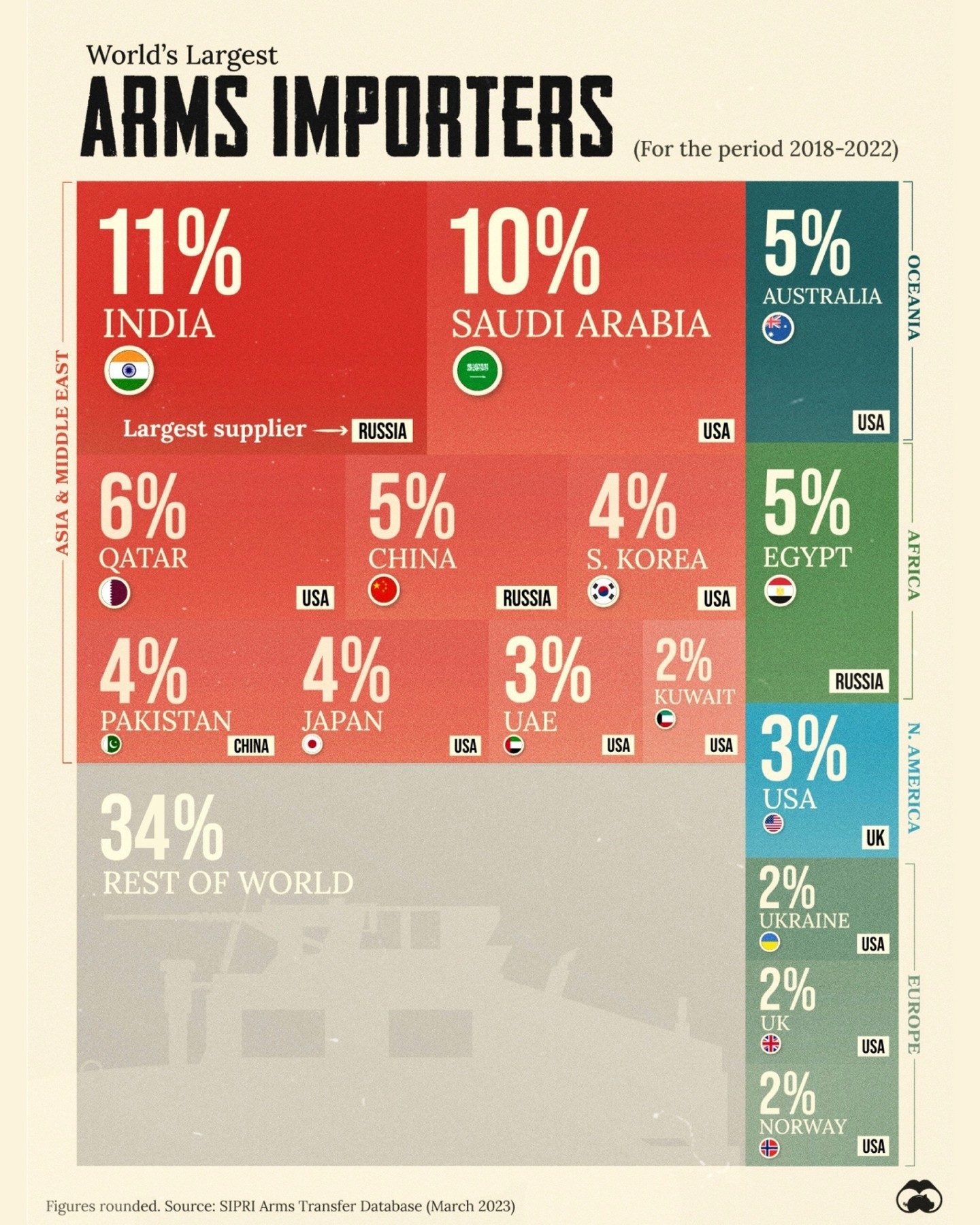
Between 2018 and 2022, India stood out as the largest arms importer, accounting for 11% of the global share. This significant import figure underscores India's efforts to modernize its military and address various strategic challenges, including border disputes with China and Pakistan. Following India, Saudi Arabia was the second-largest importer, contributing 10% to the global total. Saudi Arabia's substantial arms procurement is often linked to its ongoing conflicts in the region, particularly the war in Yemen.
Australia, with 5% of global arms imports, is another notable player. Australia's imports are driven by its strategic partnerships and the need to maintain a robust defense capability in the face of regional uncertainties, particularly in the Asia-Pacific region. Qatar, China, and Egypt also featured prominently, each contributing 5% or 6% to the global arms imports. These countries' imports reflect their respective strategic and defense priorities and their efforts to enhance their military capabilities.
Regional Breakdown
The Asia and Middle East regions collectively represented a significant portion of global arms imports. This region includes countries like India, Saudi Arabia, Qatar, and China, all of which have substantial import figures. The high demand for arms in these regions is driven by ongoing conflicts, territorial disputes, and the need to maintain strong defense postures. Countries like Pakistan, Japan, and UAE also contributed to the region's import figures, reflecting their unique security challenges and defense strategies.
European and North American countries, while not as dominant as their Asian and Middle Eastern counterparts, still play a significant role in global arms imports. The UK and Norway, for instance, accounted for 2% of the global share each. These imports are part of broader defense policies aimed at maintaining military readiness and technological readiness amid evolving global threats.
The Rest of the World
The category "Rest of the World" accounted for a substantial 34% of global arms imports. This broad category includes a diverse range of countries that, while individually smaller in terms of import volume, collectively represent a significant portion of the global market. These countries often have varying defense needs and strategic considerations, contributing to the overall complexity of the global arms trade.
Practical Tips for Understanding Arms Imports
For those interested in analyzing global arms imports:
- Access Reliable Data: Utilize data from reputable sources like SIPRI to obtain accurate and comprehensive information on global arms imports.
- Consider Regional Context: Analyze arms imports within the context of regional geopolitical dynamics, as these often drive military spending and procurement.
- Evaluate Strategic Alliances: Examine the defense partnerships and alliances of countries to understand the underlying reasons for their arms imports.
- Track Technological Trends: Pay attention to technological advancements in weapons manufacturing, as these can influence the types of arms countries choose to import.
- Monitor Conflict Zones: Keep an eye on regions experiencing or preparing for conflicts, as these areas often see higher levels of arms imports.
Important Takeaways
The data on global arms imports between 2018 and 2022 highlights several key insights. India and Saudi Arabia are the largest importers, reflecting their substantial defense needs and regional conflicts. The Asia and Middle East regions are significant contributors to global imports, driven by strategic and security concerns. European and North American countries, while smaller in comparison, still play a crucial role. The "Rest of the World" category underscores the diverse and complex nature of the global arms trade, encompassing a wide range of countries with varied defense priorities.
Conclusion
The global landscape of arms imports is dynamic and multifaceted, driven by a complex interplay of geopolitical dynamics, regional conflicts, and defense strategies. Understanding the key players and trends in arms imports is essential for gaining insights into global security dynamics and the balance of power. By analyzing data from sources like SIPRI, we can better comprehend the motivations and implications behind the substantial investments countries make in acquiring new arms and equipment.
Watch the Reel
Questions readers ask
Which countries were the top arms importers between 2018 and 2022?
According to SIPRI data, India, Saudi Arabia, and Australia were the leading arms importers during this period. These countries significantly contributed to the global arms trade during these years.
Why do countries like India and Saudi Arabia import such large quantities of arms?
Countries like India and Saudi Arabia import large quantities of arms to address their strategic challenges and maintain robust military capabilities. This is often driven by geopolitical dynamics and regional security concerns.
What insights can be gained from analyzing the global arms trade data from 2018 to 2022?
Analyzing global arms trade data from 2018 to 2022 offers insights into geopolitical dynamics, regional security concerns, and the strategic priorities of different nations. It highlights how countries are preparing for potential threats and maintaining their military capabilities.
How does the SIPRI arms data help in understanding world arms imports 2018-2022?
SIPRI data provides comprehensive information on global arms imports, including the volume and types of weapons acquired. This data helps identify key trends and patterns, such as the leading importers and the suppliers, offering a clearer picture of the global arms trade.
What role do countries like China and Pakistan play in the global arms trade 2018-2022?
Countries like China and Pakistan are also significant players in the global arms trade. China is a major arms exporter, while Pakistan is a notable importer. Understanding their roles can provide deeper insights into the geopolitical dynamics of the region and the global arms trade.
Why have Australia's military purchases increased in the 2018-2022 period?
Australia's increased military purchases can be attributed to its strategic interests and regional security concerns. As a key player in the Indo-Pacific region, Australia seeks to enhance its military capabilities to address potential threats and maintain regional stability.
What are the implications of Qatar's military purchases in the context of the global arms trade 2018-2022?
Qatar's military purchases reflect its efforts to bolster its defense capabilities amidst regional tensions. These purchases are part of a broader strategy to ensure national security and influence in the Middle East, highlighting the interconnected nature of the global arms trade.
Recent articles
Fresh deep dives from the latest Reels we unpacked.




Comments
Be the first to comment.