Cargo Airport Ranking
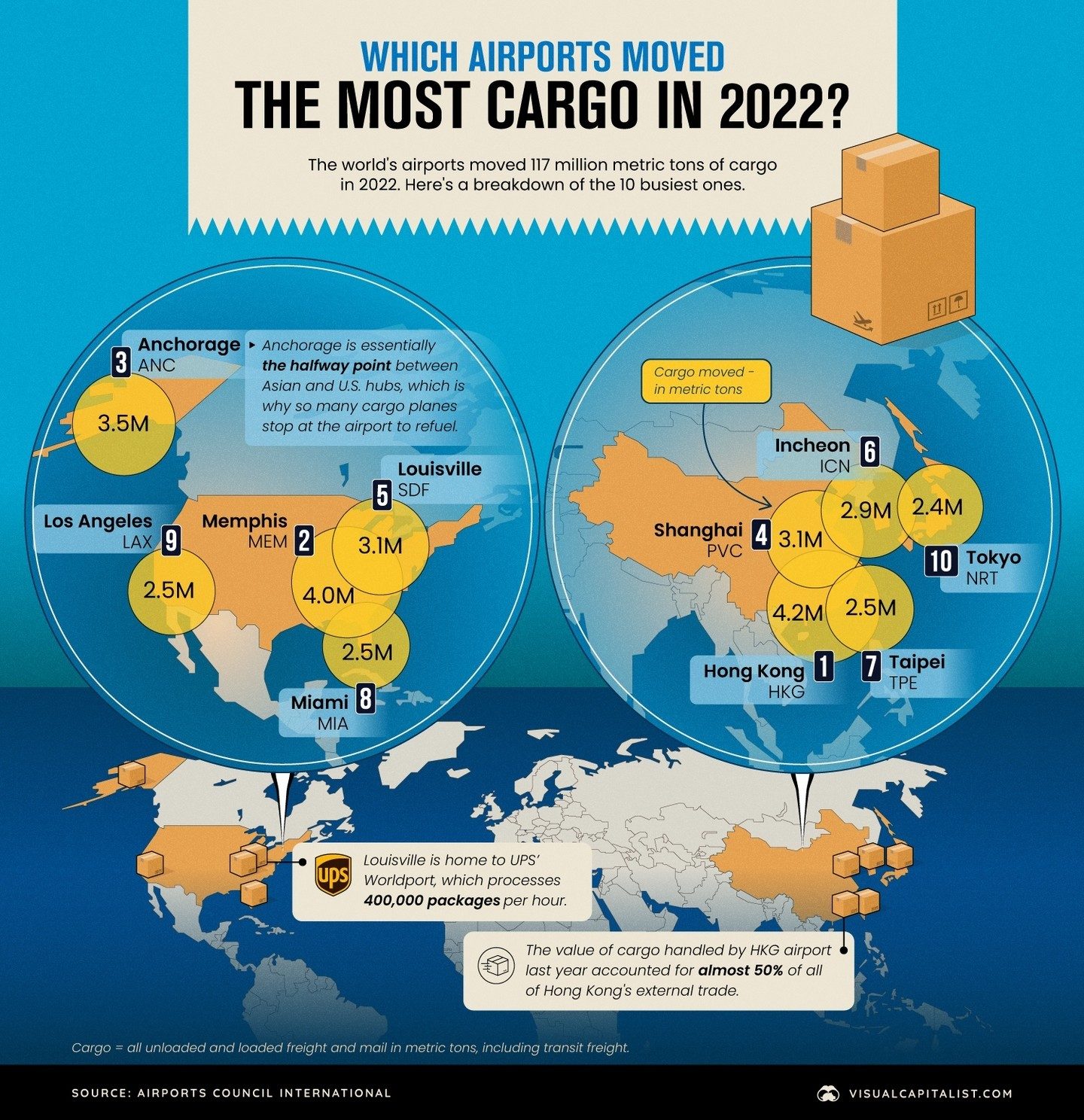
The global economy relies heavily on air cargo, which facilitates international supply chains and ensures the timely delivery of goods, from essential manufacturing components to personal packages from retailers like Amazon. In 2022, the total air cargo shipped was approximately 117 million metric tons. This cargo is moved through a vast network of airports worldwide, with some handling significantly more goods than others.
Why This Matters
Understanding which airports handle the most cargo is crucial for several reasons. These airports serve as critical nodes in the global supply chain, supporting international trade and economic growth. They are vital for the efficient distribution of goods, from consumer electronics to perishable items, and play a significant role in the logistics strategy of companies like UPS and FedEx. By examining the top cargo airports, we can gain insights into the broader trends and dynamics of global shipping.
Main Discussion
The Top 10 Airports for Cargo Movement
The ranking of the top 10 airports for cargo movement in 2022 provides a snapshot of the key players in global air cargo. These airports are spread across different continents, highlighting the interconnected nature of international trade.
1. Anchorage (ANC)
Anchorage International Airport in Alaska tops the list with 3.5 million metric tons of cargo moved. Its strategic location makes it a crucial hub for cargo flights between Asia and North America.
2. Memphis (MEM)
Memphis International Airport, home to the FedEx SuperHub, handled 4.0 million metric tons of cargo. The airport's extensive infrastructure and logistics capabilities make it a vital hub for FedEx's global operations.
3. Louisville (SDF)
Louisville International Airport, home to UPS’ Worldport, processed 3.1 million metric tons of cargo. UPS’ Worldport is renowned for its efficiency, processing an impressive 400,000 packages per hour, which significantly contributes to Louisville's ranking.
4. Los Angeles (LAX)
Los Angeles International Airport, one of the busiest airports in the United States, moved 2.5 million metric tons of cargo. Its strategic location on the West Coast allows it to be a gateway for imports and exports to Asia.
5. Incheon (ICN)
Incheon International Airport in South Korea handled 2.9 million metric tons of cargo. Its state-of-the-art facilities and efficient operations make it a key player in Asia's cargo market.
6. Hong Kong (HKG)
Hong Kong International Airport, a major cargo hub in Asia, handled 2.5 million metric tons of cargo. It accounts for nearly 50% of Hong Kong's external trade, underscoring its importance in the region's logistics network.
7. Miami (MIA)
Miami International Airport, a key gateway for Latin American trade, moved 2.5 million metric tons of cargo. Its strategic location and extensive network make it a vital hub for trade between the Americas and the rest of the world.
8. Shanghai (PVC)
Shanghai Pudong International Airport, one of China's busiest airports, handled 4.2 million metric tons of cargo. Its extensive cargo facilities and connectivity to global markets make it a significant player in air cargo.
9. Taipei (TPE)
Taiwan Taoyuan International Airport, known as Taipei International Airport, moved 2.4 million metric tons of cargo. Its strategic location and modern facilities support a high volume of air cargo.
10. Tokyo (NRT)
Narita International Airport, serving the Tokyo region, handled 3.0 million metric tons of cargo. Its extensive network and advanced infrastructure make it a crucial hub for cargo in Japan and the broader Asia-Pacific region.
Practical Tips
For businesses and logistics professionals, understanding the capabilities and capacities of these top cargo airports can be instrumental in optimizing supply chain operations. Here are some practical tips:
Strategic Planning
Plan your supply chain routes considering these airports' capacities and capabilities. For instance, if your goods are frequently shipped between Asia and North America, leveraging Anchorage’s strategic location could be beneficial.
Routing Efficiency
Choose the most efficient routes to minimize transit times and costs. For example, using Louisville for shipments processed by UPS can take advantage of their high-speed sorting facilities.
Infrastructure Utilization
Maximize the use of advanced infrastructure and logistics services at these airports. Miami’s extensive network and facilities can streamline trade between the Americas and other regions.
Important Takeaways
Cargo airports play a pivotal role in global trade and logistics. The ranking of the top 10 airports for cargo movement in 2022 highlights the strategic importance of these hubs. From Anchorage’s pivotal position in trans-Pacific trade to Louisville’s efficiency with UPS, each of these airports brings unique strengths to the global supply chain.
Conclusion
The movement of air cargo is a complex and dynamic process that underpins the global economy. The top 10 airports for cargo movement in 2022 represent the backbone of international logistics, facilitating the seamless transfer of goods across continents. By understanding the roles and capabilities of these airports, we can better navigate the intricate web of global shipping and optimize supply chain operations for efficiency and reliability.
Watch the Reel
Questions readers ask
What are the top 10 cargo airports in 2022?
The top 10 airports for cargo movement in 2022 span multiple continents. They are: Memphis International Airport, Hong Kong International Airport, Shanghai Pudong International Airport, Incheon International Airport, Anchorage Ted Stevens International Airport, Tokyo Narita International Airport, Louisville International Airport, Leipzig/Halle Airport, Paris Charles de Gaulle Airport, and Dubai International Airport. These airports are vital for the efficient distribution of goods worldwide.
How much cargo was shipped through airports in 2022?
In 2022, the total air cargo shipped globally was approximately 117 million metric tons. These shipments ranged from manufacturing components to personal packages, highlighting the diverse nature of goods transported by air.
Why is air cargo important for the global economy?
Air cargo plays a crucial role in facilitating international supply chains and ensuring the timely delivery of goods. It supports economic growth by moving essential items and enables businesses to reach global markets efficiently.
Which UPS cargo hubs ranked highest in 2022?
In 2022, UPS's primary cargo hub, Louisville International Airport, ranked 7th among the top 10 busiest cargo airports. It is a significant center for UPS operations in the Americas, handling a vast amount of packages and goods.
What makes an airport a crucial node in the global supply chain?
Airports that handle a high volume of cargo are essential nodes in the global supply chain. They support international trade, manage the distribution of various goods, and ensure that products reach their destinations efficiently. These airports often have large cargo handling capacities and sophisticated logistics systems.
What types of goods are transported through these top cargo airports?
The top cargo airports handle a wide range of goods, including consumer electronics, perishable items, manufacturing components, and personal packages from retailers. This diversity underscores the importance of air cargo in global trade and supply chains.
How does cargo tonnage help understand global air cargo movement?
Cargo tonnage is a key metric for understanding air cargo movement. It provides insights into the volume of goods transported and highlights the importance of specific airports in the global supply chain. Monitoring cargo tonnage helps identify trends and patterns in international shipping and trade.
Related deep dives
Similar reads based on topic and creator.

Recent articles
Fresh deep dives from the latest Reels we unpacked.




Comments
Be the first to comment.