AI Risks for Businesses: What You Need to Know
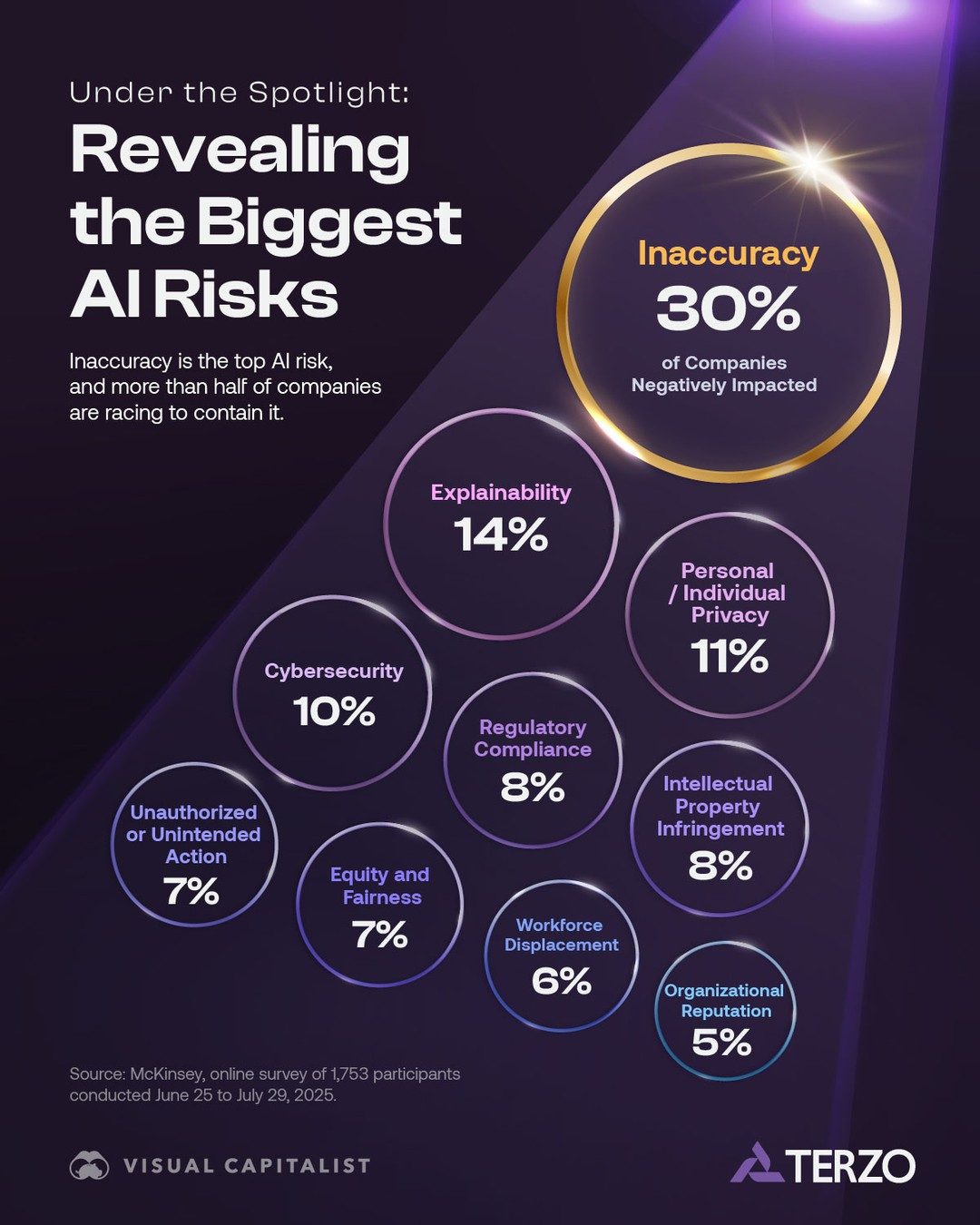
Nearly a third of companies worldwide have experienced negative impacts due to AI inaccuracy. This revelation underscores the urgent need for businesses to understand and mitigate the risks associated with artificial intelligence. An infographic from TERZO and Visual Capitalist, based on a McKinsey survey, sheds light on the most common AI pitfalls, offering valuable insights into the challenges companies face today.
Why This Matters
AI's potential to transform industries is undeniable, but its deployment also brings significant risks. Understanding these risks is critical for businesses aiming to leverage AI effectively while safeguarding their operations and reputation. The insights from the McKinsey survey highlight key areas of concern, helping businesses prioritize their risk management strategies.
The Biggest AI Risks
Inaccuracy: The Top AI Risk
Inaccuracy tops the list of AI risks, affecting more than half of the companies surveyed. This issue can lead to flawed decisions, lost opportunities, and damaged reputations. Inaccuracy often stems from poor data quality, inadequate algorithms, or insufficient model training. Companies must invest in robust data governance and continuous model improvement to mitigate this risk.
Explainability: The Black Box Problem
Explainability is a significant concern, impacting 14% of companies. AI models, especially complex ones like deep neural networks, can be opaque, making it difficult to understand how they arrive at predictions. This lack of transparency can hinder trust and adoption, particularly in regulated industries. Businesses should prioritize explainable AI models or invest in tools that can interpret complex models to enhance trust and accountability.
Personal and Individual Privacy
Privacy concerns affect 11% of companies, highlighting the importance of data protection in AI implementations. AI systems often process sensitive data, making them attractive targets for cybercriminals. Companies must implement stringent data security measures, comply with data protection regulations, and ensure transparency in data usage to protect individuals' privacy.
Cybersecurity and Regulatory Risks
Cybersecurity and regulatory risks are prominent, impacting 10% and 8% of companies, respectively. AI systems can introduce new vulnerabilities, and non-compliance with regulations can result in hefty fines and reputational damage. Businesses should incorporate cybersecurity best practices into their AI development lifecycle and stay updated with relevant regulations to navigate these challenges.
Unauthorized or Unintended Action
Unintended or unauthorized actions, affecting 7% of companies, pose significant risks. AI systems can act unpredictably, leading to operational disruptions or unintended consequences. To mitigate this, businesses should implement robust monitoring and control mechanisms, regularly audit AI systems, and establish clear governance frameworks.
Ethical and Fairness Concerns
Ethical and fairness concerns impact 7% of companies, underscoring the importance of responsible AI development. Biased AI systems can perpetuate or amplify existing social inequalities. Companies must proactively address potential biases in AI models, promote fairness, and adhere to ethical guidelines to build trust and avoid controversies.
Other Notable Risks
Workforce Displacement
Workforce displacement, affecting 6% of companies, highlights the potential for AI to automate jobs, leading to job losses. While AI can enhance productivity, companies must manage workforce transitions responsibly, offering reskilling and upskilling opportunities to mitigate the impact on employees.
Intellectual Property Infringement
Intellectual property infringement, impacting 8% of companies, underscores the risks associated with AI-powered content generation. Companies must ensure that their AI systems respect intellectual property rights and implement measures to detect and prevent infringement.
Organizational Reputation
Organizational reputation, affecting 5% of companies, emphasizes the importance of managing AI-related risks to protect a company's image. Negative incidents involving AI can tarnish a company's reputation, leading to loss of customer trust and market share. Proactive risk management and transparent communication are essential to safeguarding a company's reputation.
Practical Tips for Mitigating AI Risks
Develop a Comprehensive Risk Management Strategy
A comprehensive risk management strategy is crucial for identifying, assessing, and mitigating AI risks. Companies should conduct regular risk assessments, prioritize risks based on their potential impact, and develop mitigation plans for each identified risk.
Invest in High-Quality Data
High-quality data is the backbone of accurate AI models. Companies should invest in data governance, ensuring data is accurate, complete, and relevant. Implementing data validation, cleansing, and enrichment processes can help improve data quality and enhance AI model performance.
Prioritize Explainable AI Models
Explaining AI decisions is essential for building trust and ensuring accountability. Companies should prioritize explainable AI models or invest in tools that can interpret complex models. This approach can help stakeholders understand AI decisions and foster trust in AI systems.
Strengthen Data Security Measures
Strong data security measures are vital for protecting sensitive data and mitigating cybersecurity risks. Companies should implement robust encryption, access controls, and monitoring mechanisms to safeguard data. Regular security audits and compliance with data protection regulations can further enhance data security.
Implement Robust Governance and Compliance Frameworks
Robust governance and compliance frameworks are essential for managing AI risks effectively. Companies should develop clear policies and procedures for AI development, deployment, and monitoring. Regular audits and adherence to relevant regulations can help ensure compliance and mitigate regulatory risks.
Monitor and Audit AI Systems Regularly
Regular monitoring and auditing of AI systems are crucial for identifying and mitigating risks. Companies should establish monitoring mechanisms to detect anomalies and unauthorized actions. Regular audits can help identify potential risks and ensure that AI systems are functioning as intended.
Important Takeaways
AI risks are diverse and can have significant impacts on businesses. Understanding these risks is the first step in mitigating them. Inaccuracy, explainability, privacy, cybersecurity, and regulatory risks top the list, but ethical, workforce, intellectual property, and reputational risks are also critical.
Emphasize Transparency and Accountability
Transparent and accountable AI development practices are crucial for building trust and mitigating risks. Companies should prioritize explainable AI models, adhere to ethical guidelines, and ensure transparency in data usage.
Foster a Culture of Continuous Improvement
Continuous improvement is essential for managing AI risks effectively. Companies should regularly assess and update their AI systems, prioritizing high-quality data, robust governance, and comprehensive risk management strategies.
Stay Informed and Adapt
The AI landscape is evolving rapidly, and so are the associated risks. Companies must stay informed about emerging risks, industry best practices, and regulatory requirements. Adaptability and proactive risk management are key to navigating the complexities of AI.
conclusion
AI presents both opportunities and challenges for businesses. Understanding the biggest AI risks and implementing effective risk management strategies can help companies leverage AI's potential while mitigating its risks. By prioritizing inaccuracy, explainability, privacy, and other key risks, businesses can build resilient and trustworthy AI systems that drive innovation and growth. Regular monitoring, robust governance, and a culture of continuous improvement are essential for navigating the complexities of AI and ensuring long-term success.
Watch the Reel
Questions readers ask
What are the most common AI risks that businesses face today?
The most common AI risks for businesses include data inaccuracies, lack of explainability in AI models, and privacy concerns. These issues can lead to poor business decisions, reputational damage, and potential cybersecurity threats. According to a McKinsey survey, over half of the companies surveyed experienced negative impacts due to AI inaccuracy.
Why is data accuracy crucial in AI for businesses?
Data accuracy is vital because inaccuracies can lead to flawed AI models, resulting in poor business decisions and potential financial losses. Ensuring high-quality, accurate data is essential for training reliable AI models that can deliver meaningful insights and drive business success.
What does 'explainable AI' mean for businesses, and why is it important?
Explainable AI refers to models that can clearly communicate the logic behind their decisions. This is important for businesses because it builds trust, ensures compliance, and helps in identifying and correcting biases. It also facilitates better collaboration between AI systems and human decision-makers.
How do AI privacy concerns impact businesses, and what measures can be taken to address them?
AI privacy concerns stem from the need to protect sensitive data used in AI models. Businesses can address these concerns by implementing robust data governance policies, using anonymization techniques, and ensuring compliance with data protection regulations. This helps maintain customer trust and avoid legal repercussions.
What steps can businesses take to mitigate the risks of AI in decision-making?
To mitigate AI decision-making risks, businesses should regularly audit their AI models, use diverse and representative datasets, and foster a culture of ethical AI development. Additionally, continuous monitoring and transparency in AI processes can help identify and rectify potential issues before they impact business operations.
How can businesses leverage the insights from the McKinsey survey on AI risks?
Businesses can use the insights from the McKinsey survey to identify areas where they may be vulnerable to AI risks. By understanding the common pitfalls, such as data inaccuracies and privacy concerns, companies can proactively implement strategies to mitigate these risks, ensuring they can leverage AI effectively and sustainably.
What is the significance of the infographic from TERZO and Visual Capitalist in understanding AI risks for businesses?
The infographic provides a visual representation of the key challenges businesses face with AI, making it easier to comprehend and address these issues. It highlights critical areas such as data risks, decision-making challenges, and cybersecurity threats, offering a clear pathway for businesses to enhance their AI strategies and protect their operations.
Recent articles
Fresh deep dives from the latest Reels we unpacked.




Comments
Be the first to comment.