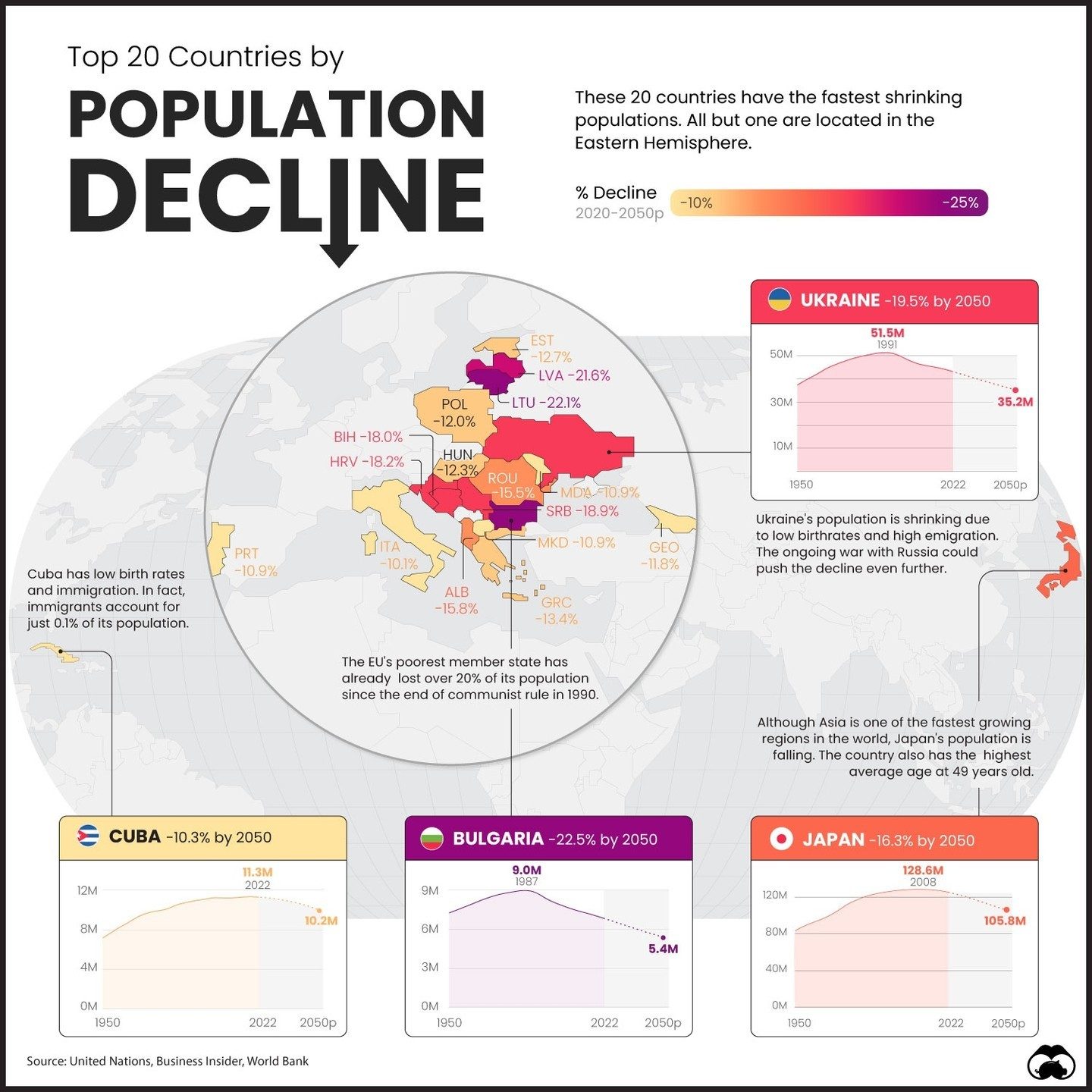
Population Decline
Since the mid-20th century, the global population has seen a steady increase, with significant growth in countries like China and India. However, a new demographic shift is underway. Researchers project that the next wave of population growth will occur in Africa, where fertility rates remain high. Meanwhile, several countries are experiencing a decline in population, presenting a stark contrast to the global growth trend.
Context: Why This Matters
Understanding population trends is crucial for policymakers, businesses, and communities. Population decline can lead to labor shortages, economic stagnation, and increased pressure on social services. Conversely, rapid population growth can strain resources and infrastructure. Identifying which countries are experiencing these changes helps in planning for future needs and challenges.
Main Discussion
Countries Facing Significant Population Decline
Several countries are projected to experience significant population declines by 2050. Among them, Ukraine, Latvia, and Bosnia stand out for their projected declines. Population decline is a multifaceted issue, influenced by factors such as low birth rates, aging populations, and emigration.
Eastern Europe and the Population Challenge
Eastern Europe is a hotspot for population decline. Countries like Latvia and Bosnia are expected to see decreases of over 18% by 2050. Factors contributing to this trend include economic instability, lower birth rates, and the emigration of younger populations. The population decline is also influenced by the inability to attract immigrants.
The Case of Japan
Japan, known for its rapidly aging population, is also experiencing a significant decline. With a projected 16.3% drop by 2050, Japan faces unique challenges. The country has one of the lowest birth rates in the world and a high life expectancy, leading to an aging society with a shrinking workforce. These factors put significant pressure on social services and the economy.
Latin America: Cuba’s Unique Situation
Latin America isn't exempt from this demographic shift. Cuba, for instance, is facing a 10.3% population decline by 2050. This decline is attributed to low birth rates and a decline in immigration. Cuba’s aging population is a significant concern, as it places a strain on the economy and healthcare system.
Practical Tips
Addressing Population Decline
For countries experiencing significant population decline, several strategies can help mitigate the challenges:
- Encourage Higher Birth Rates: Policies that support families, such as parental leave and childcare subsidies, can help increase birth rates.
- Attract Immigrants: Policies that make it easier for immigrants to settle and work in the country can help replenish the labor force.
- Invest in Health and Social Services: As the population ages, investing in healthcare, pensions, and social services will become increasingly important.
Planning for Sustainable Growth
For countries expecting growth, particularly in Africa, proactive planning is essential:
- Infrastructure Development: Investing in infrastructure can support a growing population and foster economic development.
- Education and Workforce Training: Building a skilled workforce through education and training programs will be crucial.
- Sustainable Resource Management: Policies that promote sustainable use of natural resources will be vital to ensure long-term prosperity.
Important Takeaways
Understanding these demographic shifts is vital for countries to plan effectively. Population decline and growth present unique challenges and opportunities. Countries must adapt their policies to address these changes and ensure sustainable development. By fostering policies that encourage population growth in declining regions and planning for growth in expanding areas, societies can better manage the demographic transition.
The Economic Impact
Population changes have direct economic implications. A shrinking population can lead to labor shortages and economic stagnation, while rapid growth can strain resources and infrastructure.
Social and Healthcare Challenges
An aging population places immense pressure on healthcare systems and social services, necessitating increased investment and innovation in these areas.
Conclusion
The global population landscape is changing dramatically. While some regions, particularly Africa, are set for significant growth, others, like Eastern Europe and Japan, face substantial declines. Understanding these trends is essential for planning policies that ensure sustainable development and address the unique challenges posed by population changes.
Watch the Reel
Questions readers ask
Which countries are projected to experience the most significant population decline by 2050?
Japan, Ukraine, and several Eastern European nations are among the countries expected to face the most notable population declines. This is largely due to factors such as low birth rates, aging populations, and emigration trends.
What are the main causes of population decline by 2050?
The primary drivers of population decline by 2050 include low birth rates, aging populations, and emigration. These factors combined create a demographic shift that can have far-reaching impacts on economies and social services.
How does population decline affect economies and labor markets?
Population decline can lead to significant labor shortages, which in turn can cause economic stagnation. With fewer workers available, businesses may face challenges in filling positions and maintaining productivity, which can also increase wages and costs for labor.
What are the implications of population decline for global businesses?
For global businesses, population decline in certain regions can mean reduced consumer bases and potential disruptions in supply chains. Companies may need to adapt their strategies to account for these demographic shifts, such as by investing in automation or expanding into growing markets.
Why is understanding population trends important for policymakers?
Understanding population trends helps policymakers anticipate and address issues related to labor shortages, economic growth, and the demand for social services. By being aware of these trends, governments can implement policies that support sustainable development and mitigate the challenges posed by demographic shifts.
How does emigration impact population decline in certain countries?
Emigration plays a crucial role in population decline, as it results in the loss of a country's human capital. Countries experiencing high emigration rates, such as those in Eastern Europe, may face labor shortages and economic challenges. This makes emigration an important consideration in understanding overall population trends and their impacts.
Which regions are expected to experience population growth by 2050, contrasting with the declining populations?
While many countries face population decline, Africa is projected to experience significant population growth. This is due to higher fertility rates, which contrast sharply with the declining trends seen in other regions. This growth trajectory presents unique opportunities and challenges for the African continent and global communities.
Recent articles
Fresh deep dives from the latest Reels we unpacked.




Comments
Be the first to comment.