Defense Spending: 2024 Global Rankings
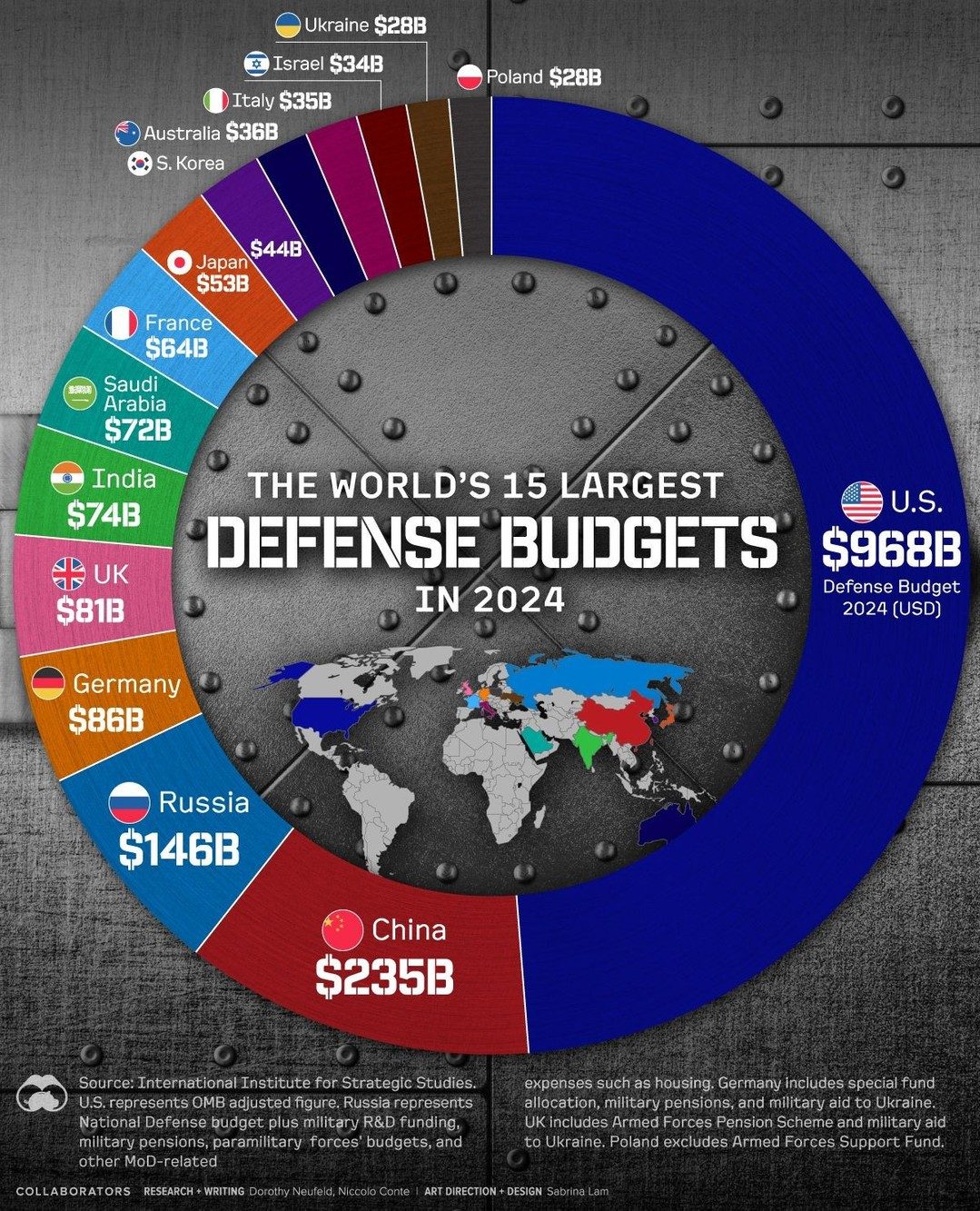
In 2024, the United States led the world with nearly $1 trillion allocated to defense, a figure that surpassed the combined military budgets of the next 12 largest spenders. Russia, with the third-largest defense budget, spent 6% of its national income on military endeavors, marking the highest proportion since the Cold War. This analysis delves into the top 15 defense budgets of 2024, providing a comprehensive view of global military spending based on data from the International Institute for Strategic Studies.
Context: The Importance of Defense Budget Analysis
Understanding global defense budgets is crucial for several reasons. It offers insights into geopolitical priorities, economic commitments, and potential areas of international tension or cooperation. Defense spending often correlates with a country's strategic goals, technological advancements, and regional security concerns. By examining these budgets, we gain a clearer picture of the world's security landscape and the resources allocated to maintain it.
Global Defense Spending: 2024 Rankings
United States: The Largest Defense Budget
The United States tops the list with a defense budget of $968 billion. This substantial investment reflects the country's global security commitments, advanced military technology, and extensive defense infrastructure. The U.S. budget includes significant allocations for research and development, military operations, and support for allies.
China: The Second-Largest Spender
China follows with a defense budget of $235 billion. This investment underscores China's growing military capabilities and its strategic ambitions in the Asia-Pacific region. China's military modernization efforts, including advancements in naval and air capabilities, are driven by this substantial budget.
Russia: Third-Largest Defense Budget
Russia's defense budget of $146 billion is significant, particularly given that it represents 6% of its national income. This high proportion indicates Russia's prioritization of military strength, especially in the context of regional conflicts and geopolitical tensions. Russia's budget includes funding for research and development, military pensions, and aid to Ukraine.
Other Major Spenders
- Saudi Arabia: With a budget of $72 billion, Saudi Arabia's defense spending is driven by regional security concerns and its involvement in conflicts, including the Yemen war.
- India: India's $74 billion budget reflects its focus on modernizing its military and maintaining regional dominance, particularly in the context of its border disputes with China and Pakistan.
- United Kingdom: The UK's $81 billion defense budget supports its global military presence and involvement in NATO operations.
- Germany: Germany's $86 billion budget is part of its commitment to increasing defense spending to 2% of GDP, in line with NATO guidelines.
- Japan: Japan's $44 billion defense budget is driven by regional security concerns, particularly its need to counterbalance China's growing military capabilities.
- South Korea: South Korea's defense spending is focused on maintaining a strong military posture against potential threats from North Korea.
Additional Spenders
Smaller but still significant budgets include:
- Italy: $35 billion
- Australia: $36 billion
- Israel: $34 billion
- Ukraine: $28 billion
These countries' defense budgets are influenced by their unique security challenges and strategic goals. For example, Israel's budget is largely driven by its ongoing conflicts with neighboring states, while Ukraine's spending is heavily influenced by its war with Russia.
Practical Tips for Understanding Defense Budgets
Analyzing the Data
When examining defense budgets, consider the following factors:
- GDP Share: The proportion of a country's GDP allocated to defense can provide insights into its priorities and economic health.
- Research and Development: Significant investments in R&D indicate a focus on military innovation and technological superiority.
- Regional Conflicts: Countries involved in regional conflicts or border disputes tend to have higher defense budgets.
Understanding the Context
It's essential to consider the broader context when evaluating defense budgets. Factors such as geopolitical tensions, regional alliances, and internal security threats can all influence how a country allocates its defense resources.
Comparing Data Sources
Different sources, such as the International Institute for Strategic Studies or the Stockholm International Peace Research Institute (SIPRI), may provide varying data. It's important to compare and contrast these sources to get a comprehensive understanding of global defense spending.
Important Takeaways
Key Insights
- The United States continues to lead global defense spending, reflecting its extensive military commitments and technological advancements.
- Russia's high proportion of GDP allocated to defense highlights its strategic priorities and regional tensions.
- China's significant investment in defense underscores its growing military capabilities and regional ambitions.
- Smaller but strategic budgets, such as those of Saudi Arabia, India, and South Korea, reflect unique security challenges and strategic goals.
Conclusion
The defense budgets of the top 15 spenders in 2024 provide a snapshot of the world's security priorities and geopolitical dynamics. From the United States' extensive military commitments to Russia's high GDP share, and China's growing capabilities, these budgets reflect each country's strategic goals and regional concerns. By understanding these allocations, we gain valuable insights into the global security landscape and the resources dedicated to maintaining it.
Watch the Reel
Questions readers ask
Which country has the largest defense budget in 2024?
The United States has the largest defense budget in 2024, with an allocation of nearly $1 trillion. This amount is more than the combined military budgets of the next 12 largest spenders. This figure underscores the US's commitment to maintaining its global military presence and technological superiority.
How much does Russia spend on its military in 2024?
Russia allocated 6% of its national income to defense spending in 2024, the highest proportion since the Cold War. This resulted in a significant military budget, making Russia the third-largest spender globally. This level of spending reflects Russia's strategic priorities and geopolitical ambitions.
Why is it important to analyze global defense budgets?
Analyzing global defense budgets offers valuable insights into geopolitical priorities, economic commitments, and potential areas of international tension. Understanding where and how countries invest in their military forces provides a clearer picture of global power dynamics and potential future conflicts. This information is crucial for policymakers and analysts to make informed decisions.
What are the implications of the US leading global defense spending in 2024?
The US leading global defense spending in 2024 implies several strategic and economic implications. It signals the US's continued commitment to maintaining global military superiority, influencing international security dynamics, and driving technological advancements in defense. Furthermore, this level of spending can have significant economic impacts, both domestically and globally, affecting industries and trade.
What is the ranking of the Ukraine defense budget in 2024?
The article does not provide a specific ranking or figure for Ukraine's defense budget in 2024. However, understanding Ukraine's military spending is crucial given the ongoing conflict and its strategic importance in Europe. For the most accurate and up-to-date information, it is recommended to refer to reliable sources such as the International Institute for Strategic Studies.
How can I compare military budgets of different countries in 2024?
To compare military budgets of different countries in 2024, you can refer to comprehensive data sources such as the International Institute for Strategic Studies. These sources provide detailed information on defense spending, allowing you to analyze and compare allocations, trends, and strategic priorities. This comparison can offer insights into each country's defense strategies, technological advancements, and geopolitical influence.
Recent articles
Fresh deep dives from the latest Reels we unpacked.




Comments
Be the first to comment.