Housing Affordability in the World's Most Expensive Cities
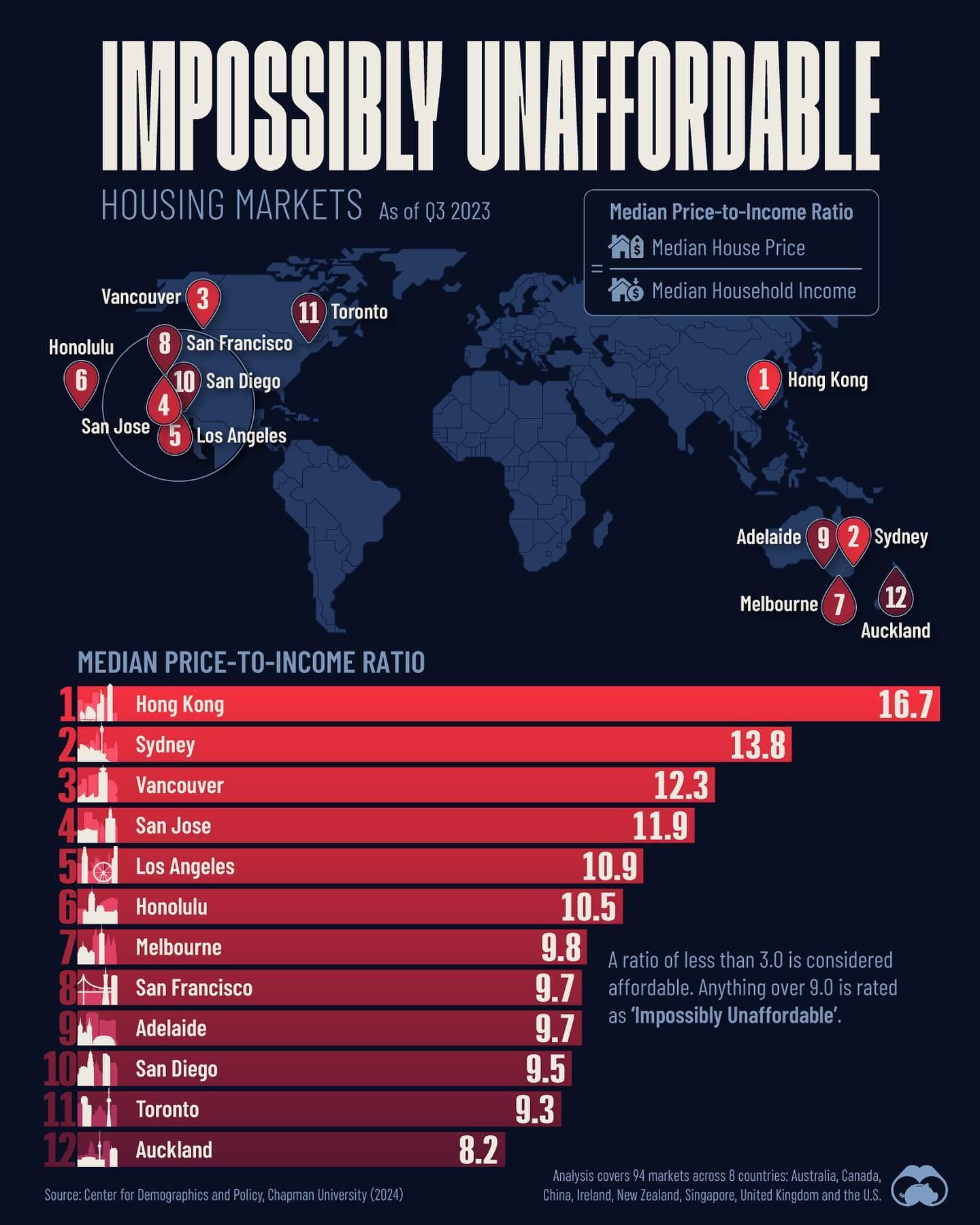
In recent years, housing affordability has become a pressing issue, especially in major cities around the world. In nearly 60% of the top 12 least affordable housing markets, the median price of a house is over 11 times greater than the median household income. This stark disparity is particularly evident in North American cities such as Vancouver, Canada, and San Jose, U.S.
A comprehensive study by the 2024 edition of the Demographia International Housing Affordability Report sheds light on this critical issue. The report highlights the median price-to-income ratio across various cities globally, providing a stark visual comparison of housing affordability. By examining this data, we can gain a clearer understanding of the challenges facing potential homebuyers in these markets.
Context / Why this Matters
Understanding housing affordability is essential for both policymakers and prospective homebuyers. The median price-to-income ratio is a key metric that helps gauge the affordability of housing in a given area. This ratio is calculated by dividing the median house price by the median household income. A ratio of less than 3.0 is generally considered affordable, while anything over 9.0 is deemed "impossibly unaffordable."
This data is crucial for several reasons:
- Economic Impact: High housing costs can strain household budgets, limiting disposable income for other essential needs and reducing overall economic activity.
- Social Mobility: Affordable housing is a cornerstone of social mobility. High housing costs can trap families in cycles of poverty, making it difficult for them to save, invest, or move to better opportunities.
- Urban Planning: Understanding affordability helps urban planners and policymakers design policies and initiatives that promote equitable housing development.
- Investment Decisions: For investors, knowing the affordability of different markets can guide them in making informed decisions about where to buy and rent properties.
Main Discussion
The Least Affordable Markets
The 2024 edition of the Demographia report analyzed 94 markets across eight countries, including Canada, China, Ireland, New Zealand, Singapore, the United Kingdom, and the United States. The findings highlight the severity of the housing affordability crisis in several key cities.
North America
Vancouver, Canada: With a median price-to-income ratio of 12.6, Vancouver tops the list of unaffordable cities in North America. The high cost of housing in Vancouver is influenced by factors such as limited land availability, stringent zoning regulations, and high demand from both local residents and foreign investors.
San Jose, U.S. San Jose, located in the heart of Silicon Valley, has a median price-to-income ratio of 11.5. The region's booming tech industry has driven up housing costs, making it one of the least affordable cities in the world. The influx of high-paying tech jobs has led to a surge in demand for housing, outpacing the supply of new homes.
Other cities in North America that face similar challenges include:
- San Francisco (10.3)
- Toronto (9.0)
- Honolulu (8.9)
- San Diego (8.6)
- Los Angeles (7.9)
Global Perspective
While North America faces significant challenges, other regions are also grappling with affordability issues. According to the report, the following cities stand out for their high median price-to-income ratios:
- Hong Kong (16.7)
- Sydney (12.6)
- Adelaide (10.3)
- Melbourne (8.1)
- Auckland (8.0)
These cities, like their North American counterparts, are characterized by strong economies, high demand for housing, and limited supply, contributing to their high housing costs.
Practical Tips
For those navigating the challenging housing market, here are some practical tips:
Research and Planning
Before making any decisions, conduct thorough research on the housing market trends in your target area. Factors such as employment opportunities, infrastructure, and future development plans can influence property values and affordability.
Financial Preparedness
Ensure you are financially prepared to handle the costs associated with buying a home. This includes not only the purchase price but also additional expenses like closing costs, property taxes, insurance, and maintenance. Working with a financial advisor can help you create a realistic budget and savings plan.
Consider Alternative Housing Options
Explore alternative housing options such as condominiums, townhouses, or even renting for a period while you save for a down payment. These options might be more affordable in the short term and can provide a stepping stone to owning a home.
Government Assistance Programs
Look into government programs and initiatives aimed at first-time homebuyers or those with low to moderate incomes. These programs often offer financial assistance, subsidies, or tax incentives that can make homeownership more accessible.
Negotiation and Flexibility
Be prepared to negotiate and remain flexible in your property search. This might involve being open to different neighborhoods, considering fixer-upper properties, or being patient in waiting for the right opportunity to arise.
Important Takeaways
The housing affordability crisis is a global issue, with many major cities facing significant challenges. The median price-to-income ratio is a critical metric that helps us understand the severity of this problem. For those facing these challenges, thorough research, financial preparedness, and flexibility are essential. Government assistance programs can also play a crucial role in making homeownership more accessible.
Conclusion
The housing affordability crisis is a multifaceted issue that requires attention from policymakers, urban planners, and potential homebuyers alike. By understanding the underlying factors and utilizing practical strategies, individuals can navigate this challenging market more effectively. As cities continue to grow and evolve, addressing housing affordability will be crucial for creating equitable and sustainable urban environments.
Watch the Reel
Questions readers ask
What are the least affordable housing markets in the world as of 2024?
The least affordable housing markets in 2024 are primarily located in major cities across the globe. According to the Demographia International Housing Affordability Report, these markets often have a median home price-to-income ratio exceeding 11, meaning the median home price is over 11 times the median household income, making housing a significant financial burden.
Why is housing affordability a critical issue in cities like Vancouver and San Jose?
Cities like Vancouver and San Jose are among the least affordable in the world, with median home prices that are disproportionately high compared to median household incomes. This disparity can strain household budgets, limit mobility, and affect economic activity. Understanding this dynamic is essential for both local residents and policymakers.
How does the price-to-income ratio help in understanding housing affordability?
The price-to-income ratio is a crucial metric for assessing housing affordability. It compares the median home price to the median household income, providing a clear picture of how much of a household's income is needed to purchase a home. A high ratio indicates that homes are less affordable, as a larger portion of income is required for housing costs.
What are the top cities to avoid in 2024 based on housing affordability?
As per the recent analysis, the top cities to avoid in 2024 based on housing affordability include several major metropolitan areas, especially in North America. These cities have a median home price that exceeds 11 times the median household income, making it challenging for residents to afford housing. Vancouver, San Jose, and San Francisco are among the worst-affected cities.
How does the housing affordability crisis impact economic activity?
The housing affordability crisis can have a profound impact on economic activity. High housing costs can limit social mobility, as residents struggle to save and invest. This can lead to reduced consumer spending, lower economic productivity, and slower economic growth, affecting both individuals and the broader economy. Household budgets are stretched, reducing disposable income for other goods and services.
What are the implications of the housing affordability crisis for investors?
For investors, the housing affordability crisis presents both challenges and opportunities. While high housing costs can make investments more attractive in terms of potential returns, they also pose risks. Market volatility and potential regulatory changes aimed at addressing affordability can impact investment strategies. Investors need to carefully consider these factors when evaluating opportunities in the world's least affordable housing markets.
What are the most affordable cities in the world, in contrast to the least affordable?
In contrast to the least affordable cities, affordable cities typically have a lower price-to-income ratio, meaning homes are more attainable for residents. In 2024, these cities often provide a higher standard of living and better opportunities for long-term investment due to their lower housing costs. However, affordability does not necessarily equate to quality of life, so research is important.
Recent articles
Fresh deep dives from the latest Reels we unpacked.




Comments
Be the first to comment.