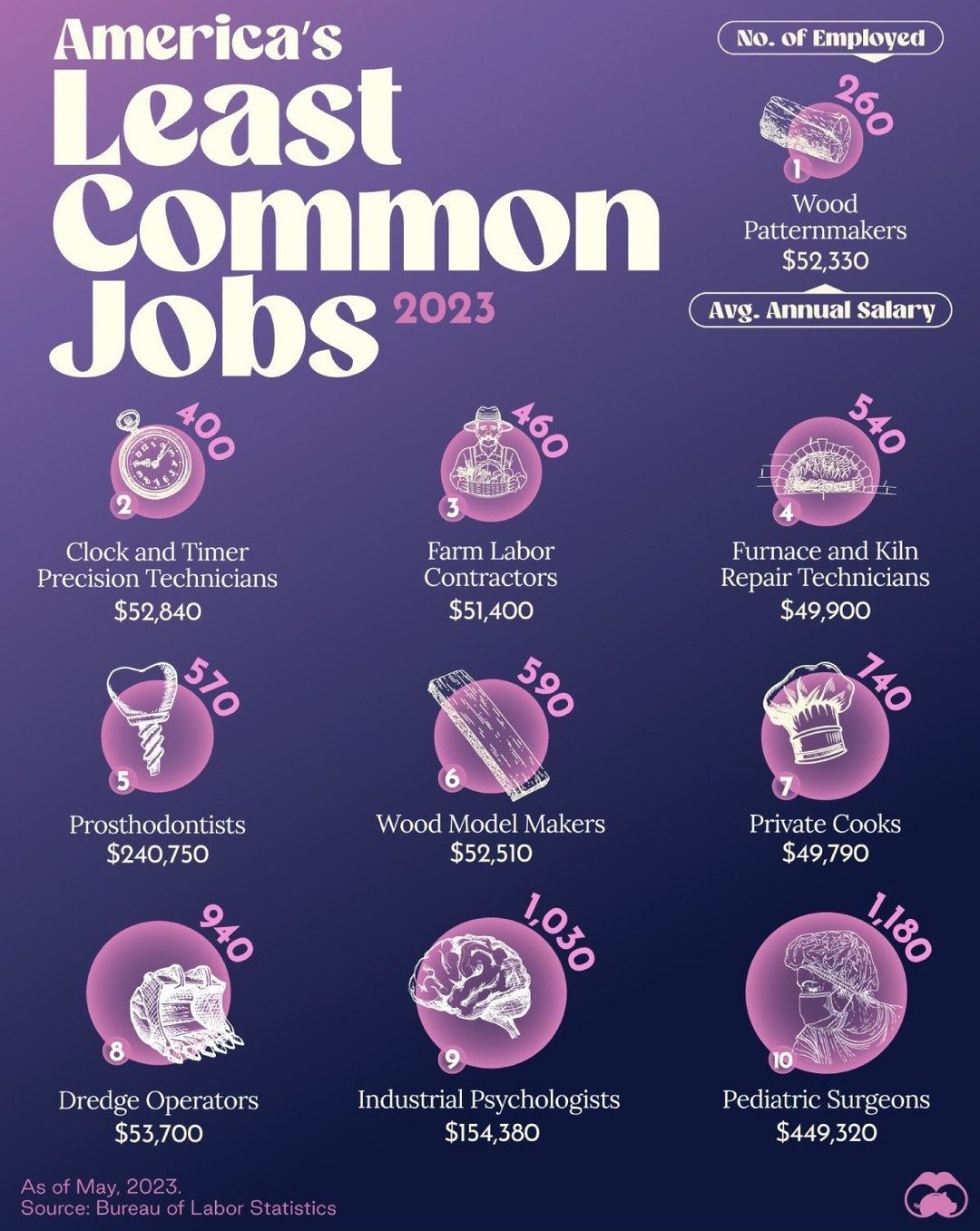
Least Common Jobs in the U.S. in 2023
The landscape of employment in the United States is vast and varied, with numerous professions contributing to the economy. However, certain jobs stand out due to their rarity. These least common jobs offer unique insights into the specialized skills and niches that exist within the American workforce. Understanding these roles can provide a deeper appreciation for the diversity and complexity of the job market.
Context / Why this matters
The Bureau of Labor Statistics (BLS) tracks the number of individuals employed in various occupations, providing valuable data on the least common jobs. This information is crucial for several reasons. It highlights the unique skills and expertise required for these roles, showcases the economic contributions of niche professions, and offers insights into emerging and declining industries. By understanding the least common jobs, we can better appreciate the broader labor market and the diverse opportunities it presents.
Main discussion
The Rarest Occupation: Wood Patternmakers
At the top of the list is the rarest occupation in the U.S.: wood patternmakers. With only 260 professionals employed nationwide, these specialists create wooden models and patterns used in various manufacturing processes. Their work is essential for industries that require precise molds and prototypes, such as metal casting and woodworking. Despite their small numbers, wood patternmakers play a vital role in maintaining the craftsmanship and precision needed for specialized production.
Highly Specialized Medical Professionals
The medical field also features some of the least common jobs. For instance, pediatric surgeons make the list, with only 1,180 professionals practicing in the U.S. These specialists focus on surgical procedures for infants, children, and adolescents, requiring extensive training and expertise. Their work is critical for addressing complex medical issues in young patients, highlighting the specialized nature of this role. Prosthodontists, who specialize in dental prosthetics, are another highly specialized medical profession, with an average annual salary of $240,750.
Precision and Craftsmanship
Several of the least common jobs involve precision and craftsmanship, such as precision technicians and wood model makers. Precision technicians, earning an average of $52,840 annually, use specialized tools and techniques to create precise components for various industries. Wood model makers, with an average salary of $52,510, create detailed wooden models used in prototyping and design. These professions require a high level of skill and attention to detail, making them essential for industries that demand precision and craftsmanship.
Essential yet Undersized Roles
Farm laborers are another group on the list, with approximately $51,400 as their average annual salary. Although farming is a cornerstone of the American agriculture sector, the number of farm laborers has significantly decreased. This decline is due to various factors, including mechanization and shifts in agricultural practices. Despite their importance in maintaining food security, farm laborers are one of the least common jobs in the U.S.
Unique and Specialized Roles
Private cooks, earning around $49,790 annually, are another interesting category. These professionals provide personalized culinary services for private clients, often in high-end settings. Their work involves creating custom menus, sourcing ingredients, and preparing meals tailored to individual preferences. The rarity of this role underscores the demand for specialized culinary services in select niches.
Understanding Unusual Occupations
Dredge operators, with an average salary of $53,700, specialize in operating dredges, machines used for underwater excavation. Their work is essential for maintaining waterways, harbors, and other aquatic environments, making them a critical part of infrastructure maintenance. Industrial psychologists, earning around $154,380 annually, apply psychological principles to organizational settings, focusing on improving workplace efficiency, morale, and productivity. Their work involves conducting research, developing strategies, and implementing programs to enhance organizational behavior and performance.
Practical tips
When considering a career in one of the least common jobs, it's essential to weigh the advantages and challenges. Specialized roles often come with higher earning potential and unique opportunities for growth. However, they may also require extensive training, specialized skills, and adaptability to evolving industry demands. Here are some practical tips for those interested in pursuing a career in a niche profession:
- Research and Understand the Role: Thoroughly investigate the job requirements, skills needed, and industry trends. This will help you determine if the role aligns with your interests and capabilities.
- Gain Relevant Education and Training: Many of the least common jobs require specialized education and training. Pursue relevant courses, certifications, and apprenticeships to build the necessary skills.
- Network and Seek Mentorship: Connect with professionals in the field to gain insights, advice, and potential job opportunities. Mentorship can provide valuable guidance and support as you navigate your career path.
- Stay Adaptable: The job market is constantly evolving, and niche professions are no exception. Be prepared to adapt to new technologies, methodologies, and industry demands to stay relevant and competitive.
Important takeaways
The least common jobs in the U.S. offer unique perspectives on the diversity and complexity of the American workforce. These roles highlight the specialized skills and expertise required for niche professions, showcasing the economic contributions and emerging trends within various industries. Understanding these least common jobs can provide valuable insights into the broader labor market and the diverse opportunities it presents.
Conclusion
From wood patternmakers to pediatric surgeons, the least common jobs in the U.S. are a testament to the specialized skills and expertise that drive the economy. These roles, while rare, play a crucial part in various industries, contributing to innovation, precision, and craftsmanship. By exploring these least common jobs, we gain a deeper appreciation for the diverse and complex nature of the American workforce, and the unique contributions of specialized professionals.
Watch the Reel
Questions readers ask
What are some of the rarest jobs in America for 2023?
The rarest jobs in America for 2023 include specialized roles such as wood patternmakers, pediatric surgeons, and precision technicians. These professions require unique skills and expertise, making them highly uncommon in the job market.
Why are wood patternmaker jobs considered rare?
Wood patternmaker jobs are rare because they involve creating precise patterns and models, often used in manufacturing. This role demands a high level of craftsmanship and technical skill, which is difficult to find and requires years of experience.
What makes pediatric surgeon jobs so unique?
Pediatric surgeon jobs are unique due to the specialized medical training and skills required to perform surgeries on infants and children. Pediatric surgeons must have a deep understanding of pediatric physiology and anatomy, making the role highly specialized and less common.
How does the Bureau of Labor Statistics determine the rarest jobs?
The Bureau of Labor Statistics (BLS) determines the rarest jobs by tracking employment data across various occupations. They identify the least common jobs by analyzing the number of individuals employed in each role, providing insights into the scarcity of certain professions in the job market.
What is the significance of rare and unique professions in the job market?
Rare and unique professions are significant because they highlight the diverse skills and expertise required in the job market. These roles are crucial for various industries and showcase the economic contribution of specialized labor, often overlooked by the broader workforce.
What are some other uncommon jobs in the U.S.?
Other uncommon jobs in the U.S. include farm laborers, precision technicians, and other niche labor roles. These jobs are less common due to their specific requirements and the declining demand for such roles in certain industries, making them valuable in their unique contributions.
How do these rare jobs influence the 2023 job market trends?
The presence of rare jobs in the 2023 job market trends highlights the need for specialized skills and the importance of these niches. These roles demonstrate the evolving job requirements and the continued need for unique expertise, which helps drive innovation and productivity across various sectors.
Recent articles
Fresh deep dives from the latest Reels we unpacked.




Comments
Be the first to comment.