College Degree Earnings: A Deep Dive into 10-Year Earnings and ROI
Choosing a college degree is a significant decision that can shape your financial future. When selecting a major, it's essential to consider not only your interests and aptitudes but also the potential return on investment (ROI) and added earnings over time. Let's explore the 10-year added earnings and ROI for various bachelor's degree fields, grounded in data from the Education Data Initiative.
Why This Matters
Understanding the economic impact of different college degrees can help students and their families make informed decisions. With rising tuition costs, it's crucial to know which degrees are likely to recoup their full cost within a decade and which fields offer the highest added earnings. This information can guide career choices and financial planning.
Main Discussion
Highest 10-Year Added Earnings
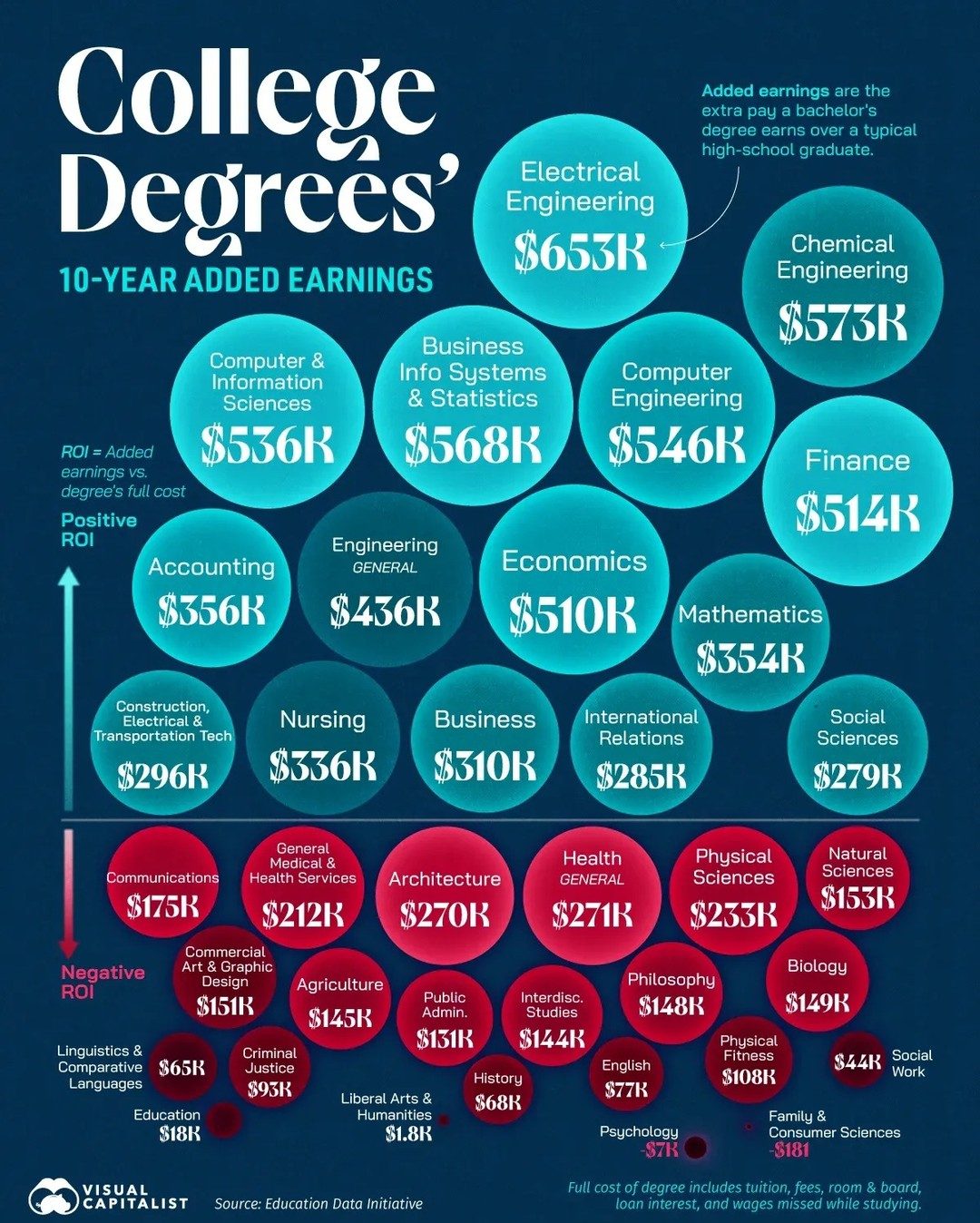
According to the data, electrical engineering graduates earn the highest added earnings over their first 10 working years, with a staggering $653,000. This is significantly higher than other fields. Close behind are graduates in computer and information sciences ($568,000), economics ($510,000), finance ($514,000), and engineering ($436,000).
These high earnings reflect the strong demand for professionals in technical and analytical fields. Employers are willing to pay premium salaries for expertise in areas like electrical engineering, computer science, and economics, making these degrees attractive options for those seeking lucrative careers.
Highest Return on Investment (ROI)
While added earnings provide a picture of potential income, ROI offers a different perspective by calculating the return on the cost of the degree. The highest ROI goes to business information systems and statistics graduates, with a remarkable 135% return. This means that for every dollar invested in their education, graduates earn $1.35 in return within the first 10 years. Despite ranking third in added earnings, this field offers an exceptional return on investment.
Other high-ROI degrees include criminal justice (120%), business (122%), accounting (107%), and computer and information sciences (124%). These fields not only offer strong earning potential but also provide a solid return on the educational investment, making them financially sound choices.
Degrees with Lower ROI
Some degrees have a lower ROI, which means that graduates may not recoup the full cost of their education within a decade. For instance, family and consumer sciences has a negative ROI of -$181,000, indicating that graduates may not earn enough to cover their educational expenses.
Public administration ($68,000), humanities and liberal arts ($138,000), and general studies ($151,000) also have relatively lower 10-year added earnings, suggesting that these fields may not provide the same financial returns as more technical or specialized degrees.
The Full Picture
It's essential to consider that these figures are averages and can vary based on location, industry, and employer. Many factors, including individual skills, networking, and career progression, can influence earning potential.
Practical Tips
When evaluating college degrees and their potential ROI, consider the following tips:
Evaluate Long-Term Career Goals
While ROI and added earnings are crucial, assess your long-term career goals and interests. Pursuing a degree that aligns with your passion and career aspirations can lead to greater job satisfaction and career success, regardless of the immediate financial returns.
Consider Future Trends
Look at emerging fields and future trends that may impact job demand. Degrees in growing sectors, such as technology, healthcare, and sustainability, are more likely to offer strong earning potential in the long run.
Network and Gain Experience
Building a robust professional network and gaining relevant experience through internships, part-time jobs, and extracurricular activities can significantly impact your earning potential. These experiences can open doors to better job opportunities and higher salaries.
Important Takeaways
ROI and Added Earnings Are Not the Only Factors
While ROI and added earnings are valuable metrics, they should not be the sole determinants in choosing a major. Personal interests, career goals, and job satisfaction are equally important factors.
Technical and Analytical Fields Offer Strong Returns
Degrees in fields like electrical engineering, computer science, and finance tend to offer strong earning potential and high ROIs. These areas are in high demand, making them financially rewarding choices.
Not All Degrees Recoup Full Costs
Only 15 of 37 majors recoup their full cost within a decade, indicating that some degrees may not provide immediate financial returns. It's essential to weigh the cost and potential ROI carefully.
Financial Planning is Crucial
Consider the cost, financing options, and potential return on investment when selecting a degree. Planning for tuition, living expenses, and potential debt can help manage financial expectations and ensure a solid financial foundation.
Conclusion
Choosing a college degree involves more than just academic interest. It's a significant financial decision that can shape your future earnings and career trajectory. By understanding the 10-year added earnings and ROI for various degrees, you can make informed choices that align with your career aspirations and financial goals.
Watch the Reel
Questions readers ask
What are the top 3 highest earning college majors based on 10-year earnings?
The top 3 highest earning college majors based on 10-year earnings are Electrical Engineering, Computer and Information Sciences, and Economics. These fields offer strong earning potential and a significant return on investment (ROI).
Why is Electrical Engineering one of the highest paying college majors?
Electrical Engineering is one of the highest paying college majors due to strong demand in various industries, including technology, automotive, and energy. The roles in this field often involve designing and developing cutting-edge technologies that are crucial for modern infrastructure. And it provides a lot of job security and high salary.
How do Computer and Information Sciences majors fare in terms of 10-year earnings?
Computer and Information Sciences majors fare exceptionally well in terms of 10-year earnings. This field is in high demand due to the increasing reliance on technology. The graduates can expect a variety of high-paying job opportunities, including software development, data analysis, and cybersecurity.
What makes Economics a top college degree for ROI?
Economics is a top college degree for ROI because it equips students with analytical and problem-solving skills that are valuable in various sectors, including finance, government, and consulting. Additionally, economics graduates often secure positions with competitive salaries, making this degree a solid investment.
Which business degrees offer the best ROI based on 10-year earnings?
Among business degrees, those with a focus on finance, management, and marketing tend to offer the best ROI based on 10-year earnings. These fields provide a wide range of career opportunities in various industries, with graduates often securing roles in corporate management, financial analysis, and strategic planning.
Do all engineering degrees provide high 10-year earnings and ROI?
Not all engineering degrees provide equally high 10-year earnings and ROI, but many do very well. Electrical Engineering is at the top, but other high-paying engineering degrees include Mechanical, Aerospace, and Chemical Engineering. These fields often involve complex problem-solving and technical skills that are in high demand across multiple industries.
Related deep dives
Similar reads based on topic and creator.

Recent articles
Fresh deep dives from the latest Reels we unpacked.




Comments
Be the first to comment.