Currency Trading Dynamics: Top Currencies Traded Against the U.S. Dollar
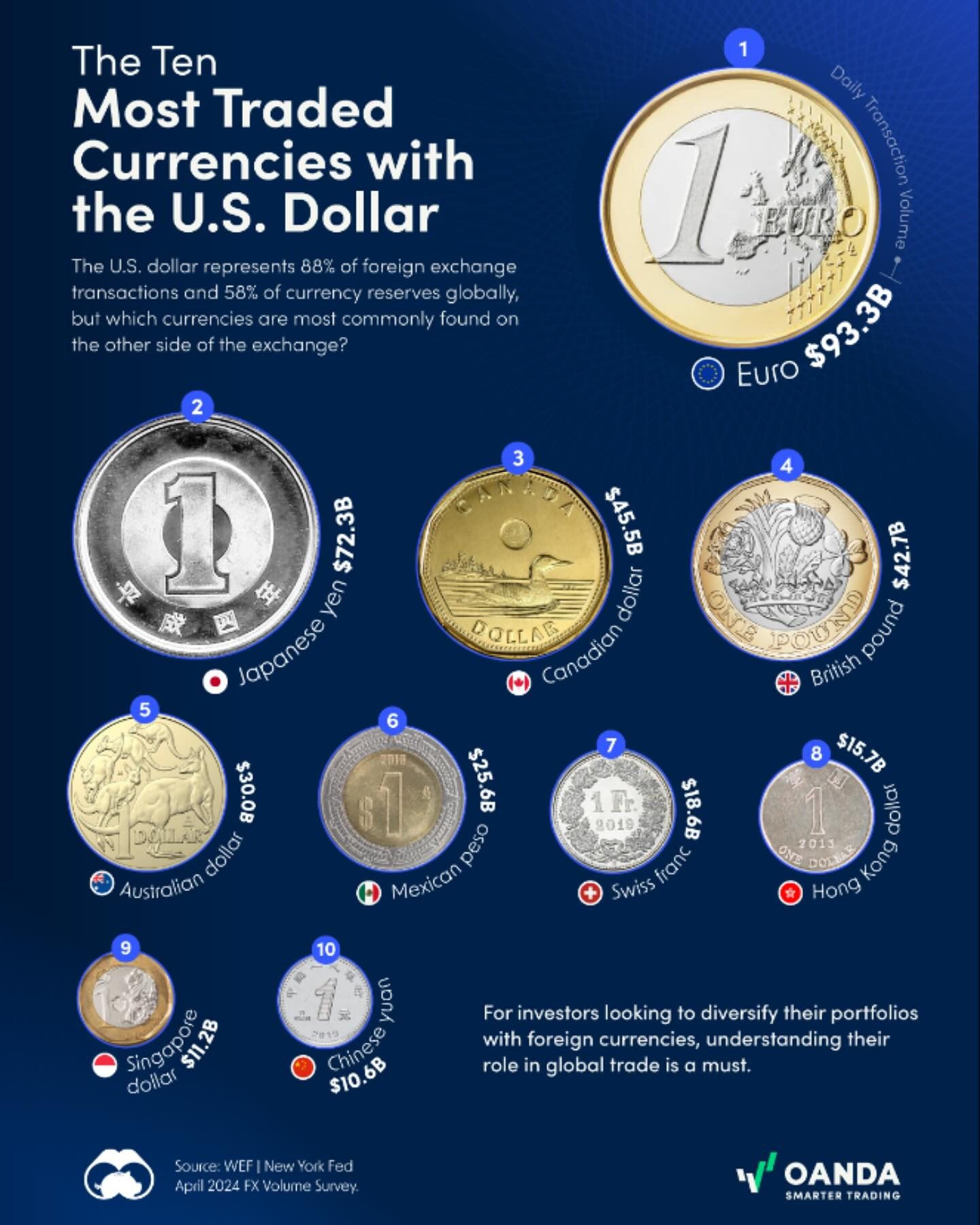
The euro was the most-traded currency against the U.S. dollar (USD) in April 2024, with an average daily trading volume of $93.3 billion. This highlights the euro's significant role in global foreign exchange (FX) markets. The U.S. dollar, involved in 88% of all global FX trades, is a cornerstone of international currency trading. This article delves into the top currencies traded against the USD, providing insights into the dynamics of currency trading and the key players in the market.
Why This Matters
Currency trading is a critical component of the global financial system, influencing everything from international trade to investment strategies. Understanding which currencies are most actively traded against the USD provides valuable context for investors, traders, and economists. The U.S. dollar's dominance in FX markets means that fluctuations in these currencies can have far-reaching economic implications.
The Top Currencies Traded Against the U.S. Dollar
Euro (EUR)
The euro, with an average daily trading volume of $93.3 billion against the USD, holds the top position. This high trading volume reflects the euro's status as a major reserve currency and its importance in international trade. The eurozone's economic stability and the European Central Bank's monetary policies significantly influence the euro's value and trading dynamics.
Japanese Yen (JPY)
The Japanese yen follows closely with an average daily trading volume of $72.3 billion. The yen is known for its role as a safe-haven currency, often sought during times of global economic uncertainty. Japan's export-driven economy and the Bank of Japan's policies also play crucial roles in determining the yen's value.
Canadian Dollar (CAD)
The Canadian dollar, with a daily trading volume of $45.5 billion, is another key player. The CAD is heavily influenced by commodity prices, particularly oil, given Canada's significant oil exports. Changes in global oil markets can lead to substantial fluctuations in the CAD's value.
British Pound (GBP)
The British pound, trading at $42.7 billion daily, is another major currency. The GBP's value is influenced by factors such as Brexit developments, UK economic data, and the Bank of England's monetary policies. The pound's volatility can provide trading opportunities but also presents risks.
Australian Dollar (AUD)
The Australian dollar, with a daily trading volume of $11.2 billion, is closely tied to commodity prices, particularly metals and energy. The AUD's performance is closely watched by traders as it can serve as a barometer for global commodity markets.
Chinese Yuan (CNY)
The Chinese yuan, trading at $10.6 billion daily, reflects China's growing economic influence. The yuan's value is managed by the People's Bank of China, and its internationalization efforts have increased its trading volume.
Mexican Peso (MXN)
The Mexican peso, with a daily trading volume of $8.6 billion, is influenced by factors such as trade relations with the U.S. and domestic economic policies. The peso's value can be volatile, particularly in response to U.S. economic indicators and trade policies.
Swiss Franc (CHF)
The Swiss franc, trading at $8.4 billion daily, is known for its stability and safe-haven status, similar to the Japanese yen. The Swiss National Bank's policies and the franc's role in global trade contribute to its value and trading dynamics.
Hong Kong Dollar (HKD)
The Hong Kong dollar, with a daily trading volume of $8.1 billion, is pegged to the U.S. dollar, which stabilizes its value. The HKD's trading volume is driven by Hong Kong's role as a global financial hub.
Singapore Dollar (SGD)
The Singapore dollar, trading at $1.2 billion daily, is influenced by Singapore's status as a major financial center and its open economy. The Monetary Authority of Singapore's policies and the country's economic performance affect the SGD's value.
Practical Tips for Trading Against the U.S. Dollar
- Stay Informed: Keep up-to-date with economic data releases, central bank announcements, and geopolitical events that can influence currency values.
- Use Technical Analysis: Employ technical analysis tools to identify trends and potential trading opportunities.
- Diversify Your Portfolio: Spread your investments across multiple currencies to mitigate risks associated with any single currency.
- Risk Management: Utilize stop-loss orders and position sizing to manage risk effectively.
- Monitor Global Events: Pay attention to global events that can impact currency markets, such as elections, trade agreements, and economic crises.
- Leverage Expert Insights: Follow insights from financial analysts and experts who specialize in currency trading.
Important Takeaways
- The U.S. dollar is involved in 88% of all global FX trades, making it a critical component of currency markets.
- The euro is the most-traded currency against the USD, followed by the Japanese yen and the Canadian dollar.
- Currency trading volumes reflect economic stability, commodity prices, and central bank policies.
- Trader behavior, geopolitical events, and economic indicators significantly influence currency values.
Conclusion
Understanding the dynamics of the top currencies traded against the U.S. dollar provides valuable insights into global currency markets. The euro, Japanese yen, Canadian dollar, British pound, Australian dollar, Chinese yuan, Mexican peso, Swiss franc, Hong Kong dollar, and Singapore dollar each play distinct roles in FX trading. By staying informed, using technical analysis, and managing risk effectively, traders can navigate these markets more confidently.
Watch the Reel
Related deep dives
Similar reads based on topic and creator.


Recent articles
Fresh deep dives from the latest Reels we unpacked.




Comments
Be the first to comment.