Crypto Security Risks
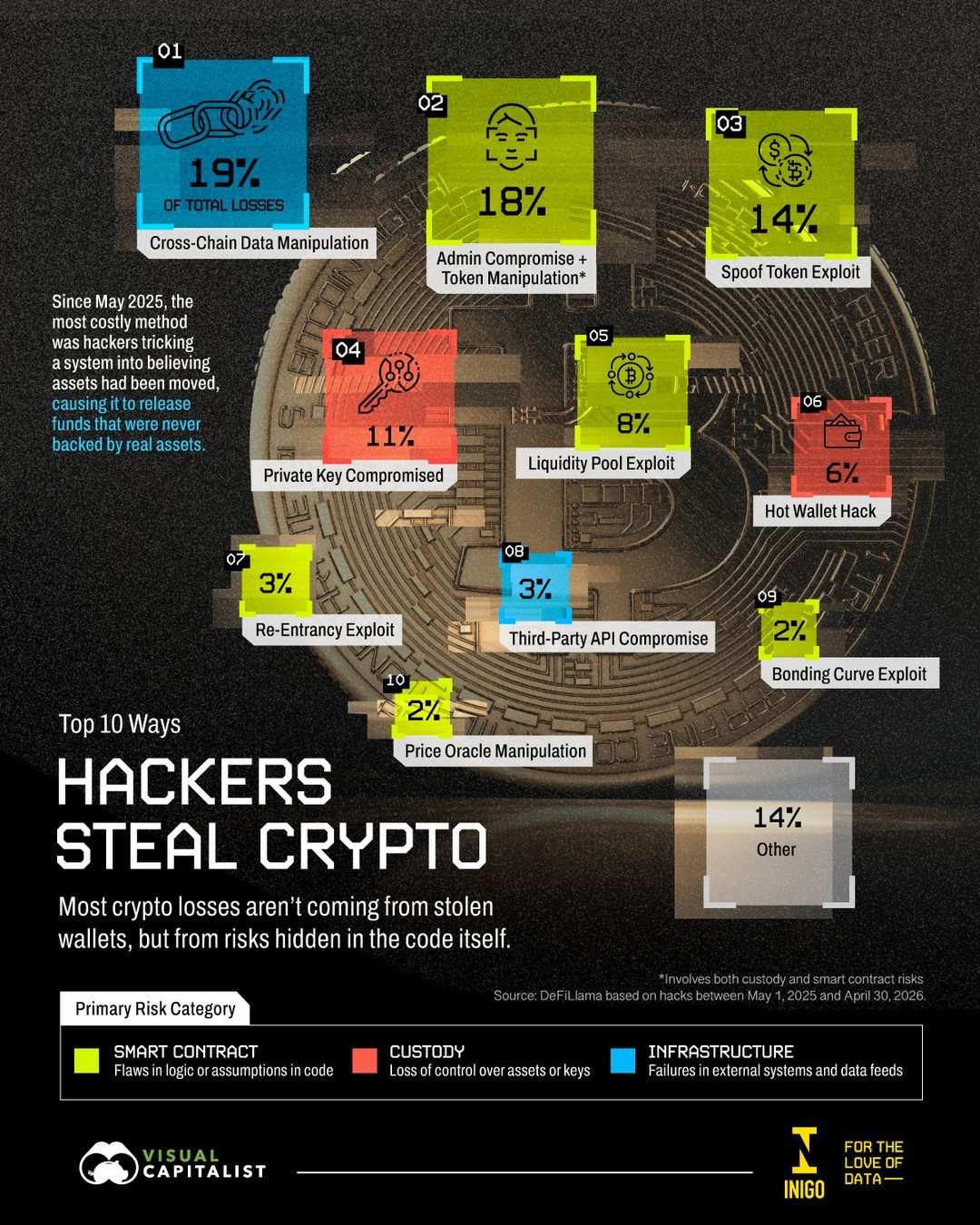
Cryptocurrency enthusiasts and investors alike must stay vigilant and informed about the security risks that come with digital assets. Understanding these risks is crucial for safeguarding investments and maintaining trust in the blockchain ecosystem. The primary risks are centered around vulnerabilities within the code itself, rather than stolen wallets. Let's dive into the top ten ways hackers steal cryptocurrency and discuss the implications of each method.
Why this matters
Cryptocurrency theft is a significant issue that affects not just individual investors but also the overall credibility of the blockchain industry. With the increasing value of digital assets, hackers are constantly evolving their methods to exploit vulnerabilities. By understanding these methods, users can better protect their investments and mitigate risks.
Main discussion
Code vulnerabilities
The infographic highlights that most cryptocurrency losses are not due to stolen wallets but from vulnerabilities within the code. This underscores the importance of robust code audits and security protocols. Let's break down the primary categories of risks:
Smart Contract Flaws
Smart contracts are self-executing contracts with the terms of the agreement directly written into lines of code. While they offer many advantages, they are also susceptible to flaws in logic or assumptions in the code. This category includes:
- Re-Entrancy Exploit (3% of total losses) - This occurs when a contract calls an external contract before updating its state, allowing the external contract to re-enter the calling contract and manipulate its state.
Cross-Chain Data Manipulation
Cross-chain technology allows different blockchains to interact, enabling interoperability. However, this also introduces risks such as:
- Cross-Chain Data Manipulation (19% of total losses) - Hackers exploit vulnerabilities in cross-chain data exchanges to manipulate information, leading to unauthorized transactions or asset losses.
- Price Oracle Manipulation (14% of total losses) - Price oracles are data feeds that provide external information to smart contracts. Manipulating these feeds can lead to incorrect price data, resulting in financial losses.
Private Key Compromise
Private keys are essential for accessing and managing cryptocurrency holdings. Compromising a private key can lead to:
- Private Key Compromise (11% of total losses) - This involves gaining unauthorized access to a user's private key, allowing hackers to transfer funds to their own wallets.
- Hot Wallet Hack (8% of total losses) - Hot wallets are connected to the internet, making them more susceptible to hacking attempts. Securing these wallets is crucial for protecting digital assets.
Liquidity Pool and Infrastructure Risks
Liquidity pools and infrastructure failures can also lead to significant losses:
- Spoofed Token Exploit (14% of total losses) - This involves creating fake tokens that mimic legitimate ones, deceiving users into trading or investing in them.
- Third-Party Compromise (2% of total losses) - Third-party services, such as exchanges or custodial services, can be compromised, leading to asset losses.
Additional Risks
Other notable risks include:
- Admin Compromise + Token Manipulation (18% of total losses) - This involves compromising the administrative keys of a smart contract, allowing hackers to manipulate tokens or drain funds.
- Bonding Curve Exploit (2% of total losses) - Bonding curves are used in decentralized finance (DeFi) to determine token prices. Exploiting these curves can lead to financial losses.
Practical tips
Securing Smart Contracts
Smart contract security is paramount. Developers should ensure that:
- Code is thoroughly audited by third-party experts before deployment.
- Re-entrancy guards are implemented to prevent re-entrancy attacks.
- Gas limits and time locks are used to mitigate flash loan attacks.
Protecting Private Keys
Private key security is essential for safeguarding digital assets. Users should:
- Use hardware wallets that are not connected to the internet when storing large amounts of cryptocurrency.
- Enable two-factor authentication (2FA) for added security.
- Regularly update software and firmware to protect against new vulnerabilities.
Safekeeping Liquidity Pools
Liquidity pools are integral to DeFi, but they come with risks. To mitigate these risks:
- Diversify liquidity provision across multiple platforms to reduce exposure.
- Monitor market conditions and adjust liquidity provision accordingly.
- Use secure and reputable platforms for liquidity pooling.
Monitoring Infrastructure
Infrastructure failures can have significant impacts. To safeguard against these:
- Regularly audit infrastructure for vulnerabilities.
- Implement robust monitoring systems to detect and respond to threats promptly.
- Use decentralized infrastructure to reduce the risk of single points of failure.
Important takeaways
The landscape of cryptocurrency security is complex and dynamic. Key takeaways include:
- Most losses come from code vulnerabilities, not stolen wallets.
- Smart contract flaws, private key compromises, and cross-chain data manipulation are among the top risks.
- Robust security measures are essential for protecting digital assets.
- Regular audits and updates are crucial for maintaining security.
- User vigilance and awareness play a significant role in mitigating risks.
Conclusion
Understanding the top ten ways hackers steal cryptocurrency is the first step in safeguarding digital assets. By implementing robust security measures, staying informed about emerging threats, and maintaining vigilance, users can better protect their investments and contribute to a more secure blockchain ecosystem. Stay informed, stay secure, and stay ahead of the risks.
Watch the Reel
Questions readers ask
What are the most common crypto vulnerabilities targeted by hackers?
The most common crypto vulnerabilities include smart contract flaws, cross-chain data manipulation, and various crypto code exploits. These vulnerabilities often lead to significant cryptocurrency losses and are frequently targeted by hackers due to their prevalence and potential for high rewards.
How do smart contract flaws pose a risk to cryptocurrency investors?
Smart contract flaws can pose a significant risk to cryptocurrency investors because they can be exploited by hackers to steal funds, manipulate data, or disrupt the normal functioning of a blockchain. These flaws are often the result of coding errors or oversights, and they can have severe financial implications. To safeguard against this, it's crucial to audit and test smart contracts thoroughly before deployment.
What are cross-chain attacks, and why are they concerning for blockchain security?
Cross-chain attacks occur when hackers exploit vulnerabilities in the process of transferring data or assets between different blockchains. These attacks are concerning because they can compromise the integrity of multiple blockchains simultaneously, leading to substantial cryptocurrency losses. Cross-chain data manipulation can result in the loss of funds, data breaches, and loss of trust in the blockchain ecosystem.
What are some of the most notorious crypto hacking methods used to exploit vulnerabilities?
Some of the most notorious crypto hacking methods include exploiting smart contract flaws, conducting cross-chain attacks, and leveraging crypto code exploits. Hackers use these methods to steal funds, manipulate data, and disrupt blockchain operations. Understanding these methods is crucial for implementing effective security measures and protecting digital assets.
How can cryptocurrency investors protect their assets from hackers?
Cryptocurrency investors can protect their assets by staying informed about the latest crypto security risks and implementing robust security measures. This includes using secure wallets, conducting thorough audits of smart contracts, and being cautious of phishing attempts. Additionally, diversifying investments and keeping software up-to-date can help mitigate the risk of crypto hacking methods.
Related deep dives
Similar reads based on topic and creator.


Recent articles
Fresh deep dives from the latest Reels we unpacked.




Comments
Be the first to comment.