America's Biggest Retailers
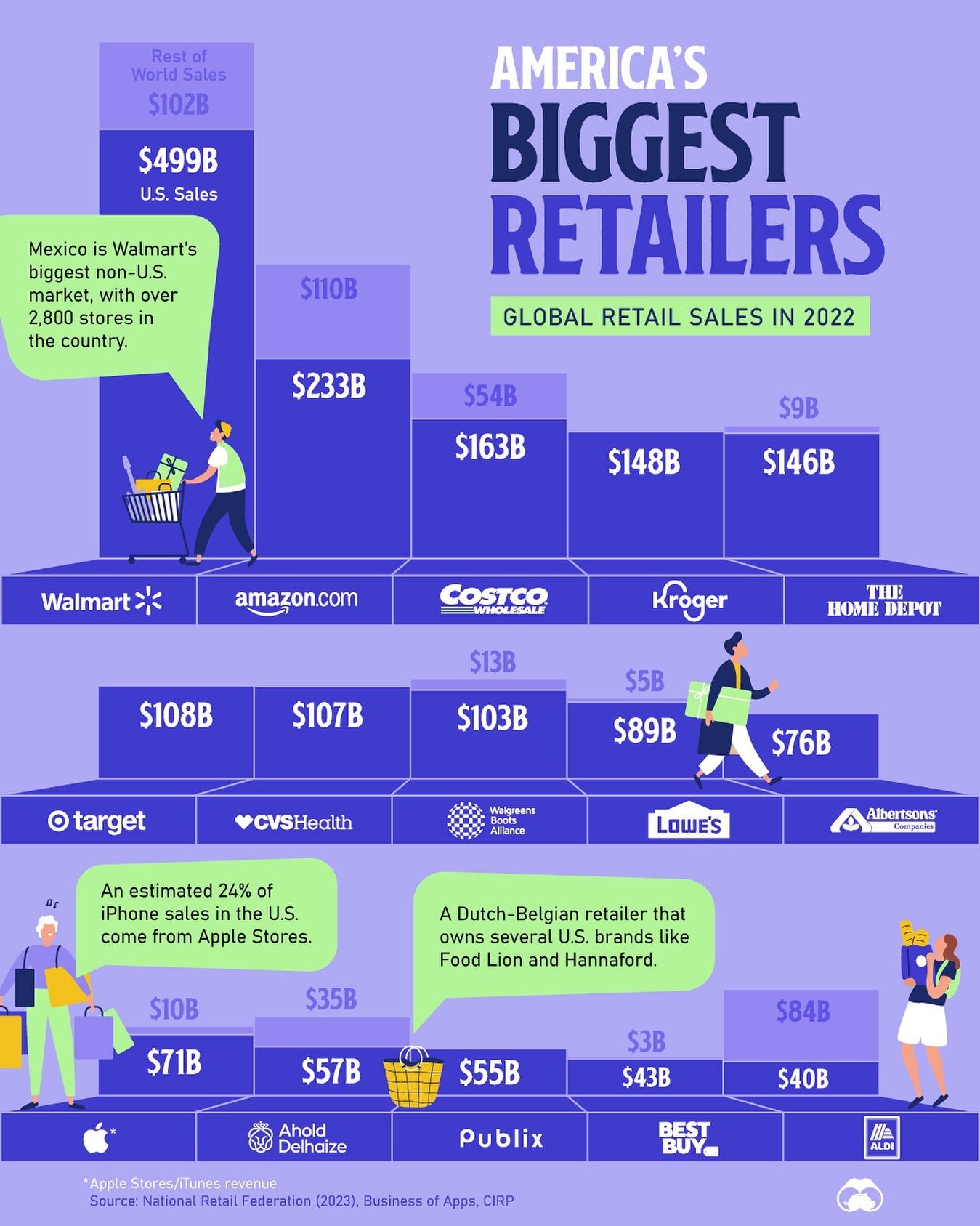
The retail landscape of the United States is vast and powerful. With a market worth more than $7 trillion, it represents nearly a quarter of the global retail industry. The sector far outpaces its closest competitors, China and India. But who are the key players driving this economic powerhouse?
Why This Matters
Understanding the retail landscape in the U.S. is crucial for grasping consumer trends, regional economic dynamics, and investment opportunities. The biggest retailers not only offer a glimpse into current shopping habits but also provide insights into future market directions. Let's delve into the major players and understand their impact.
Retail Giants: The Top Players
Walmart: The Retail Kingpin
Walmart leads the pack with a staggering $499 billion in global retail sales in 2022. Mexico is Walmart's biggest non-U.S. market, with over 2,800 stores in the country. This global presence provides a competitive edge, influencing supply chain dynamics and market trends.
Amazon: The E-commerce Juggernaut
Amazon, with $107 billion in retail sales, dominates the e-commerce sector. Beyond its online marketplace, Amazon's extensive logistics network and services like Amazon Prime have reshaped consumer expectations and behavior. The company's continuous innovation in technology and delivery methods keeps it at the forefront of the retail revolution.
Costco: The Membership Leader
Costco, generating $54 billion in sales, holds a unique position with its membership-based model. This retail strategy fosters customer loyalty and ensures consistent revenue streams. By focusing on bulk sales and providing a range of high-quality products, Costco maintains a strong foothold in the competitive retail market.
Target: The Style-Savvy Retailer
With $103 billion in sales, Target is renowned for its trendy and affordable clothing brands as well as a strong focus on in-store experience. By combining fashion trends, affordable prices, and innovative marketing strategies, it has successfully engaged a younger demographic.
CVS Health: The Healthcare Retailer
CVS, with sales reaching $55 billion, is a major player in the health and wellness retail sector. The company offers a comprehensive range of healthcare services, including pharmacies, walk-in clinics, and prescription delivery, making it a go-to destination for both retail and medical needs.
Aldi: The Discount Retailer
Aldi, with $54 billion in sales, is a strong competitor in the discount retail category. Known for its low prices and efficient operations, Aldi has built a loyal customer base by maintaining quality standards while keeping costs affordable.
Kroger: The Grocery Staple
Generating $57 billion in sales, Kroger is a household name in the grocery sector. The company's extensive network of stores, combined with competitive pricing and a wide array of private-label products, ensures its dominance in the grocery market.
The Home Depot: The Home Improvement Leader
With $146 billion in sales, The Home Depot is the leading player in the home improvement retail sector. The company's vast inventory, coupled with its extensive network of physical stores and a robust online presence, ensures it remains a top choice for DIY enthusiasts and professional contractors alike.
Lowe's: The Home Improvement Contender
Lowe's, with $95 billion in sales, is a significant competitor to The Home Depot. Lowe's focuses on customer service, offering a range of products and services to support home improvement projects, from basic repairs to full-scale renovations.
Albertsons: The Grocery Chain
Albertsons, generating $57 billion in sales, is a diverse grocery chain that caters to various consumer needs. With a focus on both urban and rural markets, Albertsons ensures accessibility and a wide range of fresh, high-quality products.
Best Buy: The Electronics Retailer
Best Buy, with $55 billion in sales, is a go-to destination for consumer electronics. By offering a wide range of products, from smartphones to home appliances, and providing expert advice and services, Best Buy maintains its relevance in the tech retail market.
Publix: The Southern Grocery Giant
Publix, with $57 billion in sales, is a household name in the southern U.S. Known for its exceptional customer service and high-quality products, Publix has built a loyal customer base that appreciates both affordability and quality.
Delhaize: The European Grocery Chain
Delhaize, generating $3 billion in sales, is a Dutch-Belgian retailer that owns several U.S. brands like Food Lion and Hannaford. The company's focus on fresh, high-quality products and community involvement has allowed it to compete effectively in the U.S. market.
Apple: The Tech Icon
Apple, with $102 billion in sales, is a tech giant that dominates the electronics and technology sector. Notably, Apple Stores in the U.S. account for an estimated 24% of iPhone sales, highlighting the brand's strong retail presence and customer loyalty.
Practical Tips for Success
-
Understand Your Customer: Each of these retailers thrives by understanding and catering to their specific customer base. Conduct thorough market research to identify your target audience and tailor your offerings accordingly.
-
Embrace Technology: Innovations in technology can significantly enhance the shopping experience. Whether it's through e-commerce platforms, mobile apps, or in-store technology, leveraging technology can give you a competitive edge.
-
Focus on Customer Service: Exceptional customer service can set you apart in a crowded market. Train your staff to provide impeccable service and prioritize customer satisfaction.
-
Diversify Your Offerings: A diverse product range ensures that you cater to a wide array of consumer needs. Consider offering both private-label and branded products to attract different segments of the market.
-
Loyalty Programs: Implementing loyalty programs can help foster customer loyalty and encourage repeat purchases. Offer rewards, discounts, and exclusive perks to keep your customers engaged.
Important Takeaways
The American retail landscape is a dynamic and competitive space, with each major retailer having its unique strengths and strategies. Walmart's global presence, Amazon's technological prowess, and Costco's membership model are just a few examples of successful retail strategies. By understanding these key players and their approaches, retailers can gain valuable insights into what drives success in this industry.
Innovation and Adaptability: The retail industry is constantly evolving, and retailers must stay ahead of the curve by continuously innovating and adapting to new trends and technologies.
Customer-Centric Approach: Prioritizing customer needs and preferences is crucial for long-term success. Retailers that understand and cater to their customers' evolving demands will thrive in this competitive market.
Strategic Investments: Investing in the right areas, whether in technology, supply chain, or customer experience, can provide a significant competitive advantage. Strategic investments can help retailers stay relevant and profitable.
Conclusion
The retail landscape in the U.S. is dominated by a mix of giants and niches, each contributing to a vibrant and competitive market. From Walmart's global dominance to Apple's tech innovation, each retailer has carved a unique niche. By analyzing their strategies, retailers can better understand the dynamics of the market and adapt their strategies for success. Whether it's through technological advancements, customer-centric approaches, or strategic investments, the key to thriving in this industry lies in staying adaptable and innovative.
Watch the Reel
Questions readers ask
Who were the four biggest retailers in America by 2022 sales?
The four biggest retailers in America by 2022 sales were Walmart, Amazon, Costco, and Target. These retailers dominated the market with their extensive product offerings and robust business strategies.
What was Walmart's sales position in 2022?
Walmart held the top position in 2022, leading the retail sector with significant sales figures. This highlights its dominance in the American retail market and its influence on consumer shopping habits.
How did Amazon's retail sales compare to other top retailers in 2022?
Amazon secured the second position in 2022 retail sales, showcasing its strong online presence and diverse product range. Its performance underscores the growing trend of e-commerce and digital shopping.
What contributed to Costco's significant market influence in 2022?
Costco's significant market influence in 2022 can be attributed to its membership model and bulk purchasing options. This strategy appeals to consumers seeking value for money, contributing to its high sales figures.
What factors contribute to the retail market trends 2022?
The retail market trends in 2022 were influenced by a variety of factors, including the shift towards e-commerce, changes in consumer shopping habits, and the economic recovery from the pandemic. Additionally, the performance of key retailers like Walmart and Amazon played a significant role in shaping these trends.
How does Aldi's 2022 sales position reflect its market strategy?
Aldi's 2022 sales position reflects its market strategy of offering affordable, high-quality products in a streamlined shopping environment. This strategy caters to budget-conscious consumers and helps Aldi maintain a strong presence in the retail sector.
What does the performance of the top retailers in the US indicate about the overall retail sector?
The performance of the top retailers in the US indicates a dynamic and competitive retail sector with strong consumer engagement. It also highlights the importance of innovation and adaptation to changing market conditions, such as the rise of e-commerce and evolving consumer preferences.
Recent articles
Fresh deep dives from the latest Reels we unpacked.




Comments
Be the first to comment.