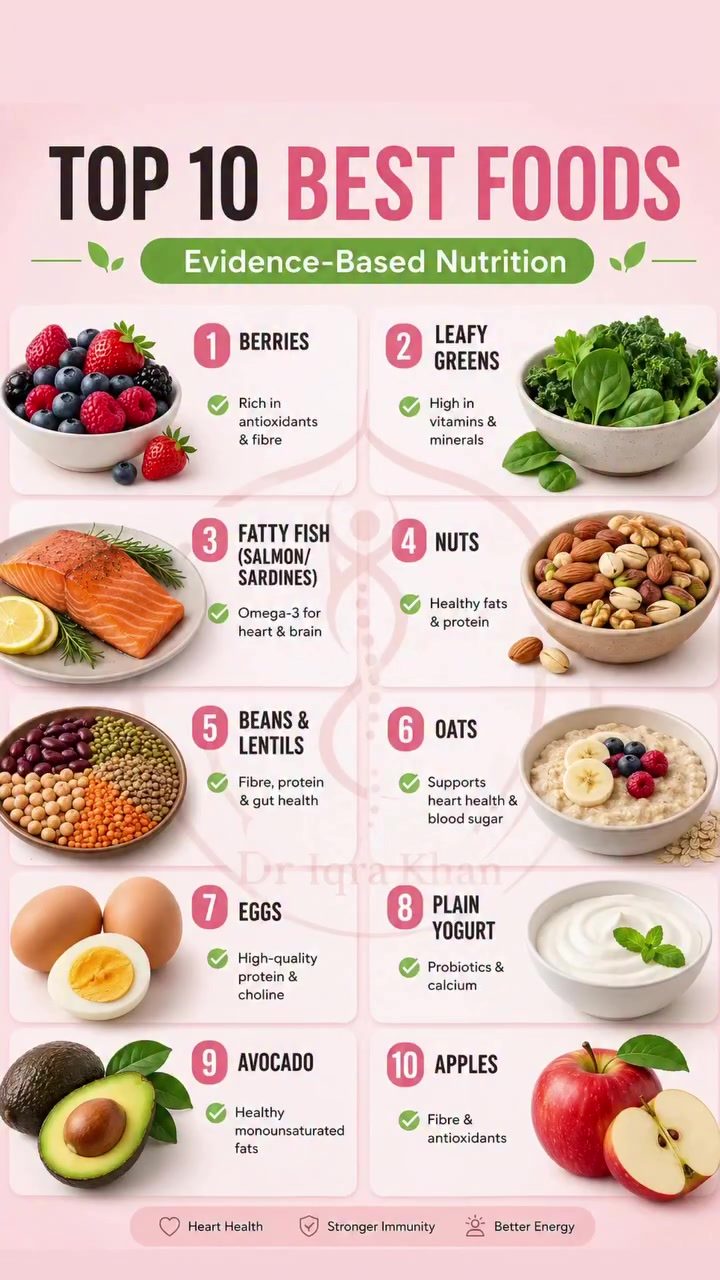
Diet shapes health, and knowing which foods to prioritize can make a significant difference. The top 10 best foods, backed by scientific research and widely recommended in major nutrition guidelines, offer a range of health benefits. These foods include berries, leafy greens, fatty fish, nuts, beans and lentils, oats, eggs, plain yogurt, avocados, and apples. Incorporating these into your diet can support heart health, boost immunity, and provide sustained energy.
Why This Matters
A balanced diet is fundamental to overall well-being. Foods rich in vitamins, minerals, and other essential nutrients fuel the body and mind, helping to prevent chronic diseases and enhance daily performance. Nutrition guidelines emphasize the importance of variety, balance, and consistency in food choices. This approach is more sustainable and effective than restrictive diets, which can be difficult to maintain and may lead to nutritional deficiencies.
Key Benefits of the Top 10 Best Foods
Berries
Berries, including blueberries, strawberries, and raspberries, are packed with antioxidants and fiber. These compounds help combat oxidative stress, which is linked to various diseases, including heart disease and certain cancers. The fiber content in berries also supports digestive health and promotes feelings of fullness, aiding in weight management.
Leafy Greens
Leafy greens such as spinach, kale, and collard greens are powerhouses of vitamins and minerals. They are rich in vitamin K, which is essential for bone health, as well as vitamin A, vitamin C, and folate. Regular consumption of leafy greens can help lower the risk of chronic diseases, including heart disease and diabetes.
Fatty Fish
Fatty fish like salmon and sardines are excellent sources of omega-3 fatty acids. These healthy fats are crucial for heart and brain health, reducing inflammation, and lowering the risk of heart disease and stroke. Omega-3s also support cognitive function and may help alleviate symptoms of depression and anxiety.
Nuts
Nuts, including almonds, walnuts, and pistachios, offer a combination of healthy fats, protein, and fiber. They are a great snack option that can help control hunger and maintain stable blood sugar levels. The monounsaturated and polyunsaturated fats in nuts support heart health by lowering LDL (bad) cholesterol and increasing HDL (good) cholesterol.
Beans and Lentils
Beans and lentils are versatile and nutrient-dense. They are high in protein, making them an excellent plant-based protein source. Additionally, they are rich in fiber, which supports gut health and promotes regular bowel movements. The soluble fiber in beans and lentils can also help lower cholesterol levels and improve blood sugar control.
Oats
Oats are a whole grain known for their heart-healthy benefits. They contain a type of fiber called beta-glucan, which can help lower cholesterol levels and improve blood sugar regulation. Oats are also a good source of protein and various vitamins and minerals, making them a nutritious choice for breakfast or a snack.
Eggs
Eggs provide high-quality protein and choline, a nutrient essential for brain health and development. They are also a good source of vitamins D, B12, and riboflavin. Despite previous concerns about cholesterol, recent research suggests that moderate egg consumption does not significantly impact heart health for most people.
Plain Yogurt
Plain yogurt is a fermented dairy product rich in probiotics, which support a healthy gut microbiome. It is also an excellent source of calcium, which is crucial for bone health. Opting for plain yogurt over flavored varieties can help avoid added sugars, making it a healthier choice.
Avocados
Avocados are rich in monounsaturated fats, which are beneficial for heart health. They also contain fiber, potassium, and various vitamins and minerals. The healthy fats in avocados can help improve cholesterol levels and reduce the risk of heart disease.
Apples
Apples are a convenient and nutritious fruit option. They are high in fiber, particularly pectin, which supports digestive health and promotes feelings of fullness. Apples also contain antioxidants, including quercetin, which has anti-inflammatory properties and may help reduce the risk of chronic diseases.
Practical Tips for Incorporating These Foods
Incorporating these top 10 best foods into your diet doesn't have to be complicated. Here are some practical tips to help you get started:
- Start Small: Begin by adding one or two of these foods to your daily meals. For example, you could include berries in your morning oatmeal or snack on a handful of nuts in the afternoon.
- Plan Ahead: Meal planning can help ensure you have these nutritious foods on hand. Make a grocery list and stock up on a variety of these foods to have them readily available.
- Experiment with Recipes: Try new recipes that incorporate these foods. For instance, you can make a salad with leafy greens, avocados, and beans, or add fatty fish to your dinner menu once or twice a week.
- Snack Wisely: Use these foods as healthy snacks. Pair an apple with some nuts for a satisfying and nutritious snack.
- Stay Balanced: Remember that variety is key. Aim to include a mix of these foods in your diet to ensure you're getting a wide range of nutrients.
Important Takeaways
- Variety and Balance: A diet rich in a variety of nutrient-dense foods is essential for overall health and wellness. Aim for balance and consistency rather than perfection.
- Sustainable Changes: Small, sustainable changes are more effective than restrictive diets. Incorporate these top 10 best foods into your meals gradually and consistently.
- Health Benefits: Each of these foods offers unique health benefits, from supporting heart health to boosting immunity and providing sustained energy.
Conclusion
Your diet plays a crucial role in shaping your health. By incorporating these top 10 best foods into your meals, you can reap a range of health benefits. Focus on variety, balance, and consistency, and make sustainable changes that fit your lifestyle. Whether you're looking to improve heart health, boost immunity, or simply feel more energized, these foods are a great place to start.
Watch the Reel
Questions readers ask
What are some of the best foods for maintaining a healthy heart?
The best foods for maintaining a healthy heart include leafy greens, fatty fish, nuts, beans and lentils, and avocados. These foods are rich in nutrients like omega-3 fatty acids, fiber, and antioxidants, which support cardiovascular health. Incorporating these into your diet can help lower cholesterol, reduce inflammation, and improve overall heart function.
Which foods can help boost my immune system?
Foods that can help boost your immune system include berries, plain yogurt, and leafy greens. These foods are packed with vitamins, minerals, and antioxidants that strengthen the immune response. Berries, for example, are high in vitamin C, while yogurt contains probiotics that support gut health, which is closely linked to immune function.
What are some good food choices for maintaining energy levels?
For sustained energy, consider foods like oats, beans and lentils, and apples. Oats provide complex carbohydrates that release energy slowly, while beans and lentils offer a combination of protein and fiber. Apples are also a great choice due to their natural sugars and fiber content, which helps maintain steady energy levels throughout the day.
How do leafy greens benefit overall health?
Leafy greens are packed with essential vitamins, minerals, and antioxidants. They are particularly rich in vitamin K, which supports bone health, and folate, which is crucial for cell function and DNA synthesis. Additionally, the high fiber content in leafy greens aids in digestion and helps maintain a healthy heart.
What makes fatty fish a good choice for nutrition?
Fatty fish, such as salmon and mackerel, are an excellent source of omega-3 fatty acids, which are beneficial for heart health and brain function. These fats help reduce inflammation, lower triglyceride levels, and support healthy blood pressure. Incorporating fatty fish into your diet can also contribute to better cognitive function and reduced risk of chronic diseases.
Why are nuts beneficial for heart health?
Nuts are high in healthy fats, fiber, and various vitamins and minerals. They help lower LDL (bad) cholesterol and reduce the risk of heart disease. The combination of monounsaturated fats and antioxidants in nuts makes them a great choice for supporting heart health and overall well-being.
How do beans and lentils contribute to a healthy diet?
Beans and lentils are rich in protein, fiber, and various micronutrients like iron and folate. They help regulate blood sugar levels, promote digestive health, and support a healthy heart by lowering cholesterol. Including beans and lentils in your meals can also aid in weight management and provide sustained energy throughout the day.
Recent articles
Fresh deep dives from the latest Reels we unpacked.




Comments
Be the first to comment.