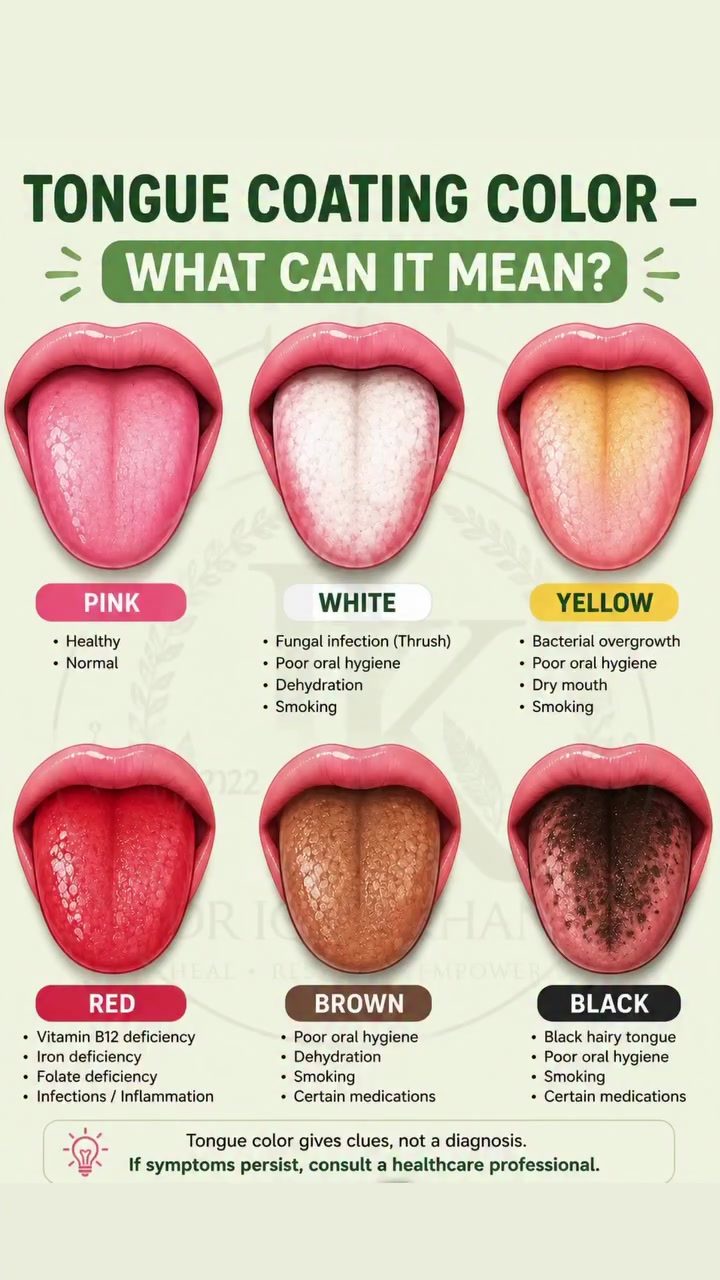
Tongue Coating Color: What Can It Mean?
The color of your tongue can offer insights into your overall and oral health. While tongue color alone isn't a definitive diagnosis, it can serve as a useful indicator of various potential issues. Let’s delve into what different tongue colors might suggest and why it matters.
Context
Understanding the significance of tongue coating colors can help you stay proactive about your health. Although these signs shouldn't replace professional medical advice, recognizing unusual changes in your tongue can prompt you to consult a healthcare professional and address any underlying issues.
Main Discussion
Pink Tongue: Healthy and Normal
A pink tongue is generally a sign of good health. This color indicates that your body is likely well-hydrated and free from infections or deficiencies. Maintaining good oral hygiene and keeping your body hydrated can help sustain this healthy color.
Red Tongue: Deficiencies and Inflammation
A red tongue can indicate several health issues. Common causes include:
- Vitamin B12 deficiency
- Iron deficiency
- Folate deficiency
- Infections or inflammation
If your tongue appears red and you experience other symptoms like fatigue or weakness, it might be worth checking your vitamin and mineral levels with a healthcare provider.
White Tongue: Oral Thrust and Dehydration
A white tongue is often linked to poor oral hygiene and dehydration. However, it can also indicate:
- Oral thrush (a fungal infection)
- Poor oral hygiene
- Dehydration
Maintaining good oral hygiene, staying hydrated, and avoiding dry mouth can help prevent a white tongue. If you suspect oral thrush, consult a healthcare professional for appropriate treatment.
Yellow Tongue: Bacterial Overgrowth
A yellow tongue is usually a sign of bacterial buildup, dry mouth, or smoking. This color suggests poor oral hygiene and can be prevented by:
- Brushing your teeth and tongue regularly
- Using a mouthwash to reduce bacterial growth
- Staying hydrated
If you notice persistent yellowing, it's a good idea to see a dentist or healthcare provider.
Brown Tongue: Smoking and Poor Hygiene
A brown tongue indicates dehydration, smoking, or poor oral hygiene. The buildup of dead cells, bacteria, and debris can cause this discoloration. Quitting smoking, maintaining good oral hygiene, and staying hydrated can help prevent this condition.
Black Tongue: Black Hairy Tongue
A black tongue, also known as black hairy tongue, can result from:
- Poor oral hygiene
- Dehydration
- Smoking
- Certain medications
This condition is often harmless but can be unsightly and cause bad breath. Maintaining good oral hygiene, staying hydrated, and addressing any underlying medical issues can help alleviate this condition.
Practical Tips
- Maintain Good Oral Hygiene: Brush your teeth and tongue regularly, and use mouthwash to keep bacteria at bay.
- Stay Hydrated: Drink plenty of water to keep your body and tongue hydrated. Dehydration can cause various tongue discolorations and other oral health issues.
- Avoid Smoking: Smoking can contribute to poor oral health, including tongue discoloration. Quitting smoking can improve your overall health and reduce the risk of developing a range of oral health issues.
- Regular Dental Check-ups: Regular dental check-ups can help detect and address any underlying issues that may be affecting your tongue's color.
Important Takeaways
- Pink Tongue: Generally healthy and normal.
- Red Tongue: Potentially indicates vitamin and mineral deficiencies or infections.
- White Tongue: Often linked to poor oral hygiene, dehydration, and oral thrush.
- Yellow Tongue: Suggests bacterial overgrowth, dry mouth, or smoking.
- Brown Tongue: Indicates dehydration, smoking, or poor oral hygiene.
- Black Tongue: Usually a sign of black hairy tongue, often linked to poor oral hygiene and certain medications.
- Consult a Healthcare Professional: If tongue changes persist for more than two weeks or if you experience pain, swelling, difficulty swallowing, or persistent ulcers, see a healthcare professional.
Conclusion
While tongue coating color offers valuable clues about your health, it's essential to understand that it is not a diagnostic tool. Recognizing changes in your tongue’s color and texture can prompt you to seek professional advice and maintain good oral and overall health. By staying proactive and addressing any underlying issues, you can ensure a healthier, happier you.
Watch the Reel
Questions readers ask
What does a pink tongue indicate about my health?
A pink tongue is typically a good sign. It usually indicates that you are well-hydrated and your vital organs are functioning properly. However, if the pink color is too bright, it might indicate a vitamin deficiency.
Why is it important to check my tongue color regularly?
Regularly checking your tongue color can help you stay proactive about your health. By monitoring changes, you can catch potential issues early and consult a healthcare professional if needed. This practice can also encourage better oral hygiene habits.
What are some common causes of a white tongue?
A white tongue can be caused by various factors, including oral thrush, which is a yeast infection, or poor oral hygiene. It can also indicate dehydration, which results in a lack of saliva. Additionally, it can be due to a lack of vitamin B3 in your diet.
Can smoking affect the color of my tongue?
Yes, smoking can significantly affect the color of your tongue. It can cause your tongue to appear discolored, often taking on a yellow or brown tint. This is due to the tar and chemicals in tobacco that stain the tongue and can also lead to dry mouth.
What does a black tongue indicate and what can I do about it?
A black or black and hairy tongue can be alarming but is usually harmless. It is often caused by bacteria or fungi overgrowth, poor oral hygiene, or certain medications. Maintaining good oral hygiene, staying hydrated, and avoiding irritating foods can help alleviate this condition.
Why is my tongue bright red and what does that mean?
A bright red tongue can indicate a vitamin deficiency, particularly in B vitamins or iron. It can also be a sign of scarlet fever or Kawasaki disease. If you notice this change, it's important to consult a healthcare provider for proper evaluation and treatment.
How can I maintain a healthy tongue color?
To maintain a healthy tongue color, practice good oral hygiene by brushing and scraping your tongue regularly. Stay hydrated, eat a balanced diet rich in vitamins and minerals, and avoid smoking and excessive alcohol consumption. Regular dental check-ups can also help monitor your tongue's health.
Recent articles
Fresh deep dives from the latest Reels we unpacked.




Comments
Be the first to comment.