Global Tobacco Use
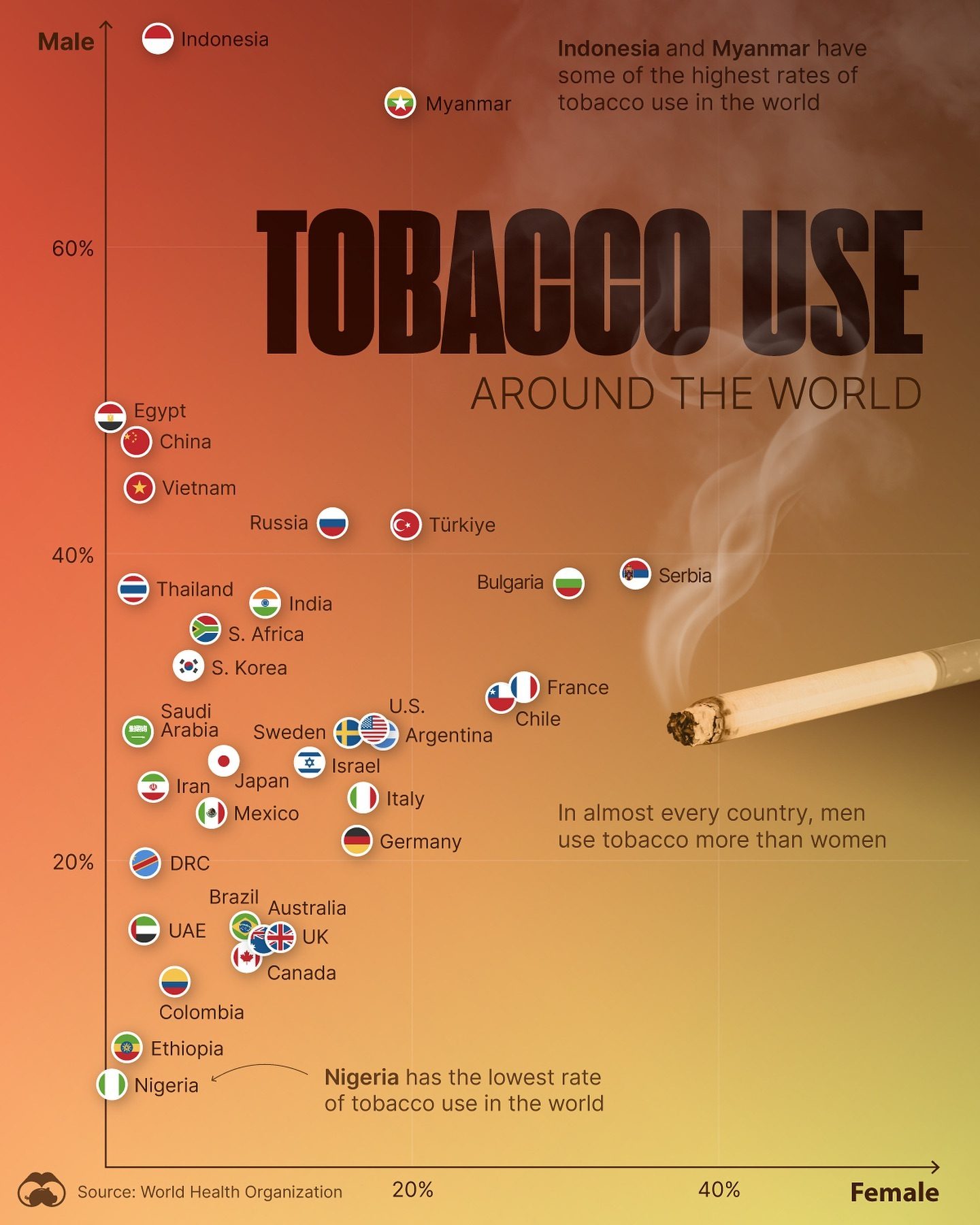
Tobacco use remains a significant global health issue, with one-in-five people worldwide using tobacco products. This prevalence, while decreasing over the decades, still impacts healthcare systems and the environment. The patterns of tobacco use vary widely across different countries and between men and women.
Context / Why this matters
Understanding global tobacco use is crucial for developing effective public health strategies. Tobacco use contributes to numerous health issues, including cancer, heart disease, and respiratory problems. The economic burden of treating these conditions is substantial, affecting healthcare resources and societal productivity.
Main discussion
Global Prevalence
According to the World Health Organization (WHO), the global rate of tobacco use has been declining. However, the sheer number of users—around 1.3 billion people—still poses a significant challenge. This widespread use has far-reaching consequences, affecting not only individual health but also public health systems and the environment.
Regional Variations
The prevalence of tobacco use varies significantly by region. Indonesia and Myanmar have some of the highest rates of tobacco use in the world. In these countries, tobacco consumption is deeply ingrained in social and cultural practices, making it challenging to implement effective anti-tobacco policies. On the other hand, Nigeria has the lowest rate of tobacco use globally, highlighting the potential for cultural and policy interventions to reduce tobacco consumption.
Gender Differences
In almost every country, men use tobacco more than women. This gender disparity is consistent across various regions, although the reasons behind it can vary. In some cultures, smoking is more socially acceptable for men, while in others, economic factors may play a role. Addressing this gender gap is essential for creating comprehensive tobacco control strategies.
Impact on Healthcare and the Environment
The global impact of tobacco use is multifaceted. Tobacco-related diseases place a heavy burden on healthcare systems, diverting resources from other critical areas. Additionally, the environmental impact of tobacco production and waste is significant. Tobacco farming contributes to deforestation and soil degradation, while cigarette butts are a major source of litter and pollution.
Practical tips
Policy Recommendations
Governments and health organizations can implement several measures to reduce tobacco use:
- Taxation: Increasing taxes on tobacco products can make them less affordable, thereby reducing consumption.
- Public Awareness: Public health campaigns can raise awareness about the dangers of tobacco use and promote smoking cessation.
- Regulation: Strict regulations on tobacco advertising and marketing can help reduce the appeal of tobacco products, especially to youth.
- Support for Quitting: Providing resources and support for individuals who want to quit smoking can increase successful cessation rates.
Community Involvement
Community-level interventions can also be effective. Local initiatives, such as support groups and community health programs, can provide a supportive environment for individuals trying to quit smoking. Engaging community leaders and influencers in anti-tobacco campaigns can amplify the message and reach a broader audience.
Important takeaways
- Tobacco use remains a significant global health issue, affecting one-in-five people worldwide.
- The prevalence of tobacco use varies widely by country and gender, with Indonesia and Myanmar having the highest rates and Nigeria the lowest.
- Men generally use tobacco more than women in most countries.
- Effective tobacco control requires a multi-faceted approach, including policy measures, public awareness campaigns, and community involvement.
Conclusion
Tobacco use continues to be a critical global health challenge, with significant implications for healthcare and the environment. By understanding the patterns of tobacco use and implementing targeted interventions, we can work towards reducing its impact. Whether through policy changes, public awareness, or community-level initiatives, collective efforts are essential to address this pervasive issue.
Watch the Reel
Questions readers ask
Which countries have the highest tobacco use rates worldwide?
Indonesia and Myanmar top the list with the highest tobacco use rates. These countries reflect distinct cultural attitudes and policies towards tobacco, contributing to their high prevalence of tobacco use.
Why is Nigeria considered a country with low tobacco use?
Nigeria has one of the lowest tobacco use rates globally. This can be attributed to a combination of cultural norms, strong tobacco control policies, and public awareness campaigns that discourage tobacco consumption.
How does tobacco use differ between men and women globally?
Globally, tobacco use is more prevalent among men than women. This gender disparity is influenced by a variety of social, cultural, and economic factors, and varies significantly from one region to another.
What are some of the key global trends in tobacco use?
While global tobacco use remains high, with one-in-five people using tobacco, there has been a decrease in prevalence over the decades. This trend is driven by various factors, including stricter regulations, public health initiatives, and changing social norms.
What are the primary health concerns associated with global tobacco use?
Tobacco use contributes to a wide range of health issues, including cancer, heart disease, and respiratory problems. These conditions impose a significant economic burden on healthcare systems and reduce societal productivity.
How do cultural influences impact tobacco use rates in different countries?
Cultural influences play a significant role in determining tobacco use rates. In countries like Indonesia and Myanmar, cultural acceptance and traditional practices contribute to higher rates of tobacco use, while in other countries, cultural norms may discourage its use.
How do tobacco policies affect usage rates in different countries?
Tobacco policies, such as taxation, advertising restrictions, and public health campaigns, significantly impact usage rates. Countries with robust tobacco control policies often see lower tobacco use, while those with lax regulations may experience higher rates.
Recent articles
Fresh deep dives from the latest Reels we unpacked.




Comments
Be the first to comment.