Understanding and Managing Bloating
Bloating is a common issue that many people experience, and it's often mistakenly viewed as inherently negative. Bloating, however, is usually the body's natural response to specific triggers. Recognizing these triggers can help manage and mitigate bloating effectively. This guide delves into the causes of bloating, the foods that commonly trigger it, and practical strategies for managing and reducing bloating.
Why This Matters
Bloating can be uncomfortable and frustrating, but understanding its causes can help you make informed decisions about your diet and lifestyle. By identifying what triggers bloating, you can adjust your habits to feel lighter and more energized. Addressing bloating isn't about fearing certain foods; it's about noticing patterns and making thoughtful choices.
Common Triggers of Bloating
Several factors can contribute to bloating. Some of the most common triggers include:
Portion Size
Eating larger portions can overload your digestive system, leading to bloating. Paying attention to portion sizes can help prevent this issue.
Speed of Eating
Eating too quickly can cause you to swallow excess air, which can lead to bloating. Slowing down and taking the time to chew your food thoroughly can help mitigate this.
Carbonation
Carbonated beverages like soda contain gas that can get trapped in your digestive system, causing discomfort and bloating.
Sugar Alcohols
Sugar alcohols, often found in diet and sugar-free products, can be difficult to digest and may cause bloating, especially for those with sensitive digestive systems.
High-Fiber Foods
While fiber is generally beneficial for digestion, consuming large amounts of high-fiber foods can lead to bloating.
Dairy and Lactose
Many people experience bloating after consuming dairy products due to lactose intolerance, which affects the body's ability to digest lactose.
Alcohol
Alcohol can cause bloating by relaxing the muscles in the stomach and intestines, slowing down digestion.
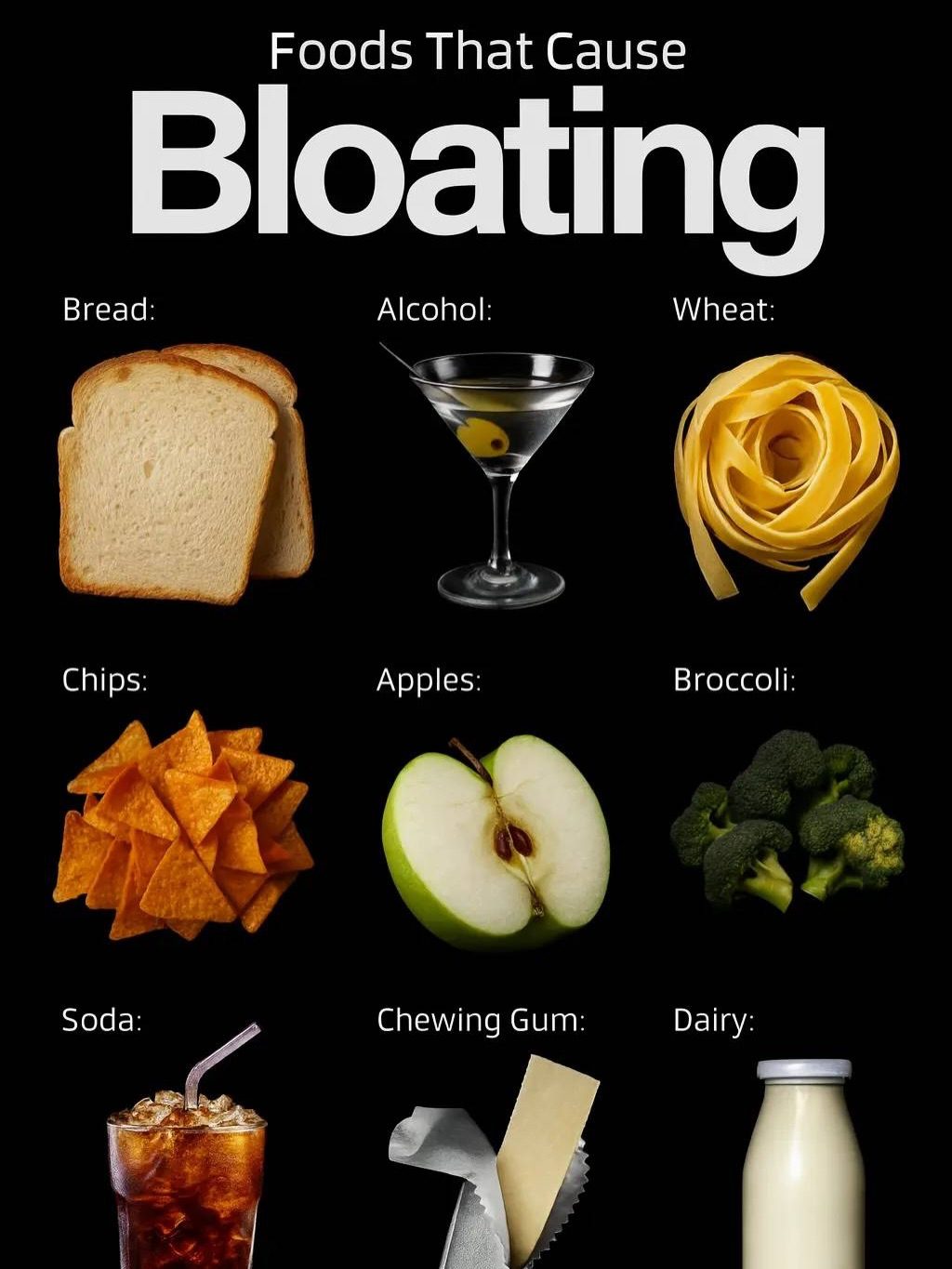
Foods That Commonly Cause Bloating
Certain foods are notorious for causing bloating. Some of the most common culprits include:
Bread
Bread, particularly those high in gluten, can cause bloating in those with sensitivities or intolerances.
Alcohol
Alcohol can irritate the stomach lining and slow down digestion, leading to bloating.
Wheat
Wheat contains gluten, which can be difficult for some people to digest, causing bloating and discomfort.
Chips
High in fat and often fried, chips can be heavy on the stomach and lead to feelings of bloating.
Apples
Apples are high in fiber, which is beneficial for digestion, but consuming too much fiber in one go can lead to bloating.
Broccoli
Broccoli and other cruciferous vegetables can cause bloating due to their high fiber and carbohydrate content.
Soda
Carbonated beverages like soda can introduce excess gas into your digestive system, causing bloating and discomfort.
Chewing Gum
Chewing gum can cause you to swallow more air, leading to bloating.
Dairy
Dairy products, especially for those with lactose intolerance, can cause significant bloating.
Debloating Strategies
If you're prone to bloating, there are several strategies you can employ to alleviate and prevent it:
Simple Swaps
On days when you feel bloated, consider making some simple swaps in your diet:
- Cooked veggies > raw salads: Cooked vegetables are often easier to digest than raw vegetables.
- Still water > soda: Opt for still water instead of carbonated beverages.
- Smaller portions of high-fiber foods: Reducing the portion size of high-fiber foods can help your digestive system cope better.
Debloat Combo
A combination of specific foods and activities can help reduce bloating:
- Ginger or peppermint tea: Both have properties that can soothe the digestive system.
- Cucumber/lemon water: Hydrating and can help flush out toxins.
- Gentle walk after meals: A leisurely stroll can aid digestion and prevent bloating.
Food Choices for Healthy Skin
While managing bloating, it's also beneficial to focus on foods that support overall health, including skin health. Foods rich in vitamins A, C, E, and D, as well as hydrating and fermented foods, can contribute to glowing skin:
- Vitamin A: Sweet potatoes, apricots, carrots, and tomatoes support collagen production.
- Vitamin E: Almonds, avocados, and sunflower seeds provide antioxidant protection and hydration.
- Vitamin D: Foods like tuna, eggs, and salmon support cell growth and repair.
- Vitamin C: Strawberries, citrus fruits, and bell peppers enhance collagen production and healing.
- Hydrating foods: Watermelon, celery, cucumber, and zucchini keep the skin healthy and hydrated.
- Fermented foods: Kimchi, yogurt, and kombucha help maintain a healthy gut, which is essential for overall health and glowing skin.
Nutrition Tracking with Workit
Nutrition tracking apps like Workit can be invaluable in managing bloating and maintaining a healthy diet. These apps provide personalized nutrition plans, helping you stay consistent and track your progress. By understanding your body's specific triggers and adjusting your diet accordingly, you can feel lighter and more energized.
Practical Tips for Managing Bloating
Notice Patterns
Pay attention to how different foods and habits affect your body. Keep a food journal to track what you eat and how it makes you feel. This can help you identify specific triggers and patterns.
Build Meals Wisely
Focus on building meals that make you feel light and energized. Include a variety of fruits, vegetables, lean proteins, and whole grains. Avoid overeating and eat slowly to aid digestion.
Stay Hydrated
Drinking plenty of water can help prevent constipation and bloating. Aim for at least 8 glasses of water a day, and consider adding herbal teas and infused waters for variety.
Incorporate Gentle Exercise
Regular, gentle exercise can aid digestion and prevent bloating. Activities like walking, yoga, and pilates can be particularly beneficial.
Important Takeaways
Recognize Your Triggers
Identifying the specific foods and habits that trigger bloating is crucial. This understanding allows you to make informed decisions and adjust your diet accordingly.
Make Mindful Choices
Choose foods and beverages that support your digestive health and overall well-being. Be mindful of portion sizes, eat slowly, and incorporate a variety of nutritious foods into your diet.
Stay Consistent
Consistency is key in managing bloating. Stick to a healthy diet and lifestyle, and use tools like nutrition tracking apps to stay on track and monitor your progress.
Seek Support
Don't hesitate to seek support from healthcare professionals or nutritionists if you're struggling with persistent bloating. They can provide personalized advice and guidance tailored to your specific needs.
Conclusion
Bloating is a common issue, but understanding its triggers and incorporating practical strategies can help you manage and reduce it effectively. By recognizing your body's reactions to specific foods and making mindful choices, you can build a diet that supports your overall health and well-being. Whether you're dealing with bloating or simply looking to optimize your diet, these insights and tips can help you feel lighter, more energized, and healthier.
Watch the Reel
Questions readers ask
What are some common bloating triggers that I should be aware of?
Common bloating triggers include certain foods like beans, lentils, dairy, and carbonated drinks. Other factors such as eating too quickly, large portion sizes, and even stress can contribute to bloating. Paying attention to these triggers can help you make dietary adjustments accordingly.
How can I manage bloating caused by dairy products?
If you suspect dairy is a trigger, try reducing your intake or switching to lactose-free alternatives. Keep a food diary to track how your body responds to different foods. This can help you identify patterns and make adjustments as needed.
How does alcohol consumption affect bloating?
Alcohol can exacerbate bloating by irritating the stomach lining and slowing down digestion. Additionally, alcoholic beverages often contain sugars and other additives that can cause discomfort. Limiting your alcohol intake may help reduce bloating symptoms.
What role does portion size play in bloating?
Eating large portions can overwhelm your digestive system, leading to bloating. To manage this, try eating smaller, more frequent meals throughout the day. This can help your body process food more efficiently and reduce discomfort.
Are there specific foods that can help relieve bloating?
Certain foods can aid in relieving bloating. For example, cucumbers are high in water and low in calories, which can help flush out excess water and reduce bloating. Additionally, staying hydrated by drinking plenty of water can help alleviate bloating symptoms.
How do citrus fruits affect bloating?
Citrus fruits can trigger bloating in some individuals due to their high acidity, which can irritate the stomach lining and cause gas. If you notice that citrus fruits cause discomfort, try reducing your intake or opting for less acidic alternatives.
What should I do if I suspect a vitamin deficiency is causing my bloating?
If you suspect a vitamin deficiency, consult a healthcare provider. Deficiencies in certain vitamins, such as B vitamins, can lead to digestive issues, including bloating. Your healthcare provider can recommend appropriate supplements or dietary changes to address the deficiency.
Recent articles
Fresh deep dives from the latest Reels we unpacked.




Comments
Be the first to comment.