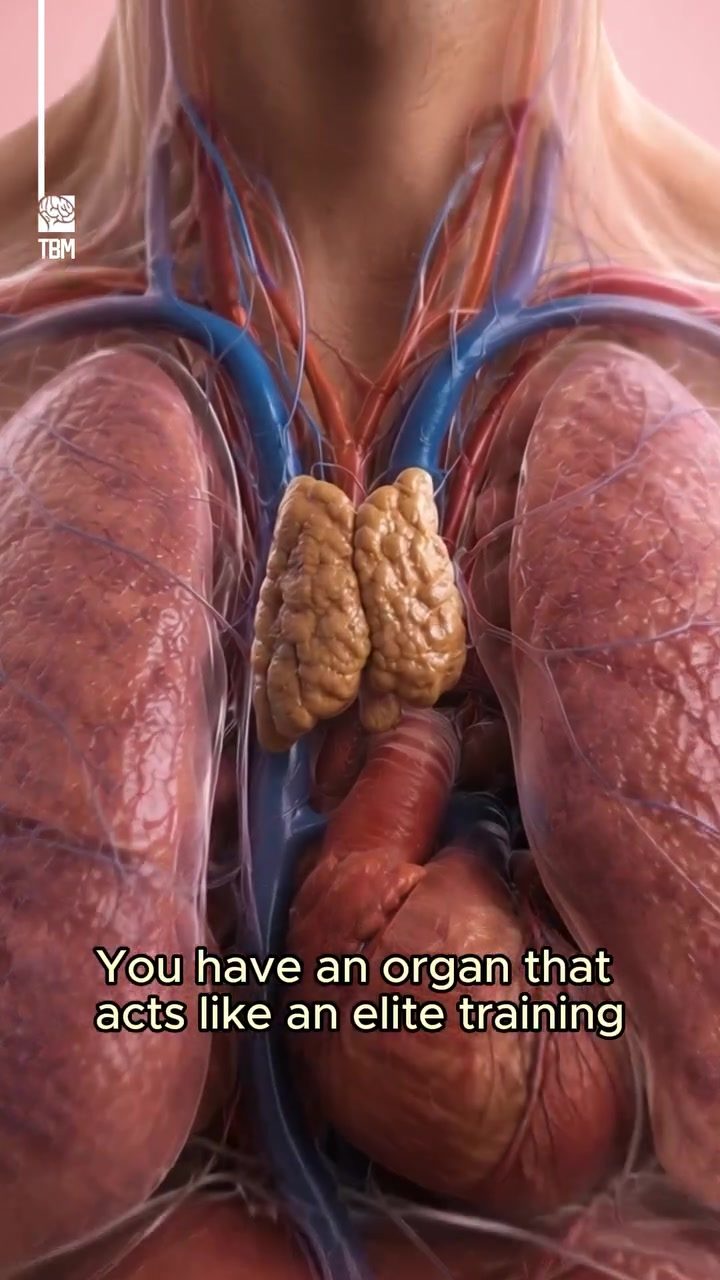
The Thymus Gland: The Body's Immune Training Center
The thymus gland is a small but mighty organ that plays a crucial role in your immune system. Often overlooked, this organ serves as an elite training center for your body's defenders, ensuring that your immune system can distinguish between harmful invaders and your own healthy tissues.
Context / Why This Matters
The thymus gland is essential for building a robust immune defense, particularly during childhood. This organ is responsible for training T-cells, a type of white blood cell, to recognize and respond to dangerous pathogens while avoiding attacks on the body's own cells. Without the thymus, the immune system would struggle to differentiate between self and non-self, leading to potential autoimmune disorders and increased susceptibility to infections.
Main Discussion
The thymus gland performs its most critical functions during childhood. Throughout this period, the gland is actively training T-cells, which are then deployed to patrol the body and respond to any potential threats. Once a person reaches puberty, the thymus begins to shrink in a process called involution. During this process, much of the thymus' active tissue is gradually replaced by fat, and its ability to produce new T-cells declines significantly. However, the T-cells that were trained during childhood continue to defend the body throughout adulthood.
The Role of T-Cells
T-cells are a type of white blood cell that plays a central role in the immune response. These cells are produced in the bone marrow but migrate to the thymus for maturation. Inside the thymus, immature T-cells undergo a rigorous selection process. This process involves learning to recognize dangerous viruses, bacteria, and abnormal cells while being taught not to attack the body's own healthy tissues.
Positive selection: Immature T-cells are exposed to self-antigens (proteins from the body's own cells) and those that can recognize and bind to these antigens are selected for further development.
Negative selection: T-cells that strongly react to self-antigens are eliminated to prevent autoimmune reactions. This ensures that only T-cells capable of recognizing and responding to foreign invaders while sparing the body's own tissues survive.
Involution of the Thymus
As a person ages, the thymus gland undergoes a gradual process of involution. This means the thymus shrinks in size and its active tissue is replaced by fat. This process begins during puberty and continues throughout adulthood. Despite this shrinkage, the T-cells that were trained during childhood continue to circulate in the body, providing a lifetime of immune protection.
Practical Tips
While the thymus gland's role is largely automatic and not something you can consciously influence, there are general practices that support overall immune health. These include:
- Maintain a balanced diet rich in vitamins and minerals to support immune function.
- Engage in regular physical activity to boost overall health and immune response.
- Prioritize good sleep habits, as adequate rest is crucial for immune function.
- Avoid smoking and limit alcohol consumption, as these habits can weaken the immune system.
- Practice good hygiene to reduce exposure to pathogens.
Important Takeaways
The thymus gland is a vital organ that trains the immune system to distinguish between harmful invaders and the body's own tissues. During childhood, the thymus actively produces and trains T-cells, which then patrol the body for years to come. Although the thymus shrinks with age, the T-cells it produced continue to provide essential immune defense. Maintaining overall health and immune function can support the body's natural defenses.
Conclusion
The thymus gland is a remarkable organ that plays a critical role in immune system development and function. By training T-cells to recognize and respond to threats while sparing healthy tissues, the thymus lays the foundation for a robust immune defense. Even as the thymus shrinks with age, the T-cells it produced continue to offer lifelong protection. Understanding the thymus gland's role and supporting overall health can help ensure your immune system remains strong and effective.
Watch the Reel
Questions readers ask
What is the primary function of the thymus gland?
The thymus gland's main function is to train T-cells, a crucial component of the immune system. These T-cells are taught to identify and attack harmful invaders, such as viruses and bacteria, while leaving healthy tissues untouched. This training process is vital for maintaining a robust immune response.
How does the thymus gland work in immune system development?
The thymus gland plays a pivotal role in immune system development, particularly in childhood, by training T-cells in the process of differentiation. It ensures that these cells are mature and capable of responding to a wide range of threats, thus developing a strong immune system.
Why is the thymus gland important in childhood?
The thymus gland is crucial in childhood because it is responsible for the production and maturation of T-cells. During this period, the thymus is highly active in training T-cells to recognize and respond to various pathogens, which is essential for building a robust and effective immune response.
What happens to the thymus gland as we age?
As we age, the thymus gland gradually shrinks, a process known as thymic involution. Although the thymus becomes less active, the T-cells it has trained throughout childhood and adolescence provide lifelong immune protection. These T-cells remain in the body, ready to defend against harmful invaders.
What role do T-cells play in the immune system?
T-cells are a type of white blood cell that plays a central role in the immune system. Trained by the thymus gland, T-cells help the body recognize and respond to harmful pathogens. They are essential for mounting an effective immune response and maintaining overall health.
How does the thymus gland contribute to immune protection throughout life?
The thymus gland contributes to immune protection throughout life by training T-cells during early development. These trained T-cells remain in the body and provide ongoing protection against harmful invaders, ensuring a robust and effective immune response even as the thymus gland shrinks with age.
What are the potential consequences if the thymus gland is not functioning properly?
If the thymus gland is not functioning properly, the body may struggle to differentiate between self and non-self, leading to potential autoimmune disorders. This can result in the immune system attacking healthy tissues and cells, causing various health issues and weakening the body's overall immune response.
Related deep dives
Similar reads based on topic and creator.


Recent articles
Fresh deep dives from the latest Reels we unpacked.




Comments
Be the first to comment.