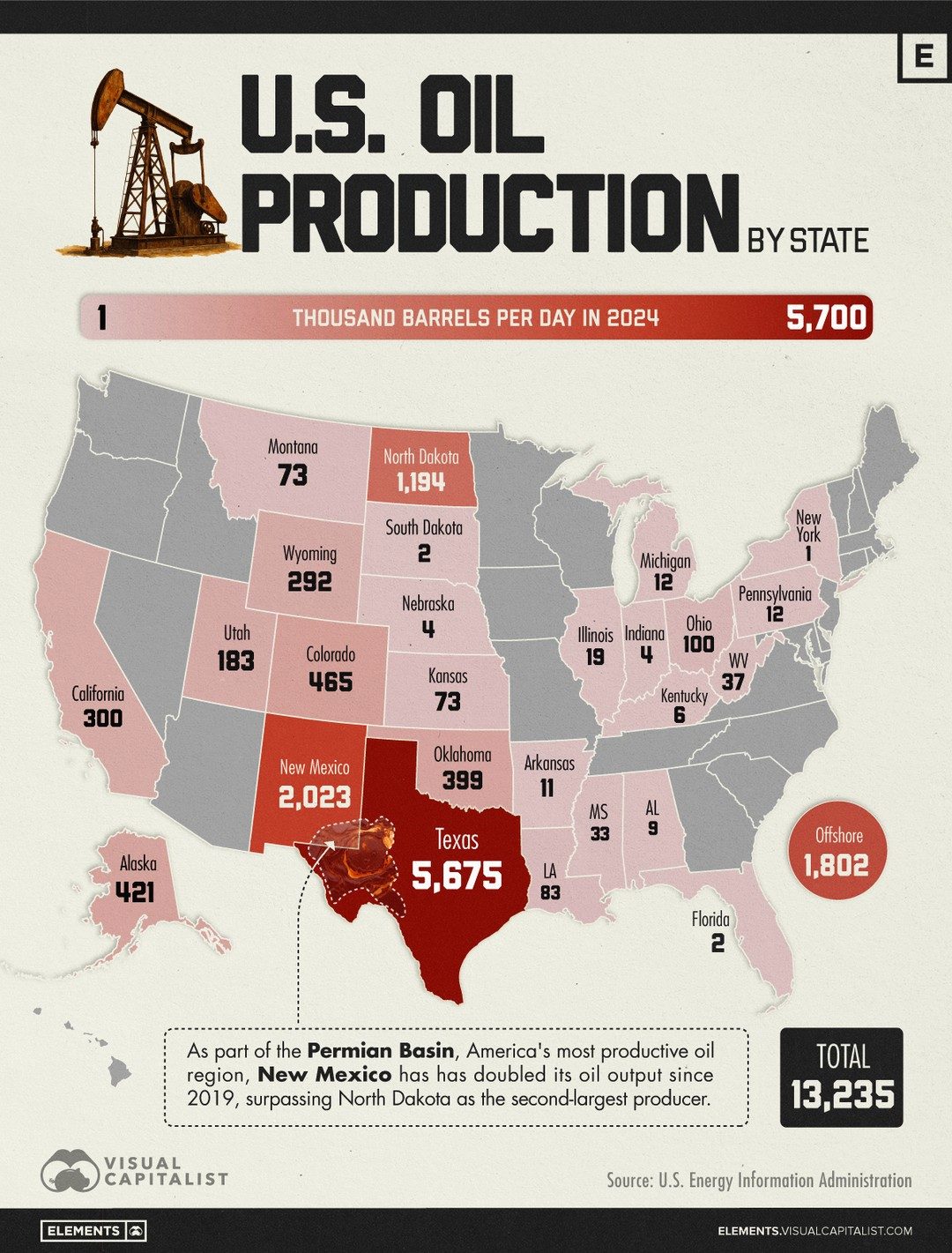
U.S. Oil Production by State
The oil production landscape in the United States is dynamic, with significant contributions from various states. Leading the charge are Texas and New Mexico, which have seen remarkable increases in oil output, driving a historic boom in American oil production. This article delves into the current state of oil production across the U.S., highlighting key players and the broader implications for the energy sector.
Context: Why This Matters
Understanding the geographical distribution of oil production is crucial for several reasons. It provides insights into the economic impact on different regions, the infrastructure requirements for transporting and refining oil, and the environmental considerations associated with oil extraction. Moreover, the data can inform policy decisions and investment strategies in the energy sector.
Main Discussion
Texas: The Leader in U.S. Oil Production
Texas has long been a dominant force in U.S. oil production, and this trend continues. With a staggering 5,675 thousand barrels produced daily, Texas is the undisputed leader. This production is largely driven by the Permian Basin, one of the most prolific oil-producing regions in the country. The Permian Basin spans parts of Texas and New Mexico, contributing significantly to the overall output of both states.
New Mexico: Rapid Growth and Significant Contributions
While Texas maintains its lead, New Mexico has made significant strides, nearly doubling its oil production since 2019. Now producing over 2 million barrels per day, New Mexico has surged to become the second-largest oil-producing state. This rapid growth is largely attributed to advancements in drilling technologies and the strategic location of the Permian Basin, which extends into New Mexico.
Other Notable Producers
Although Texas and New Mexico are the frontrunners, several other states also play substantial roles in U.S. oil production. North Dakota, known for the Bakken Formation, produces 292 thousand barrels per day. Alaska, with its vast reserves, contributes 183 thousand barrels per day. These states, along with others like Oklahoma and Wyoming, collectively bolster the nation's oil output.
Practical Tips for Understanding Oil Production Data
When interpreting oil production data, it's essential to consider several factors:
-
Technological Advancements: Innovations in drilling and extraction technologies have significantly increased production efficiency, particularly in shale plays like the Permian Basin.
-
Regulatory Environment: State and federal regulations can impact oil production. Understanding the regulatory landscape can provide insights into future production trends.
-
Market Demand: Global and domestic demand for oil influences production levels. Keeping an eye on market trends can help predict future production changes.
-
Infrastructure: The availability and condition of infrastructure for transporting and refining oil are crucial. Pipelines, refineries, and storage facilities are integral to the oil production chain.
Important Takeaways
Key insights from the current oil production landscape include:
- Texas and New Mexico are driving the historic oil boom in the U.S., with Texas leading the way and New Mexico experiencing rapid growth.
- The Permian Basin is a critical region for oil production, contributing significantly to both Texas and New Mexico's output.
- North Dakota and Alaska remain significant contributors, with the Bakken Formation and Alaska's vast reserves playing crucial roles.
- Technological advancements, regulatory environments, market demand, and infrastructure are all critical factors influencing oil production trends.
Conclusion
The U.S. oil production landscape is diverse and dynamic, with Texas and New Mexico leading the charge. Understanding the contributions of various states and the factors influencing production is vital for making informed decisions in the energy sector. As technology continues to advance and market demands evolve, the U.S. oil production landscape is poised for further growth and change.
Watch the Reel
Questions readers ask
Why are Texas and New Mexico significant in the current U.S. oil boom?
Texas and New Mexico are leading the U.S. oil boom due to their substantial increases in oil output. Texas is the top producer in the nation, while New Mexico is rapidly expanding its production, making them pivotal in driving this historic growth in American oil production.
What role does the Permian Basin play in the oil production of Texas and New Mexico?
The Permian Basin, which straddles both Texas and New Mexico, is a critical driver of oil production in these states. It offers significant energy opportunities and has seen remarkable production growth, contributing to the overall boom in U.S. oil output.
How does Texas' daily oil output compare to other states?
Texas leads the nation in daily oil production, surpassing other major oil-producing states like North Dakota. This high output is a key factor in Texas' significant contribution to the overall U.S. oil boom.
What economic opportunities does the Permian Basin offer?
The Permian Basin presents numerous economic opportunities, including job creation, investment in infrastructure, and revenue for local communities. The rapid expansion of oil production in the region has led to substantial economic benefits for Texas and New Mexico.
What are the infrastructure challenges associated with the Permian Basin's oil production?
The rapid growth in oil production in the Permian Basin has led to infrastructure challenges, such as the need for enhanced pipelines, transportation networks, and refining capabilities to accommodate the increased output. Addressing these challenges is crucial for sustaining the boom.
How is the Permian Basin's growth impacting the broader U.S. energy sector?
The Permian Basin's production growth is significantly impacting the broader U.S. energy sector by increasing the nation's oil output, reducing dependence on foreign oil, and driving investments in energy infrastructure. This growth also influences global energy markets.
What are the environmental considerations associated with the Permian Basin's oil production?
The expansion of oil production in the Permian Basin raises environmental concerns, including potential impacts on water resources, air quality, and wildlife habitats. Managing these impacts is essential for sustainable oil production in the region.
Recent articles
Fresh deep dives from the latest Reels we unpacked.




Comments
Be the first to comment.