Tether's Gold and Treasury Holdings
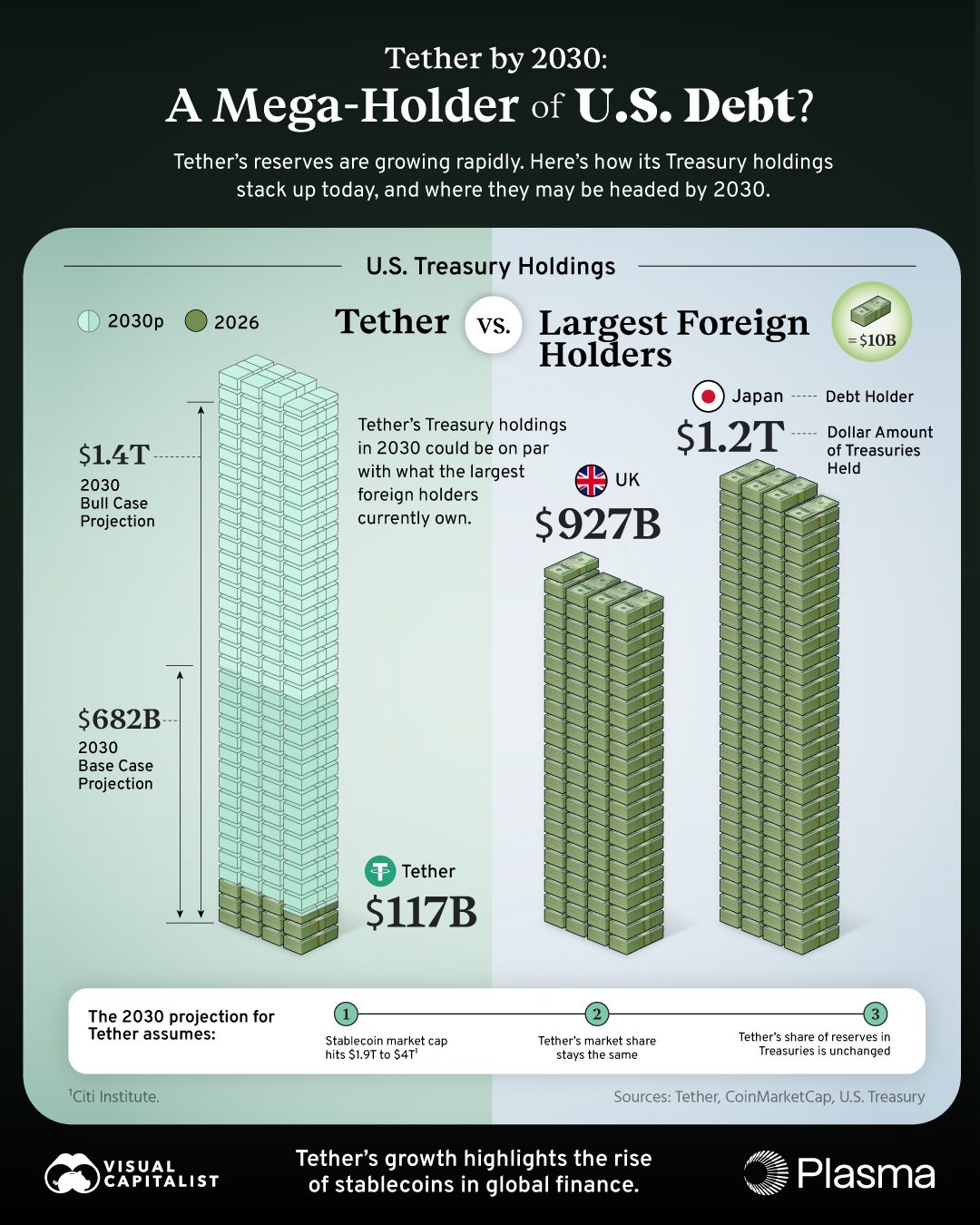
Stablecoins, particularly Tether, are on a trajectory to become major players in global finance. By 2030, Tether's gold and U.S. Treasury holdings are projected to rival those of major countries, making it crucial to understand the implications of this financial shift.
Context / Why this matters
The rise of stablecoins like Tether represents a significant shift in the financial landscape. Stablecoins are cryptocurrencies designed to minimize price volatility, typically backed by reserves of traditional assets. Tether, in particular, is the largest stablecoin by market capitalization. As its holdings in gold and U.S. Treasuries grow, it will play a more central role in the global economy. This shift could influence financial markets, monetary policies, and even geopolitical dynamics. Understanding Tether’s projected holdings and their implications is essential for investors, economists, and policymakers alike.
Main discussion
Projected U.S. Treasury Holdings
By 2030, Tether’s U.S. Treasury holdings are anticipated to reach $1.2 trillion (T). This projection is based on the assumption that the stablecoin market cap will expand to between $1.9 trillion and $4 trillion. To put this into context, current U.S. Treasury holdings of major foreign countries include Japan at $927 billion (B) and the UK at $117 billion. If Tether's projections hold, it would surpass both Japan and the UK, making it one of the largest foreign holders of U.S. debt.
Projected Gold Holdings
Tether’s gold holdings are also expected to grow significantly. By 2030, Tether could hold approximately 1,514 metric tons of gold. This amount is comparable to the current holdings of major central banks, such as Japan with 846 metric tons and the UK with 310 metric tons. These projections assume that the gold price will reach $5,000 per ounce by 2030, which, if accurate, would make Tether a major player in the global gold market.
The Role of Stablecoins in Global Finance
Tether’s growth highlights the broader rise of stablecoins in global finance. As stablecoins gain traction, they are increasingly used in transactions, investments, and as a store of value. This trend is driven by several factors, including the growing acceptance of cryptocurrencies, the need for stable assets in volatile markets, and the convenience of digital transactions. With the Plasma One app, users can make stablecoins a part of their everyday financial activities, earning up to 4% cashback. This app further integrates stablecoins into daily life, making them more accessible and practical for a wider audience.
Implications for the Financial System
The significant holdings of U.S. Treasuries and gold by Tether could have far-reaching implications for the financial system. Firstly, it could influence global monetary policies. Central banks and financial regulators will need to consider the impact of stablecoins on their economies, including inflation, interest rates, and exchange rates. Secondly, it could affect global financial stability. The large-scale movement of funds into stablecoins could disrupt traditional banking systems and financial markets, especially if there are sudden shifts in investor sentiment or market conditions. Lastly, it could reshape geopolitical dynamics. Countries with large holdings of U.S. Treasuries and gold could see their influence wane as Tether and other stablecoins gain prominence, potentially altering the balance of power in international finance.
Practical tips
For Investors
Investors should keep a close eye on the growth of stablecoins and their implications for the financial markets. Diversifying into stablecoins can provide a hedge against volatility in traditional assets. Additionally, understanding the regulatory environment and potential risks associated with stablecoins is crucial for making informed investment decisions.
For Policymakers
Policymakers need to stay ahead of the curve in understanding and regulating stablecoins. This includes developing clear frameworks for stablecoin issuance, ensuring transparency and accountability, and addressing any potential risks to financial stability. Collaboration with international bodies and other jurisdictions will be essential for effective regulation.
For Individuals
Individuals can benefit from the rise of stablecoins by incorporating them into their daily financial activities. Using apps like Plasma One, users can earn cashback and other incentives while leveraging the stability and convenience of stablecoins. This can be particularly useful for cross-border transactions, online shopping, and other digital payments.
Important takeaways
The projected growth of Tether’s holdings in U.S. Treasuries and gold underscores the increasing importance of stablecoins in the global financial system. This shift has significant implications for financial markets, monetary policies, and geopolitical dynamics. As stablecoins like Tether continue to gain traction, it is essential for investors, policymakers, and individuals to stay informed and adapt to this changing landscape. By understanding the potential impact and opportunities, stakeholders can navigate the evolving financial environment more effectively.
Conclusion
As Tether's gold and U.S. Treasury holdings are projected to reach levels comparable to those of major countries, the stablecoin's role in global finance will continue to grow. This trend highlights the broader rise of stablecoins and their potential to reshape financial markets, monetary policies, and geopolitical dynamics. By staying informed and adaptable, investors, policymakers, and individuals can position themselves to benefit from this evolving financial landscape. The future of money is increasingly digital, and stablecoins are at the forefront of this transformation.
Watch the Reel
Questions readers ask
What is Tether and why is it significant in global finance?
Tether is a type of cryptocurrency known as a stablecoin, designed to maintain a stable value by being backed by reserves of traditional assets. It is significant in global finance because it is the largest stablecoin by market capitalization, and its growing holdings in gold and U.S. Treasuries are expected to make it a major financial player by 2030.
Why are Tether's gold and U.S. Treasury holdings important?
Tether's gold and U.S. Treasury holdings are important because they provide a stable backing for the stablecoin, and they are projected to reach levels that could influence global financial markets. These holdings could make Tether a major force in global finance, rivaling even some major countries' reserves.
How might Tether's growth impact the future of global finance?
Tether's growth could alter the dynamics of central finance, as its holdings in gold and U.S. Treasuries grow. This could lead to increased competition and diversification in financial markets, and potentially influence monetary policy and financial politics by 2030.
What are the implications of stablecoins like Tether holding significant amounts of gold?
Stablecoins holding significant amounts of gold could reshape global finance trends, driving demand for the precious metal and affecting its market. It could also influence gold's role in international trade and finance, as well as the dynamics of gold as a reserve asset.
How might Tether's holdings in U.S. Treasuries affect the global economy by 2030?
Tether's projected holdings in U.S. Treasuries could make it a significant player in the global economy. This could lead to increased demand for U.S. government securities, influencing interest rates, inflation, and the broader financial markets. Additionally, it could impact the U.S. dollar's dominance in the global economy.
What is the projected timeline for Tether to become a major global financial player?
By 2030, Tether is expected to have expanded its holdings in gold and U.S. Treasuries significantly. With these reserves, it will be well-positioned to play a more central role in the global financial system, influencing financial markets, monetary policy, and global finance trends.
how will the future of stablecoins like Tether affect the role of traditional reserve assets?
As stablecoins like Tether grow in prominence, they could diversify the role of traditional reserve assets such as gold and U.S. Treasuries. This shift may prompt central banks and financial institutions to reassess their reserve strategies, potentially leading to increased allocations to stablecoins.
Recent articles
Fresh deep dives from the latest Reels we unpacked.




Comments
Be the first to comment.