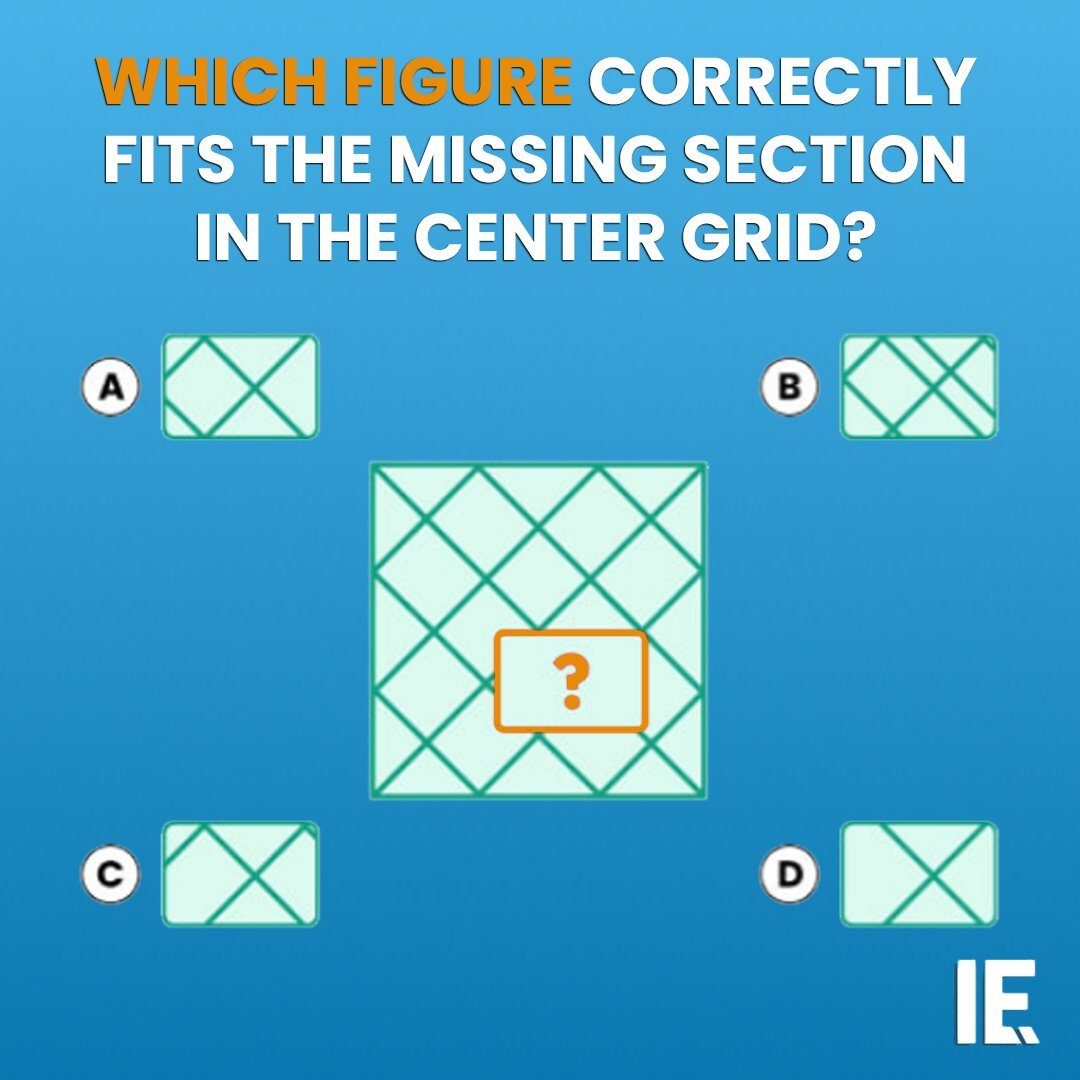
Pattern Completion Puzzle
Pattern puzzles, involving spatial reasoning and symmetry, are both entertaining and intellectually stimulating. They challenge participants to find the right fit for a missing piece in a grid, often through symmetry and alignment. Understanding how to solve these puzzles can enhance visual-spatial skills, which are valuable in various fields, from architecture to graphic design.
Why This Matters
Pattern puzzles are more than just a fun pastime. They help improve cognitive abilities, particularly spatial reasoning and logical thinking. These skills are crucial in many professions and daily activities. For example, architects and designers often rely on their ability to visualize and manipulate shapes and patterns. Engineers, too, use spatial reasoning to create and understand complex structures. Even in everyday tasks, like packing a suitcase or arranging furniture, pattern puzzles can sharpen your eye for symmetry and alignment.
Main Discussion
The Basics of Pattern Completion Puzzles
Pattern completion puzzles typically involve a grid or pattern with a missing section. The goal is to determine which of the provided options best fits the missing part. The key to solving these puzzles lies in understanding the overall pattern and symmetry of the grid.
Spotting the Symmetry
Symmetry is a fundamental concept in pattern puzzles. It refers to the identical arrangement of shapes or figures on either side of an axis or a center. Identifying symmetry can help you determine how the missing piece should align with the rest of the grid.
For example, if a grid has a vertical line of symmetry, the left side should mirror the right side. Similarly, a horizontal line of symmetry means the top half of the grid mirrors the bottom half. Sometimes, grids have both vertical and horizontal lines of symmetry, making them easier to complete.
Aligning the Pieces
Alignment refers to the way pieces fit together seamlessly, creating a cohesive pattern. When a piece is correctly aligned, it fits perfectly into the missing section of the grid without any gaps or overlaps. Alignment often involves slight rotations or flips to ensure the pieces match the existing pattern.
Types of Patterns
Puzzles can involve various types of patterns, including geometric shapes, repeating motifs, and color-based patterns. Each type requires a different approach to solving.
Geometric Patterns
Geometric patterns involve the use of shapes like squares, circles, triangles, and rectangles. These patterns often rely on symmetry and alignment to complete. Look for repeating shapes and lines to determine the correct fit for the missing piece.
Repeating Motifs
Repeating motifs are designs that are repeated throughout the grid. These motifs can be simple or complex, and they often create a sense of rhythm and order. To solve these puzzles, identify the repeating motif and use it to guide your placement of the missing piece.
Color-Based Patterns
Color-based patterns use different colors to create a visual effect. These puzzles can be more challenging, as you need to consider color distribution and symmetry in addition to the shapes and alignment. Look for patterns in the colors and try to match them to the missing section.
Practical Tips
- Analyze the Grid: Before choosing an option, take a few moments to study the existing pattern in the grid. Look for any obvious symmetry or repeating motifs.
- Examine the Options: Carefully examine each of the provided options. Check for any slight differences in shape, size, or orientation.
- Visualize the Fit: Mentally visualize how each option would fit into the missing section of the grid. Consider how it aligns with the surrounding pieces and whether it maintains the overall symmetry.
- Eliminate Incorrect Options: If a piece looks clearly out of place or doesn't align properly, eliminate it as an option. This will help you narrow down your choices.
- Check for Symmetry: Always look for symmetry in the grid. A correctly aligned piece should mirror the surrounding sections, creating a balanced and harmonious pattern.
Important Takeaways
Pattern completion puzzles are not only a fun challenge but also a valuable exercise for improving spatial reasoning and logical thinking. By understanding the principles of symmetry and alignment, you can enhance your problem-solving skills and visual-spatial abilities. These puzzles can be found in various forms, from simple geometric patterns to more complex color-based designs. By practicing and applying the tips mentioned, you can become more proficient in solving these puzzles and enjoy the cognitive benefits they offer.
Conclusion
Pattern completion puzzles are an engaging way to challenge your mind and improve cognitive skills. They involve analyzing grids, identifying patterns, and determining the correct alignment for missing pieces. Whether you are solving a geometric, repeating, or color-based pattern, the key is to pay attention to symmetry and alignment. By practicing pattern puzzles regularly, you can sharpen your visual-spatial skills and enjoy the satisfaction of solving these intriguing challenges.
Watch the Reel
Questions readers ask
What are symmetry puzzles and how do they help improve cognitive abilities?
Symmetry puzzles are a type of visual pattern puzzle that require you to recognize and complete patterns based on symmetry and alignment. By solving these puzzles, you can enhance your cognitive abilities, particularly in spatial reasoning and logical thinking. These puzzles challenge you to find the missing figure in a grid, which helps improve your pattern recognition skills and visual perception.
How do visual pattern puzzles benefit professionals in various fields?
Visual pattern puzzles benefit professionals by enhancing their visual-spatial skills, which are valuable in fields like architecture, graphic design, and engineering. These puzzles help improve the ability to visualize and manipulate shapes and patterns, which is crucial for tasks such as designing buildings, creating graphics, and solving engineering problems.
What are some examples of symmetry games that can help improve visual-spatial skills?
Examples of symmetry games include pattern completion puzzles and grid puzzles. These games often involve identifying the correct missing piece in a grid and placing it accurately. By practicing these games, you can improve your visual-spatial skills, which are essential for solving symmetry puzzles and other types of visual pattern puzzles.
What are the benefits of solving missing figure puzzles?
Solving missing figure puzzles can significantly enhance your spatial reasoning and logical thinking skills. These puzzles require you to recognize patterns and complete them by finding the correct missing piece. Regular practice of these puzzles can improve your ability to visualize and manipulate shapes, which are essential skills for various daily activities and professions.
How can I get started with solving symmetry puzzles?
To get started with solving symmetry puzzles, begin by practicing with simple pattern puzzles that involve basic symmetry and alignment. Gradually move on to more complex puzzles as your skills improve. You can find these puzzles in books, online, or through various apps. Focus on recognizing patterns and understanding how to complete them based on symmetry and alignment.
Recent articles
Fresh deep dives from the latest Reels we unpacked.




Comments
Be the first to comment.