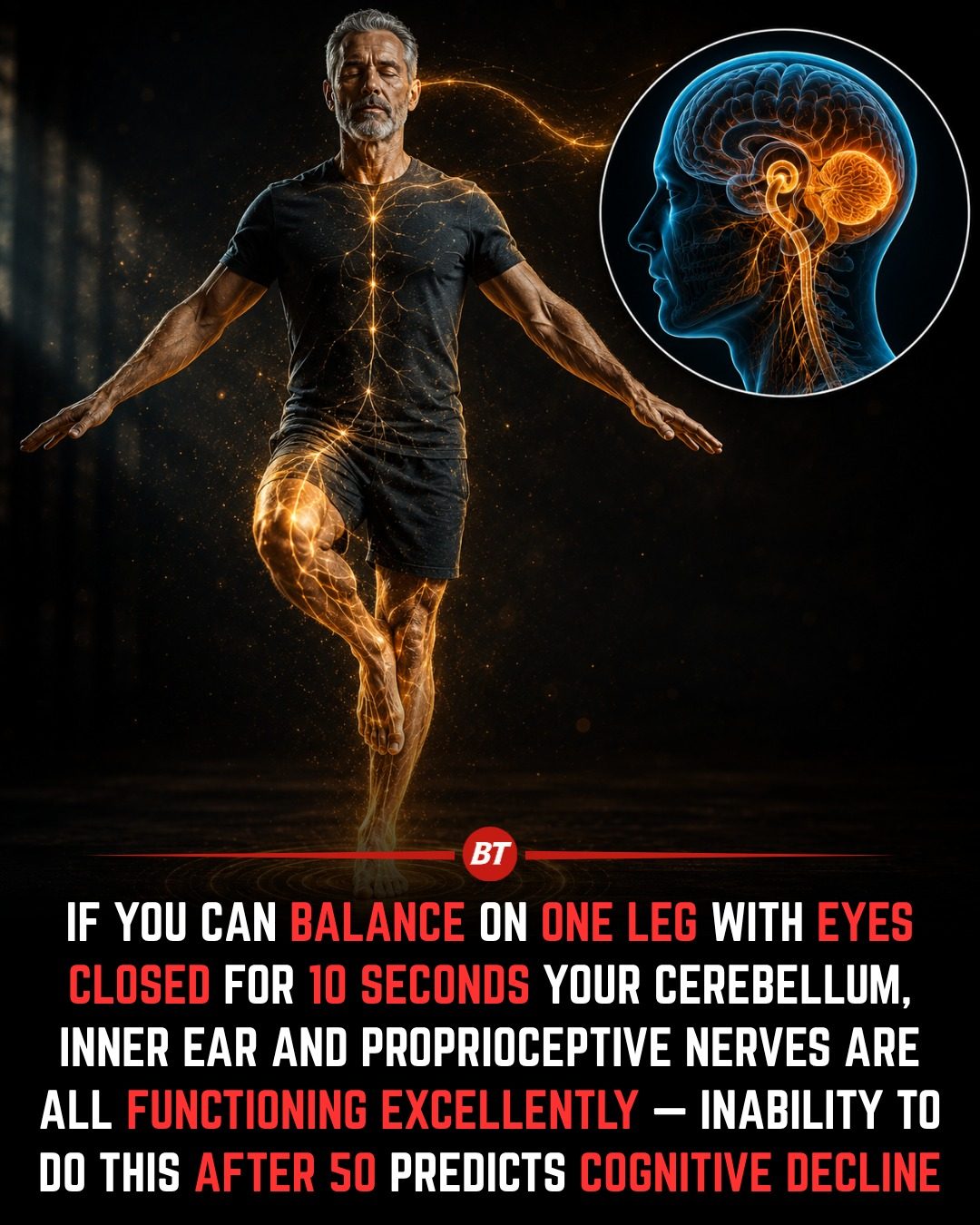
Balance and Cognitive Health
Balance is a critical aspect of healthy aging, and a simple test can provide insights into overall neurological health. Try standing on one leg with your eyes closed for 10 seconds. This exercise isn't just about balance; it's a full-body neurological challenge that engages several key systems in the body.
Why This Matters
As we age, maintaining balance becomes increasingly important. It's not just about avoiding falls; it's about understanding how well our neurological systems are functioning. This 10-second test can offer a window into the health of the cerebellum, inner ear, and proprioceptive nerves—all of which play crucial roles in coordination, stability, and spatial awareness.
The Science Behind the Test
The Cerebellum
The cerebellum, located at the base of the brain, is responsible for coordination, balance, and precise movement. When you close your eyes and stand on one leg, the cerebellum works to maintain your stability by integrating information from your muscles, joints, and inner ear.
The Inner Ear (Vestibular System)
The vestibular system in the inner ear detects movement and head position. It sends signals to the brain about changes in orientation, helping to keep you upright. Closing your eyes during the balance test removes visual cues, forcing your brain to rely more heavily on the vestibular system.
Proprioceptive Nerves
Proprioceptive nerves provide constant feedback to the brain about the position and movement of your joints and limbs. This sensory information is crucial for maintaining balance, especially when visual cues are eliminated.
The Test and Its Implications
How to Perform the Test
- Stand near a wall or sturdy surface for safety.
- Lift one foot off the ground.
- Close your eyes and see how long you can maintain your balance.
What the Results Mean
Being able to balance on one leg with your eyes closed for 10 seconds indicates that your cerebellum, inner ear, and proprioceptive nerves are functioning well. This is a good sign of overall neurological health. However, if you struggle with this test, especially after the age of 50, it may suggest a higher risk of cognitive decline. Poor single-leg balance in older adults has been linked to an increased risk of falls, loss of independence, and reduced physical function.
Practical Tips
Improving Balance
Balance is a skill that can be improved with practice. Here are some exercises and activities to help strengthen your balance and overall neurological health:
- Single-Leg Stands: Stand on one leg for as long as you can, then switch to the other leg. Gradually increase the duration and difficulty by closing your eyes or standing on an unstable surface.
- Tai Chi: This low-impact exercise involves slow, controlled movements that improve balance, flexibility, and coordination.
- Strength Training: Strengthening your core, legs, and hips can improve your overall stability and balance.
- Walking Exercises: Regular walking, especially on uneven surfaces, can help train your proprioceptive nerves and improve balance.
Incorporating Balance Exercises into Daily Life
- Stand on One Leg While Brushing Your Teeth: This simple habit can help improve your balance without adding extra time to your day.
- Use a Balance Board or Wobble Board: These tools can make everyday activities like waiting for the kettle to boil into a balance workout.
- Mindful Movement Practices: Yoga and Pilates incorporate balance exercises that can improve both physical and mental well-being.
Important Takeaways
Early Detection of Neurological Issues
The ability to balance on one leg with your eyes closed can serve as an early indicator of neurological issues. If you find it challenging, consider incorporating balance exercises into your routine and consulting a healthcare provider for further evaluation.
Maintenance and Improvement
Balance, like muscle strength, benefits from regular practice. Incorporating balance exercises into your daily routine can improve your stability, coordination, and overall quality of life, reducing the risk of falls and cognitive decline.
The Role of Proprioceptive Nerves
Proprioceptive nerves play a crucial role in balance and coordination. Activities that challenge these nerves, such as standing on one leg or walking on uneven surfaces, can help maintain and improve their function.
The Importance of a Holistic Approach
Maintaining balance involves a holistic approach that includes strength training, flexibility exercises, and activities that challenge your proprioceptive nerves. Incorporating a variety of exercises and activities into your routine can help you stay balanced and healthy as you age.
Conclusion
Balance is more than just a physical skill; it's a reflection of overall neurological health. The ability to balance on one leg with your eyes closed is a powerful indicator of how well your brain, inner ear, and proprioceptive nerves are functioning. By incorporating balance exercises into your daily routine, you can improve your stability, reduce the risk of falls, and support overall cognitive health. Whether you're 30 or 80, maintaining and improving balance is essential for healthy aging.
Watch the Reel
Questions readers ask
Why should I try the one-legged stand test with my eyes closed?
This test provides a quick assessment of your neurological health by challenging your balance, coordination, and spatial awareness. It helps you understand how well your body's systems are working together to maintain stability, especially as you age.
Which body parts are involved in the one-legged stand test?
The test engages several key systems, including the cerebellum, inner ear, and proprioceptive nerves. These components work together to help you maintain balance and coordination.
What does it mean if I can't balance for 10 seconds with my eyes closed?
If you struggle with this test, it might indicate that there are aspects of your neurological health that could be improved. However, it's important to consult with a healthcare professional for a thorough evaluation.
How can I improve my balance and neurological health?
Regular balance training exercises, such as the one-legged stand test, tai chi, and yoga, can help improve your stability and coordination. Additionally, maintaining a healthy lifestyle with regular physical activity can benefit your overall neurological health.
Is the 10-second one-legged stand test suitable for everyone?
While this test is generally safe, it's important to consider your current health and fitness levels. If you have any concerns or health conditions, consult a healthcare provider before attempting the test.
What role does the cerebellum play in balance and coordination?
The cerebellum is a key player in balance and coordination. It helps process information from your muscles and sensory systems to ensure smooth and precise movements. This test can give you an idea of how well your cerebellum is functioning.
How does the one-legged stand test with eyes closed relate to aging?
As we age, balance declines, and the risk of falls increases. This test offers a simple way to assess your balance and neurological health. Regularly performing this test can help you track changes and take proactive steps to maintain your balance and stability.
Related deep dives
Similar reads based on topic and creator.




Recent articles
Fresh deep dives from the latest Reels we unpacked.




Comments
Be the first to comment.