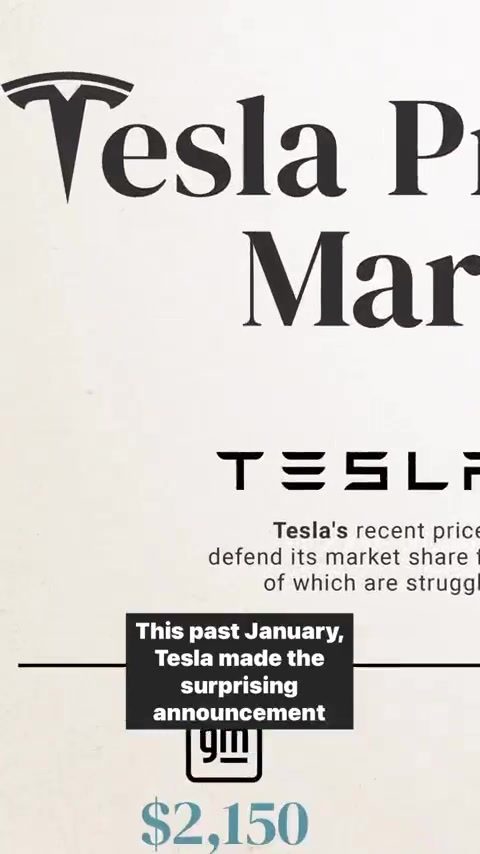
Tesla's Recent Price Cuts and Their Impact on the Electric Vehicle Market
Tesla's aggressive price cuts have become a central topic of discussion in the electric vehicle (EV) market. With an impressive profit margin, Tesla is placing pressure on its competitors by reducing prices on its vehicles by up to 20%.
Why This Matters
Tesla's price cuts are a strategic move to maintain its market dominance. As other automakers begin to make significant strides in the EV sector, Tesla's decision to lower prices ensures that it stays competitive. Understanding the implications of these price adjustments and the broader financial landscape of the EV industry can help consumers, investors, and industry watchers navigate this rapidly evolving market.
Tesla's Market Strategy
Tesla's recent price reductions have drawn considerable attention, primarily because of their timing. The company has long enjoyed a market position where demand for its vehicles often exceeded supply. However, in January, Tesla announced significant price cuts, signaling a shift in its market strategy.
This move is aimed at maintaining market share in the face of increasing competition. As more automakers enter the EV market, Tesla's decision to lower prices makes its vehicles more accessible to a broader audience. By doing so, Tesla is effectively pressuring its competitors to either match these cuts or risk losing market share.
Market Response to Tesla's Pricing Strategy
Tesla's competitors have responded to the price cuts in various ways. Some have followed suit with their own price adjustments, while others are evaluating their strategies to stay competitive. The differential in profit margins plays a crucial role in how these companies can react to Tesla's aggression.
Profit Margins and Market Positioning
Recent data highlights Tesla's unparalleled financial performance in the EV sector. The company boasts a net profit margin of $9,574 per vehicle, significantly higher than its rivals. This financial strength allows Tesla to implement substantial price reductions without compromising its profitability.
Comparison with Competitors
Let's break down the profit margins of some of Tesla's key competitors:
- Tesla: $9,574
- BYD: $2,150
- Volkswagen: $973
- Hyundai: $927
- GM: $1,550
- NIO: -$19,141
The stark contrast in profit margins reveals Tesla's unique financial position. While BYD, Volkswagen, Hyundai, and GM have positive margins, NIO stands out with a significant loss. This disparity underscores Tesla's ability to afford aggressive pricing strategies without sacrificing profitability. Conversely, NIO's financial state may limit its capacity to engage in similar cuts, leaving it at a competitive disadvantage.
Impact on Chinese EV Startups
The data indicates that Chinese EV startups, particularly those with no net profits, are unlikely to match Tesla’s price reductions. This puts them at a significant disadvantage, as they may struggle to compete on price without jeopardizing their already precarious financial positions. Tesla's substantial profit margins give it a clear edge in this regard, allowing it to maintain market share while exerting pressure on its competitors.
Practical Tips for Consumers and Investors
For consumers, Tesla’s price cuts offer a unique opportunity to purchase high-quality, technologically advanced electric vehicles at more affordable prices. However, it's essential to consider other factors such as availability, model-specific features, and long-term costs, including maintenance and charging expenses.
Investor Considerations
For investors, Tesla’s aggressive pricing strategy and strong financial performance present a mix of opportunities and challenges. While Tesla’s market dominance and innovative technology continue to attract investors, competitors’ reactions and the overall market dynamics could introduce volatility. It may be prudent for investors to monitor industry trends and financial reports closely.
Important Takeaways
Tesla’s decision to cut prices on its vehicles has significant implications for the EV market. The company's unrivaled profit margins allow it to maintain market share while pressuring competitors. As the market evolves, understanding the financial landscape and strategic moves of key players will be crucial for consumers, investors, and industry stakeholders.
Market Dynamics
The EV market is dynamic, with new players and technological advancements constantly reshaping the landscape. Tesla's price cuts are a strategic response to this changing environment, aimed at safeguarding its market leadership. As other automakers adjust their strategies, the market will continue to evolve, offering new opportunities and challenges for all stakeholders.
Long-term Implications
Over the long term, Tesla's aggressive pricing and financial strength could reshape the EV market, potentially leading to broader adoption and innovation. However, the dynamics of competition and the financial health of other automakers will play a critical role in determining the market’s trajectory.
Conclusion
Tesla’s recent price cuts signal a significant shift in the EV market, underscoring the company’s financial strength and strategic prowess. As competitors respond to these changes, the landscape of the EV industry will continue to evolve. For consumers, investors, and industry stakeholders, staying informed about these developments will be essential for navigating the opportunities and challenges ahead.
Watch the Reel
Questions readers ask
How do Tesla's recent price cuts affect its competitors in the electric vehicle market?
Tesla's price cuts put significant pressure on competitors by narrowing the price gap, making Tesla vehicles more accessible. This forces other automakers, such as Volkswagen, Hyundai, and NIO, to reassess their pricing strategies to remain competitive. Additionally, it impacts the market share of companies like BYD, which has been gaining traction in the EV sector. As consumers have more affordable options, the demand for competitor's EVs may fluctuate.
Why is Tesla able to maintain high profit margins while lowering prices?
Tesla's ability to maintain high profit margins while cutting prices is due to several factors, including economies of scale, improved production efficiency, and vertical integration. By owning key parts of its supply and production chain, Tesla reduces costs and maintains profitability. Furthermore, Tesla's strong brand recognition and demand for its vehicles allow it to sell more units even at lower prices.
What is the potential impact of Tesla's pricing strategy on the broader EV market?
Tesla's pricing strategy is accelerating the adoption of electric vehicles by making them more affordable. This increased competition can drive innovation and improvement in technology across the EV market. Additionally, it encourages other automakers to focus on cost-efficient production methods, further advancing the overall EV market.
How do Tesla's price cuts compare to those of other automakers in the EV sector?
Tesla's price cuts are notable for their magnitude, with reductions of up to 20%. This is more substantial than the price adjustments typically seen from other automakers, such as Volkswagen or Hyundai, which tend to implement more modest price changes. NIO and BYD have also made price adjustments but with different strategic focuses.
Will Tesla's price cuts lead to a price war in the EV industry?
Tesla's price cuts could potentially trigger a price war in the EV industry, as competitors may feel compelled to lower their prices to remain competitive. However, a full-scale price war is not inevitable, as other automakers may choose to focus on differentiation through technology, features, or other non-price factors to maintain their market position.
How are consumers likely to respond to Tesla's price cuts?
Consumers are likely to respond positively to Tesla's price cuts, as lower prices make Tesla vehicles more accessible. This can lead to increased sales and market share for Tesla. Additionally, consumers may benefit from the competitive pressure that Tesla's price cuts put on other automakers. This is likely to result in broader price reductions and improved offerings across the EV market.
Related deep dives
Similar reads based on topic and creator.


Recent articles
Fresh deep dives from the latest Reels we unpacked.




Comments
Be the first to comment.