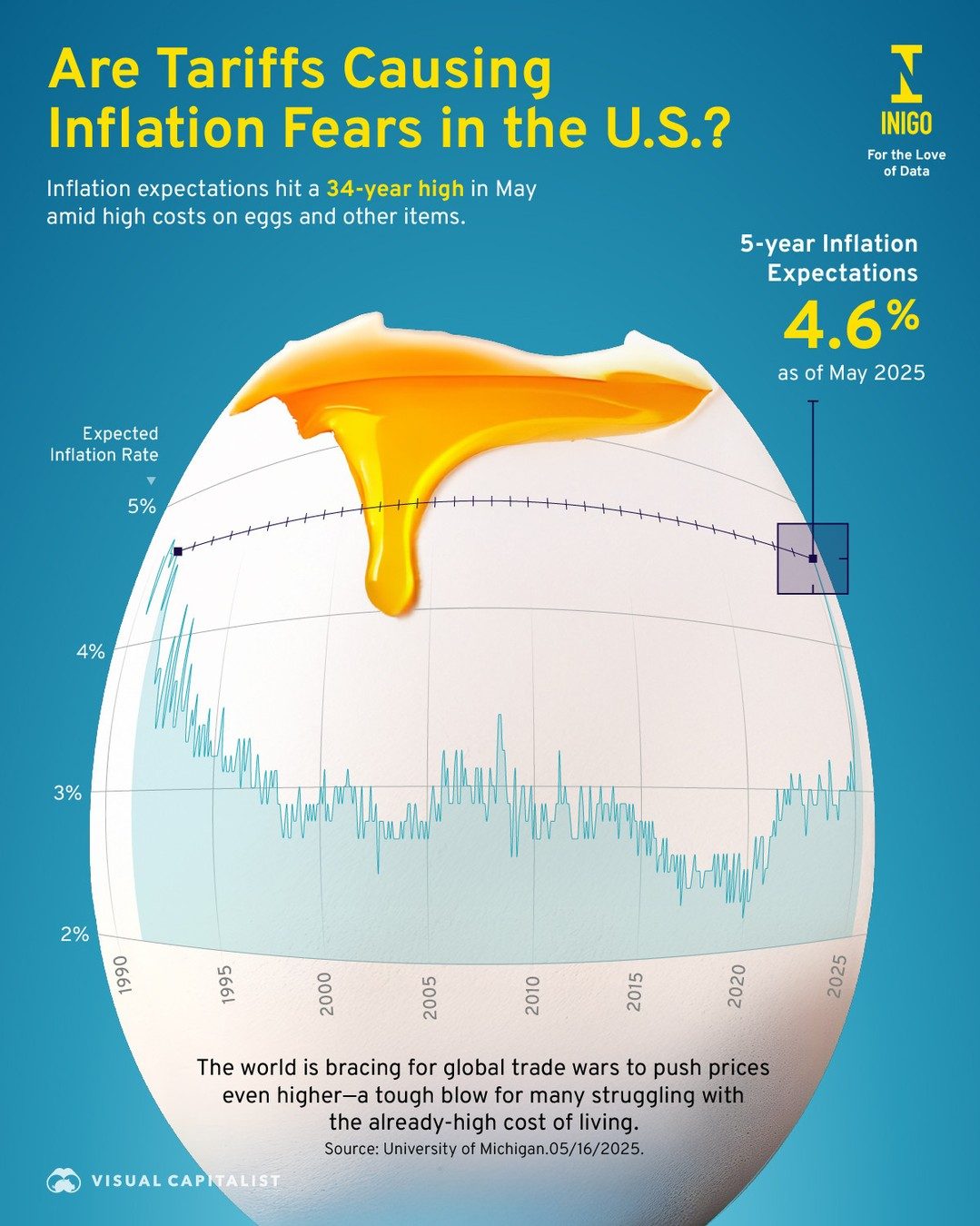
Inflation Expectations in the U.S. Hit a 34-Year High
Inflation expectations in the U.S. have surged to their highest level in 34 years, driven significantly by the rising costs of goods like eggs and the impact of tariffs on major trading partners. These tariffs, imposed on countries including Canada, Mexico, and China, are exacerbating the financial strain on American consumers.
Context / Why This Matters
Understanding the current inflation landscape is crucial for both consumers and policymakers. Inflation expectations play a pivotal role in shaping economic decisions and future price trends. With the cost of essential items like eggs soaring, many households are feeling the pinch, which could lead to broader economic shifts. The tariffs on major trading partners are adding another layer of complexity, potentially altering the dynamics of global trade and domestic pricing.
Main Discussion
The Current State of Inflation
The 5-year inflation expectation is currently at 4.6% as of May 2025, according to the University of Michigan's Consumer Sentiment Survey. This figure is important as it reflects the average American's expectation for future inflation rates. This is particularly concerning when compared to historical data, as the inflation rate is now at its highest levels since 1981.
The Role of Tariffs
Tariffs imposed on major trading partners, including Canada, Mexico, and China, are a significant factor contributing to increased inflation. These tariffs can cause prices to rise across various sectors, as manufacturers and retailers pass on the additional costs to consumers. The tariffs are part of broader trade policies aimed at reducing the trade deficit and protecting domestic industries. However, the unintended consequences include higher prices and a potential squeeze on consumer spending.
Historical Perspective
Historically, inflation rates have fluctuated widely. For instance, in 1961, the expected inflation rate was 5%. Comparing this to the current expected rate of 5% in 2025 highlights the cyclical nature of inflation and the significant impact of external factors like tariffs and trade policies. Understanding this historical context can provide insights into how current policies might affect future inflation trends.
Global Trade Wars
The global trade landscape is increasingly fraught with tensions, as countries engage in trade wars that push prices even higher. This is a tough blow for many people already struggling with the high cost of living. The U.S. is not alone in this situation; many other countries are also grappling with similar challenges. The interconnected nature of the global economy means that actions taken by one country can have ripple effects around the world, exacerbating inflation concerns.
Practical Tips
For Consumers
In a high-inflation environment, consumers can take several steps to manage their finances more effectively. First, consider adjusting your spending habits to prioritize essentials while cutting back on non-essential items. Second, look for sales and discounts, and consider buying in bulk for commonly used items. Additionally, keeping an eye on alternative, lower-cost goods can help stretch your budget. Remember, while it may be tempting to stock up on items that are currently cheaper, ensure that you have the storage space and that the items won't expire or become outdated quickly.
For Businesses
Businesses can also take steps to mitigate the impact of inflation. Diversifying supply chains can help reduce the risk of price shocks from tariffs or trade disruptions. Companies should also explore cost-saving measures, such as negotiating better terms with suppliers or investing in technologies that improve efficiency. Furthermore, it's crucial to maintain transparent and timely communication with customers about price changes, which can help preserve trust and loyalty during challenging times.
Important Takeaways
- Inflation expectations in the U.S. have reached a 34-year high, driven by increased costs of goods and tariffs on major trading partners.
- The 5-year inflation expectation is 4.6% as of May 2025, reflecting a significant rise in consumer concerns about future price levels.
- Tariffs and global trade wars are contributing to higher prices and financial strain on households.
- Understanding historical inflation trends can provide insights into current economic conditions and future expectations.
- Both consumers and businesses need to adapt to the current economic climate by implementing practical financial management strategies.
Conclusion
Inflation expectations in the U.S. are at a critical point, driven by a mix of domestic and global factors. The impact of tariffs and global trade wars on prices and the cost of living cannot be underestimated. As we navigate these challenging times, it is essential for both consumers and businesses to stay informed and adapt their strategies to mitigate the effects of inflation. By understanding the current landscape and historical trends, we can better prepare for future economic shifts and make informed decisions.
Watch the Reel
Questions readers ask
How do tariffs on major trading partners contribute to inflation in the US?
Tariffs increase the cost of imported goods, which in turn drives up domestic prices. This is particularly evident in essential items like eggs, where tariffs have led to noticeable price increases, contributing to the overall inflation rate.
Which countries' tariffs are most significantly impacting US inflation expectations?
Tariffs on major trading partners like Canada, Mexico, and China are notably impacting US inflation. These countries are significant sources of imports, and tariffs on goods from these nations have led to increased costs for American consumers.
How are tariffs affecting household budgets in the US?
Tariffs are increasing the cost of goods, including essential items. This financial strain is being felt across the country, with households experiencing a squeeze on their budgets as prices for necessities like eggs rise.
What is the current status of US inflation expectations?
US inflation expectations have reached their highest level in 34 years. This surge is driven by various factors, including the rising costs of goods and the impact of tariffs on major trading partners.
What can consumers expect regarding inflation and tariffs in 2025?
While it's difficult to predict with certainty, current trends suggest that inflation may continue to be a significant factor. The impact of tariffs on inflation will likely depend on policy changes and global trade dynamics in the coming years.
How can visual data help in understanding the impact of tariffs on inflation?
Visual data, such as graphs and charts, can illustrate the correlation between tariff implementations and inflation rates. This can help consumers and policymakers better understand the relationship and make more informed decisions.
What role do expectations of inflation play in the current economic landscape?
Expectations of inflation influence consumer behavior and economic decisions. High inflation expectations can lead to increased spending and investing, further driving up prices and contributing to the inflation cycle.
Recent articles
Fresh deep dives from the latest Reels we unpacked.




Comments
Be the first to comment.