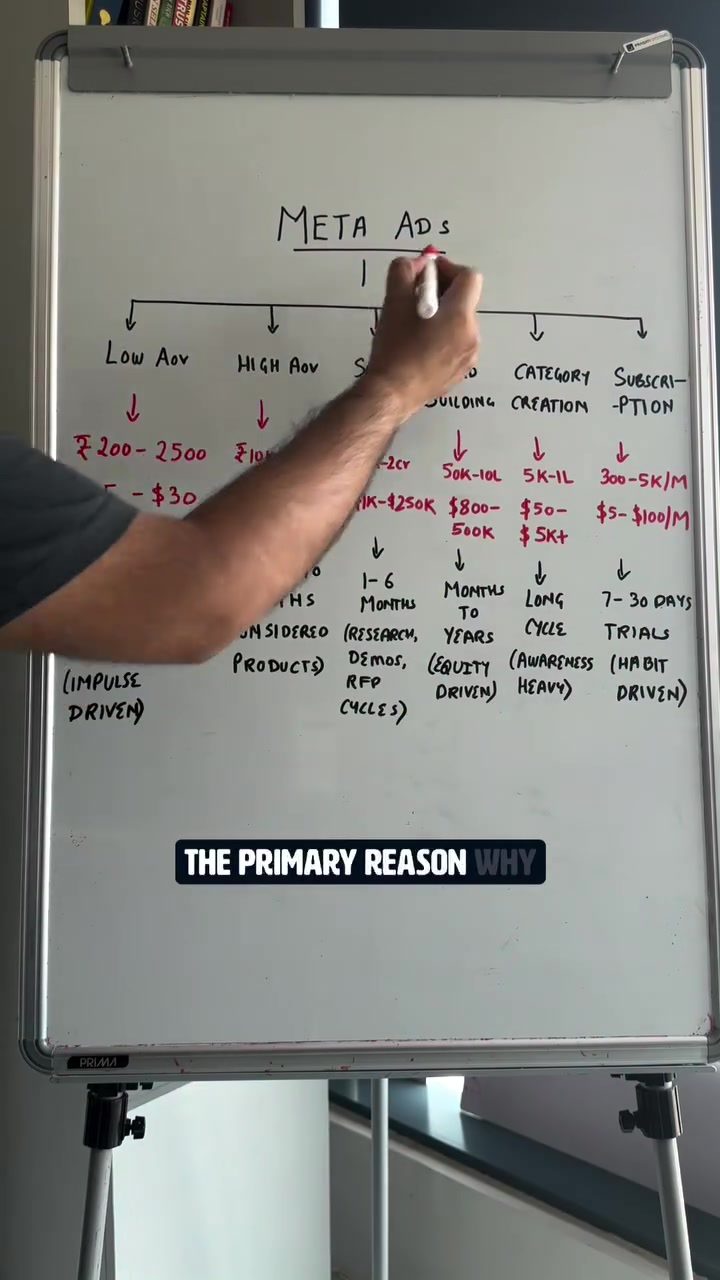
Meta Ads Strategy
Creating effective Meta ads requires a nuanced understanding of how different categories and products behave on the platform. The primary reason many Meta ads fail is the misapplication of a low Average Order Value (AOV) playbook across all categories. Different categories, such as low AOV, high AOV, Software as a Service (SaaS), brand building, category creation, and subscription, have unique consumer behaviors and timelines. Understanding and adapting to these differences is crucial for success.
Why This Matters
Meta ads are a powerful tool for reaching a wide audience, but their effectiveness hinges on a tailored approach. Each category of products or services has distinct characteristics that influence how consumers engage with ads and convert. By recognizing and addressing these differences, you can significantly improve the performance of your Meta ads.
Main Discussion
Low AOV Categories
Low AOV categories, typically priced under $30, often see quick conversions. Products in this range, such as skincare, fast fashion, food and beverages, mobile accessories, and home lifestyle items, are usually impulse-driven purchases. Customers in these categories tend to convert either on the same day or within seven days. This rapid conversion cycle means that your ads need to capture attention quickly and drive immediate action.
High AOV Categories
On the other hand, high AOV categories involve products with price points that can range from thousands to hundreds of thousands of dollars. These include electronics, real estate, automobiles, luxury fashion, jewelry, premium healthcare, and education. The conversion timelines for these products are significantly longer, often spanning weeks to months. This is because consumers in these categories typically go through a thorough research and decision-making process, including demos, request for proposals (RFPs), and other detailed evaluations. Ads in these categories need to focus on providing comprehensive information and building trust over a longer period.
SaaS Products
SaaS products require a different approach altogether. The conversion timeline for SaaS can range from one to six months. This is because potential customers often need to undergo a detailed evaluation process, which may involve demos, free trials, and RFPs. The focus here should be on providing value-driven content that addresses pain points and demonstrates the product's benefits over competitors.
Brand Building
Brand building is a long-term strategy that can take months to years to show results. This approach is equity-driven, focusing on creating a strong brand identity and fostering brand loyalty. Ads in this category should prioritize awareness and engagement rather than immediate conversions. Building a strong brand can lead to sustained growth and customer retention over time.
Category Creation
Creating a new category is a lengthy and challenging process. It involves introducing a new product or service that doesn't fit into existing categories. This requires significant investment in awareness and educational content to inform potential customers about the new category and its benefits. The timeline for seeing results in category creation can be extensive, but the potential for long-term success is substantial.
Subscription Business
Subscription services have a unique consumer cycle. Users often start with a trial period before committing to a subscription. This means that your ads need to focus on developing the habit of using the product during the trial phase. Effective ads in this category will highlight the value and convenience of the subscription, encouraging users to continue beyond the trial period.
Practical Tips
Customize Your Playbook
Develop a unique playbook for each category. Understand the consumer behavior and timelines specific to your product and tailor your ads accordingly. For example, low AOV products need immediate attention-grabbing content, while high AOV products require detailed and trust-building information. This process will ensure you are not just copying and pasting frameworks from one category to another.
Leverage Different Ad Formats
Use a variety of ad formats to cater to different consumer behaviors. For instance, video ads can be highly effective for impulsive purchases, while carousel ads can provide detailed information for high AOV products. Experiment with different formats to see what resonates best with your target audience.
Focus on Education and Awareness
For categories that require more extended conversion timelines, like brand building, category creation, and SaaS, focus on educational and awareness content. Provide valuable information that helps potential customers understand the benefits and features of your product.
Utilize Targeted Ads
Use Meta's targeting options to reach the right audience at the right time. For high AOV and SaaS products, consider using retargeting to keep your brand top of mind during the research and decision-making process. For subscription services, focus on trial users and provide incentives to convert them into paying customers.
Monitor and Adjust
Continuously monitor the performance of your ads and be prepared to adjust your strategy as needed. Use analytics tools to track key metrics such as conversion rates, click-through rates, and engagement. This will help you identify what's working and what needs improvement.
Important Takeaways
Understanding the unique characteristics of different product categories is essential for creating effective Meta ads. Each category has distinct consumer behaviors, timelines, and needs. Customizing your ad strategy to address these differences will significantly improve your chances of success.
Conclusion
Final Thoughts
By tailoring your Meta ads strategy to the specific needs and behaviors of your target audience, you can achieve better results and drive meaningful growth. Whether you're dealing with low AOV, high AOV, SaaS, brand building, category creation, or subscription services, a well-thought-out playbook is essential. Focus on delivering value-driven content, leveraging different ad formats, and continuously monitoring performance to ensure your ads resonate with your audience and drive conversions.
Watch the Reel
Questions readers ask
What is Average Order Value (AOV) and why is it important for Meta Ads strategies?
Average Order Value (AOV) is the average amount spent by customers in a single transaction. For Meta Ads, understanding AOV is crucial because it helps tailor strategies to match the spending habits of your target audience. High AOV products may require longer nurturing, while low AOV items can be promoted with strategies that encourage quick purchases.
How should I adjust my Meta Ads strategy for high AOV products?
For high AOV products, focus on strategies that build trust and nurture leads over time. Use detailed product information, customer testimonials, and consider using longer ad formats to convey the value of your high-ticket items. Additionally, retargeting and remarketing campaigns can help keep your brand top of mind during the extended decision-making process.
What are the best practices for Meta Ads targeting low AOV, impulse buys?
To optimize Meta Ads for low AOV, impulse purchases, prioritize quick, attention-grabbing content. Use eye-catching visuals, clear calls-to-action, and highlight limited-time offers. These tactics can encourage immediate purchases and boost your conversion rate.
Why is it important to adapt Meta Ads strategies for different product categories?
Different product categories have unique consumer behaviors and purchase timelines. Adapting your Meta Ads strategies to these differences ensures that your ads resonate with your target audience and drive better results. For example, a Software as a Service (SaaS) product might require a strategy that emphasizes long-term benefits and ROI, while a subscription service might focus on convenience and ongoing value.
How can I optimize Meta Ads for lengthy purchase cycles?
For products with lengthy purchase cycles, focus on building a strong relationship with potential customers. Use a combination of top-of-funnel content that provides value without a hard sell, and retargeting efforts that keep your brand visible throughout the customer journey. Consider using ad formats that allow for more information, such as carousels or collection ads, to showcase different aspects of your product or service.
What are some common mistakes to avoid when using Meta Ads for varying AOV?
A common mistake is applying a one-size-fits-all approach to Meta Ads, rather than tailoring strategies to the specific AOV and product category. Another pitfall is not leveraging retargeting effectively, which can be especially detrimental for high AOV products with longer purchase cycles. Always align your ad strategy with the unique characteristics of your target audience and product offerings.
How can I measure the success of my Meta Ads strategies for different AOV categories?
To measure success, focus on metrics that align with your goals for each AOV category. For low AOV, track immediate conversion rates and return on ad spend (ROAS). For high AOV, consider metrics like cost per acquisition (CPA) and customer lifetime value (CLV). Use Meta's analytics tools to monitor performance and adjust your strategies based on data-driven insights.
Recent articles
Fresh deep dives from the latest Reels we unpacked.




Comments
Be the first to comment.