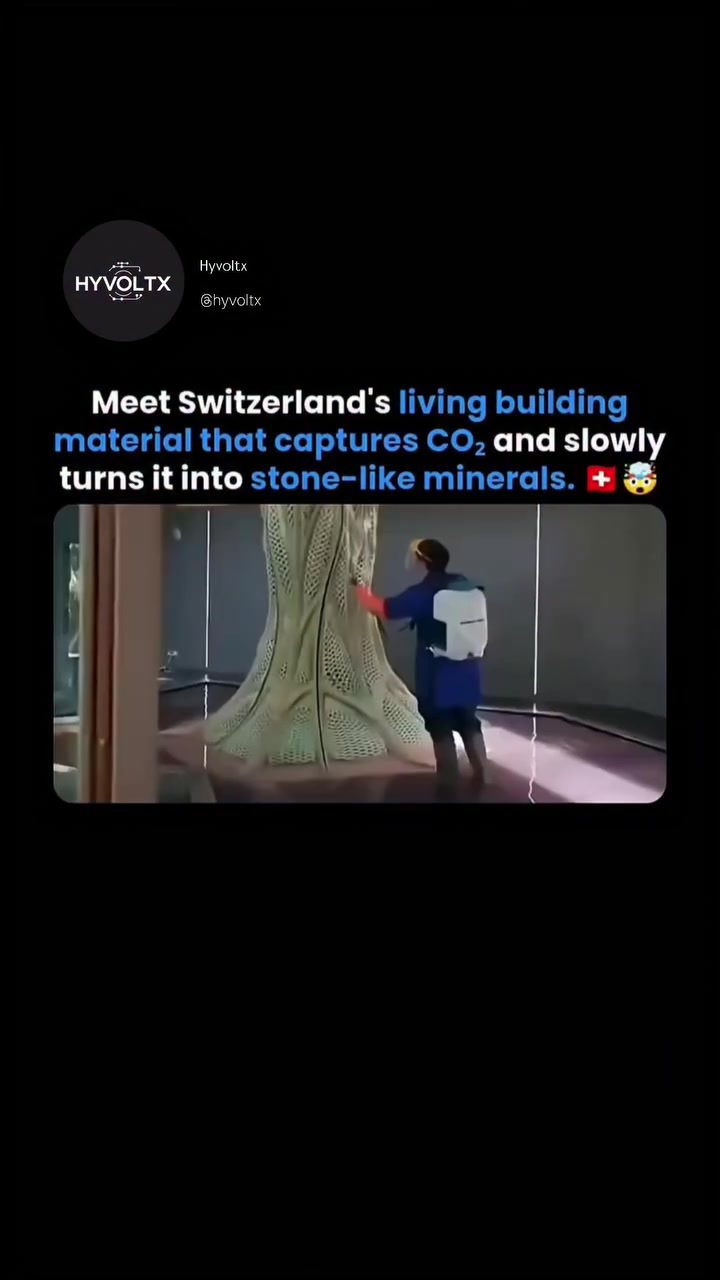
Living Building Materials: Revolutionizing Construction with CO₂ Capture
Switzerland has seen the development of an innovative building material that captures carbon dioxide (CO₂) and transforms it into stone-like minerals. This breakthrough, developed by scientists at ETH Zurich, utilizes photosynthetic cyanobacteria embedded within a 3D-printed hydrogel. The material not only captures CO₂ from the atmosphere but also converts it into calcium carbonate, a mineral found in limestone and seashells. As the bacteria photosynthesize using sunlight, they gradually strengthen the material while permanently storing carbon, making it a promising carbon-negative alternative for future building facades and architectural structures. This article explores the science behind this living building material, its potential impact on construction, and how it could revolutionize sustainable building practices.
Context and Why This Matters
The construction industry is one of the world's most carbon-intensive sectors, accounting for a significant portion of global greenhouse gas emissions. Traditional building materials and methods contribute to this problem, making the search for sustainable alternatives crucial. The development of living building materials represents a significant step forward in addressing these environmental challenges.
Main Discussion
The Science Behind Living Building Materials
The living building material created by ETH Zurich scientists incorporates photosynthetic cyanobacteria. These bacteria are embedded within a 3D-printed hydrogel, a substance that provides a supportive structure for the bacteria to thrive. The bacteria use sunlight to photosynthesize, a process that captures CO₂ from the atmosphere. As they photosynthesize, they convert the captured CO₂ into calcium carbonate, a stable mineral that forms the basis of the material's structure. This process not only captures and stores carbon but also strengthens the material over time, making it a durable and sustainable option for construction.
Potential Applications in Construction
The potential applications of this living building material in the construction industry are vast. The material's ability to capture and store carbon while strengthening over time makes it an ideal choice for building facades, wall panels, and other structural elements. As the bacteria continue to photosynthesize, the material can actively clean the air, reducing the carbon footprint of buildings and contributing to a more sustainable urban environment.
The Role of 3D Printing in Material Development
3D printing plays a crucial role in the development of this living building material. The use of 3D-printed hydrogel provides a precise and customizable structure for the bacteria to inhabit. This technology allows for the creation of complex shapes and designs, enabling architects and engineers to integrate the material into various building components. Additionally, 3D printing allows for efficient and cost-effective production, making the material more accessible for large-scale construction projects.
Benefits for Sustainable Construction
The primary benefit of this living building material is its ability to capture and store carbon. By converting CO₂ into calcium carbonate, the material reduces the amount of greenhouse gases in the atmosphere, contributing to a more sustainable environment. Furthermore, the material's ability to strengthen over time means that it requires less maintenance and replacement, reducing waste and further supporting sustainability goals.
Practical Tips for Implementing Living Building Materials
Selecting the Right Applications
When considering the use of living building materials, it's essential to select the right applications. The material is particularly well-suited for building facades, wall panels, and other exterior elements where sunlight exposure is optimal. This ensures that the bacteria can efficiently photosynthesize and capture CO₂.
Integrating with Existing Construction Methods
Integrating living building materials with existing construction methods requires careful planning and collaboration between architects, engineers, and material scientists. It's important to ensure that the material is compatible with traditional construction techniques and that it can be easily incorporated into building designs.
Ensuring Long-Term Performance
To ensure the long-term performance of living building materials, it's crucial to monitor the health and activity of the embedded bacteria. Regular maintenance and monitoring can help ensure that the material continues to capture and store carbon effectively, maintaining its structural integrity and sustainability benefits over time.
Important Takeaways
Environmental Benefits
The environmental benefits of living building materials are significant. By capturing and storing carbon, these materials help reduce greenhouse gas emissions, contributing to a more sustainable future. Their ability to strengthen over time also means that they require less maintenance and replacement, reducing waste and further supporting sustainability goals.
Economic Advantages
In addition to their environmental benefits, living building materials offer economic advantages. Their durable nature and ability to strengthen over time can reduce long-term maintenance and replacement costs, making them a cost-effective option for construction projects.
Future Potential
The development of living building materials represents a significant step forward in sustainable construction. As research and technology continue to advance, the potential applications and benefits of these materials are likely to expand, further revolutionizing the construction industry and contributing to a more sustainable future.
Conclusion
The creation of a living building material that captures CO₂ and turns it into stone-like minerals is a groundbreaking development in the field of sustainable construction. This innovative material, developed by scientists at ETH Zurich, offers numerous environmental and economic benefits, making it a promising alternative to traditional building materials. By integrating this material into construction projects, we can reduce greenhouse gas emissions, support sustainability goals, and contribute to a more sustainable future.
Watch the Reel
Recent articles
Fresh deep dives from the latest Reels we unpacked.




Comments
Be the first to comment.