Orange Juice Production: The Process Behind Your Grocery Store's Orange Juice
Orange juice is a staple in many households, often enjoyed for its refreshing taste and nutritional benefits. The process of producing and storing orange juice on a large scale, however, is far more intricate than most consumers realize. Let's delve into the industrial process behind store-bought orange juice.
Why This Matters
Many people assume that the orange juice found in grocery stores is freshly squeezed and bottled shortly before purchase. In reality, the journey of orange juice from orchard to shelf involves complex industrial processes designed to ensure a consistent supply year-round. Understanding these processes helps demystify the product and sheds light on the intricate steps involved in maintaining the quality and flavor of orange juice.
The Production and Storage Process
Harvesting and Processing
Orange juice production begins with the harvesting of oranges, typically from large orchards. Once harvested, the oranges are transported to processing facilities where they are squeezed to extract the juice. At this stage, the juice is in its most natural and flavorful state, containing hundreds of naturally occurring aroma compounds.
Storing Fresh Juice
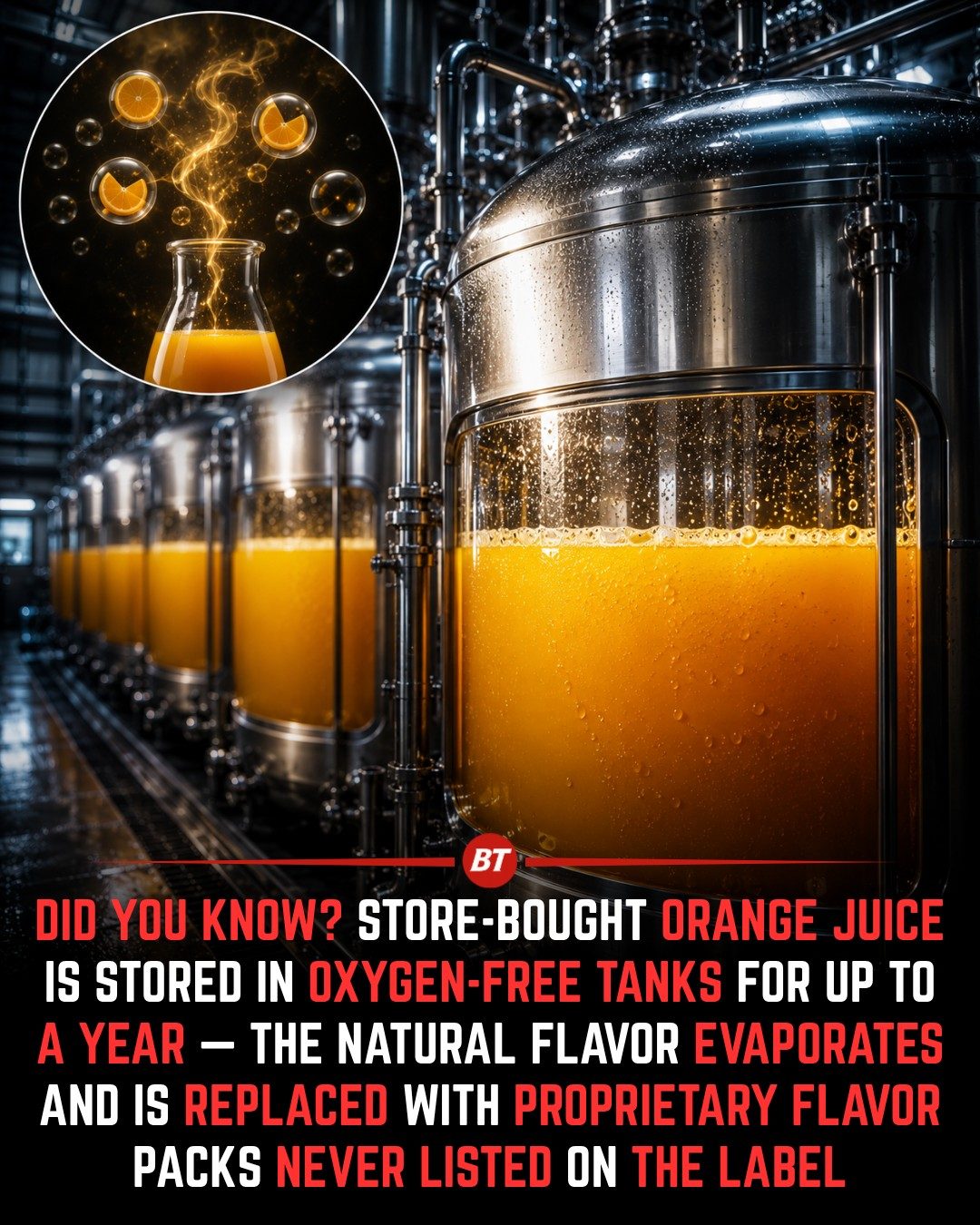
To ensure a consistent supply of orange juice throughout the year, manufacturers store large quantities of the freshly squeezed juice in massive oxygen-free tanks. These tanks can hold orange juice for up to a year. Removing oxygen from the storage environment helps prevent spoilage and slows the degradation of the juice, preserving its quality over an extended period.
The Role of Oxygen-Free Tanks
The use of oxygen-free tanks is a critical step in the storage process. Oxygen can react with the juice, causing it to degrade more quickly and lose its fresh aroma and flavor. By storing the juice in an oxygen-free environment, manufacturers can extend its shelf life significantly. However, this process also has a significant impact on the juice's flavor profile.
Flavor Evaporation and Replacement
One of the challenges of storing orange juice for extended periods is the evaporation of its natural flavor. The volatile compounds responsible for the fresh aroma and taste of newly squeezed orange juice can dissipate over time, even in an oxygen-free environment. To address this issue, manufacturers use specially developed flavor packs made from compounds originally derived from oranges. These flavor systems are designed to restore the aroma and taste that can be lost during storage and processing.
Regulatory Considerations
Because these flavor compounds are derived from orange components, regulations in many countries do not require them to be listed separately on the ingredient label. This can lead to consumer confusion, as the label may simply state "100% orange juice" without indicating the use of these added flavor packs. The process ensures that the juice maintains a consistent taste profile, but it also means that the product on the shelf may be quite different from what consumers imagine.
Practical Tips
If you prefer a juice that retains the fresh-squeezed taste, there are a few practical tips to keep in mind:
Checking the Label
While the label may not always explicitly state the use of flavor packs, paying attention to the processing and storage methods outlined on the packaging can provide some insight. Look for terms like "freshly squeezed" or "not from concentrate" to get an idea of the juice's freshness.
Buying Local
Supporting local orchards and juice producers can also be a good way to ensure that you are getting a fresher product. Local producers often have shorter supply chains, which means the juice is processed and bottled closer to the time of purchase. This can result in a more flavorful and fresh-tasting product.
Storage at Home
Storing orange juice properly at home can also help maintain its freshness. Keep it refrigerated and consume it within a reasonable time frame to ensure you get the best flavor. Freshly squeezed orange juice is best enjoyed soon after purchase or preparation.
Important Takeaways
Understanding the industrial process behind orange juice production reveals several key points:
- Store-bought orange juice is often stored in oxygen-free tanks for extended periods to ensure a consistent year-round supply.
- The natural flavor of orange juice can evaporate during storage, leading to the use of flavor packs to restore aroma and taste.
- Regulations in many countries do not require these added flavor compounds to be listed separately on the ingredient label.
- For a fresher taste, consider buying local or paying close attention to the labeling and storage methods of the product.
Conclusion
The process of producing and storing orange juice involves several intricate steps designed to ensure consistent quality and flavor. From harvesting and processing to storage in oxygen-free tanks and the addition of flavor packs, each step plays a crucial role in delivering the product to consumers. Whether you are a casual consumer or someone who enjoys a glass of orange juice daily, understanding the industrial process can enhance your appreciation for this beloved beverage.
Watch the Reel
Questions readers ask
How does large-scale orange juice manufacturing ensure a consistent supply year-round?
Large-scale orange juice manufacturers use oxygen-free tanks to store freshly squeezed juice, which helps preserve the juice's flavor and prevents degradation. This process allows for a consistent supply of orange juice throughout the year, regardless of the harvesting season.
What is the difference between store-bought orange juice and freshly squeezed orange juice?
Store-bought orange juice has undergone an industrial process that includes pasteurization and storage in oxygen-free tanks, which can affect its taste and nutritional content. Freshly squeezed orange juice, on the other hand, is consumed immediately after extraction, retaining a more vibrant flavor and higher nutritional content.
How do manufacturers preserve the flavor of orange juice during storage?
Manufacturers preserve the flavor of orange juice by storing it in oxygen-free tanks. This process prevents the juice from oxidizing, which can degrade its taste and nutritional compounds over time. By minimizing exposure to oxygen, manufacturers can maintain the juice's quality for extended periods.
Why is the industrial process of orange juice production important to understand?
Understanding the industrial process of orange juice production helps consumers make more informed decisions about the product they are buying. It reveals the steps involved and helps consumers appreciate the complexities behind ensuring a consistent supply of orange juice. The process ensures that the product remains stable, safe, and ready for consumption year-round.
How does the storage process affect the taste of store-bought orange juice?
The storage process can affect the taste of store-bought orange juice, as it can alter the juice's flavor compounds. While oxygen-free storage helps preserve the juice, some consumers might notice slight differences in taste compared to freshly squeezed orange juice. This is due to the industrial processes and storage techniques used to ensure a year-round supply.
Related deep dives
Similar reads based on topic and creator.




Recent articles
Fresh deep dives from the latest Reels we unpacked.




Comments
Be the first to comment.