Home Buying vs. Renting in the U.S.: A Historical Perspective
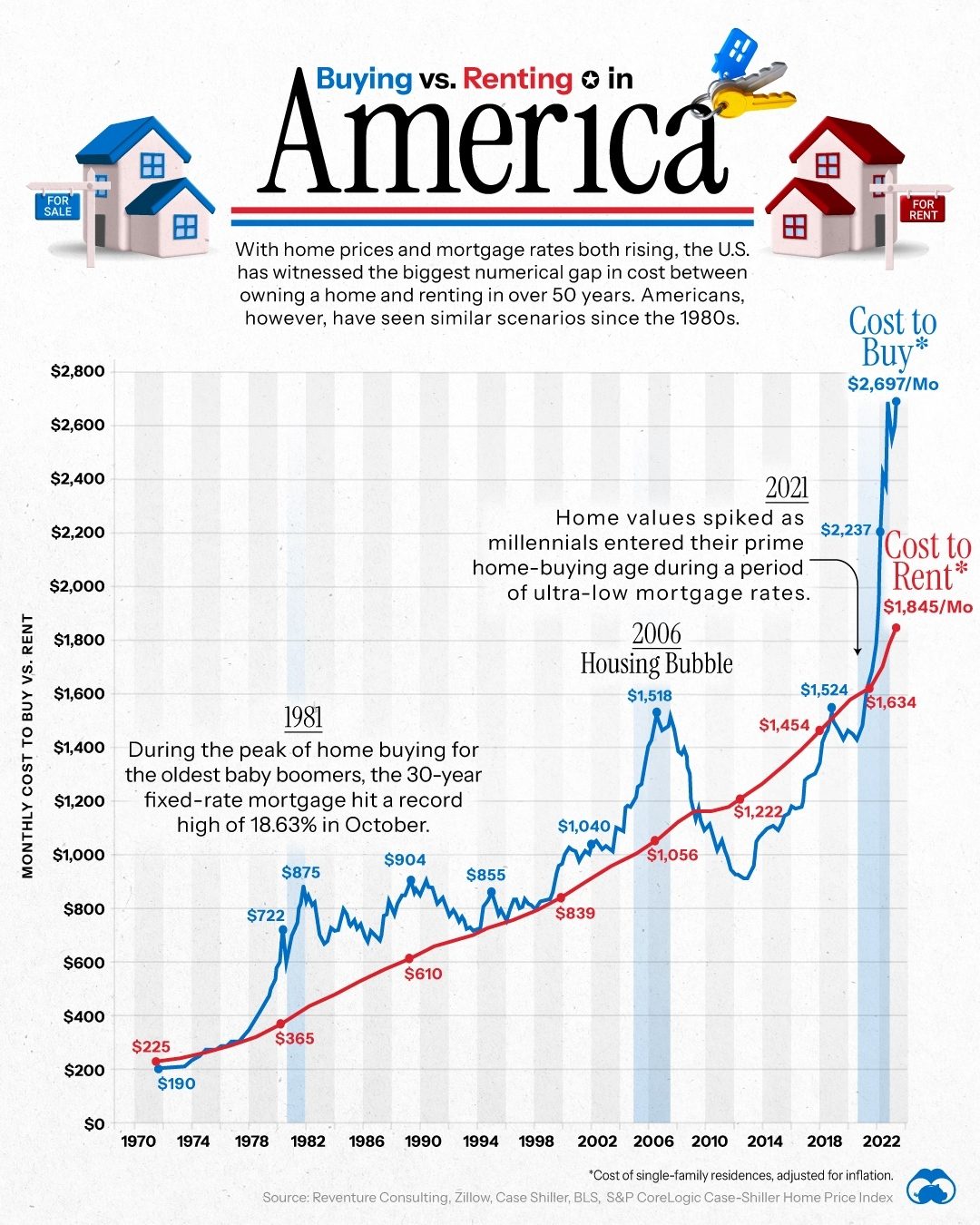
Today, the U.S. is experiencing the biggest gap in monthly costs between owning a home and renting in over 50 years. This trend is driven by rising home prices and mortgage rates. Understanding the historical context of this situation can provide valuable insights into current market conditions and future trends.
Context / Why this matters
The decision to buy or rent a home is one of the most significant financial choices an individual or family will make. It impacts monthly budgets, long-term financial goals, and overall quality of life. The current gap in costs between buying and renting is substantial, making it crucial to delve into the historical data to understand how we got here and what it means for future homeowners and renters.
Main discussion
Historical Trends in Home Buying vs. Renting
Since 1970, the U.S. has seen significant fluctuations in home buying and renting costs. Inflation-adjusted data shows that the cost of both buying and renting has increased, although the gap between the two has widened at various points. One of the most notable periods was the early 1980s, when similar gaps occurred.
The infographic highlights key periods, including the housing bubble of the 1980s and the more recent spike in home values as millennials entered the market. The entry of millennials into the housing market during a period of ultra-low mortgage rates had a significant impact on home prices, leading to a notable increase in the cost of buying a home.
The Impact of Mortgage Rates and Housing Bubbles
Mortgage rates play a crucial role in the affordability of homeownership. During periods of low mortgage rates, buying a home becomes more attractive, leading to increased demand and higher home prices. Conversely, high mortgage rates can make renting a more economical choice. Understanding these fluctuations is essential for making informed decisions.
Housing bubbles, such as the one in 1981, also impact the cost of buying versus renting. These periods of rapid price appreciation can lead to significant market corrections, affecting both buyers and renters. The infographic shows the impact of these bubbles on the monthly cost to buy versus rent, providing a clearer picture of historical trends.
The Role of Millennials in the Housing Market
The entry of millennials into the housing market has been a significant factor in recent trends. With ultra-low mortgage rates and a desire for homeownership, millennials have driven up home prices. This has resulted in a broader gap between the cost of buying and renting, making it more challenging for new buyers to enter the market.
Practical tips
When deciding whether to buy or rent, consider the following tips:
-
Evaluate Your Financial Situation: Assess your income, savings, and long-term financial goals. Buying a home requires a significant upfront investment, including a down payment, closing costs, and ongoing maintenance.
-
Consider Market Conditions: Look at current mortgage rates, home prices, and rental prices in your area. Historical data can provide insights into future trends, helping you make a more informed decision.
-
Think Long-Term: Homeownership is often a long-term investment. If you plan to stay in the same location for several years, buying a home may be more beneficial. However, if you anticipate moving frequently, renting might be a better option.
-
Factor in Maintenance Costs: Owning a home comes with additional costs, such as repairs, maintenance, and property taxes. These expenses can add up quickly, so it's essential to factor them into your budget.
-
Evaluate Local Market Trends: Different regions have varying housing markets. Research local trends, including home price appreciation, rental price fluctuations, and economic indicators.
Important takeaways
-
Historical Context Matters: Understanding historical trends in home buying and renting can provide valuable insights into current market conditions.
-
Mortgage Rates Influence Decisions: Low mortgage rates can make buying a home more attractive, while high rates can favor renting.
-
Housing Bubbles Impact Costs: Periods of rapid price appreciation and subsequent corrections can significantly impact the cost of buying versus renting.
-
Millennials' Impact: The entry of millennials into the housing market has driven up home prices, widening the gap between buying and renting costs.
-
Long-Term Planning: Consider your long-term financial goals and housing needs when deciding whether to buy or rent.
Conclusion
The current gap in monthly costs between owning a home and renting is significant, but it is not unprecedented. Historical data shows that similar scenarios have occurred, and understanding these trends can help individuals make more informed decisions. By considering factors such as mortgage rates, housing bubbles, and long-term financial goals, potential homeowners and renters can navigate the current market more effectively.
Watch the Reel
Questions readers ask
What factors have contributed to the significant increase in home buying costs compared to renting?
The surge in home buying costs relative to renting is primarily due to rising home prices and increased mortgage rates. These factors have created the largest monthly cost gap between buying and renting in over 50 years. Additionally, inflation and economic conditions have played a role in this trend.
Why is it important to look at historical data when considering buying a home versus renting?
Examining historical data provides context for current market conditions and helps predict future trends. By understanding past patterns in home prices, mortgage rates, and renting costs, individuals can make more informed decisions about whether to buy or rent a home.
How do current mortgage rates in 2023 affect the decision to buy a home?
In 2023, higher mortgage rates have increased the overall cost of homeownership, making it more expensive to buy a home compared to renting. This shift is a significant factor in the widened cost gap and influences the financial feasibility of buying a home for many potential buyers.
What are the key considerations when using a buy vs. rent calculator?
A buy vs. rent calculator can help compare the costs of buying versus renting by taking into account factors such as mortgage rates, home prices, renting costs, and property taxes. However, it is important to also consider personal financial goals, long-term plans, and the potential for home price appreciation or depreciation.
How have inflation-adjusted home prices impacted the home buying trends for millennials?
Inflation-adjusted home prices have significantly influenced home buying trends for millennials. Rising home prices and mortgage rates have made it more challenging for millennials to enter the housing market, leading many to opt for renting instead of buying, especially in areas where the cost of single-family homes has surged.
What are the implications of the current housing market trends for renters?
The current housing market trends, with higher home buying costs, have led to a more favorable environment for renters in terms of cost. However, renters should be aware of the potential for rent increases and consider long-term financial goals when deciding whether to continue renting or explore the possibility of buying a home in the future.
How can renters decide if now is the right time to buy a home?
Renters considering a transition to homeownership should evaluate their financial stability, long-term plans, and the local housing market conditions. Conducting a thorough rent vs. buy analysis, using a buy vs. rent calculator, and consulting with a financial advisor can provide clarity on whether buying a home is a viable and beneficial option at this time.
Recent articles
Fresh deep dives from the latest Reels we unpacked.




Comments
Be the first to comment.