Etymology of 'Mortgage'
The word "mortgage" has a fascinating history rooted in an older language. Understanding its origins provides insight into the legal and financial context in which the term was first used.
Context / Why this matters
Mortgages are a fundamental part of modern finance, particularly in real estate. The term is ubiquitous in discussions about home ownership, loans, and property transactions. Knowing where the term comes from can enhance appreciation for its historical significance and the evolution of financial practices.
Main discussion
The French origins
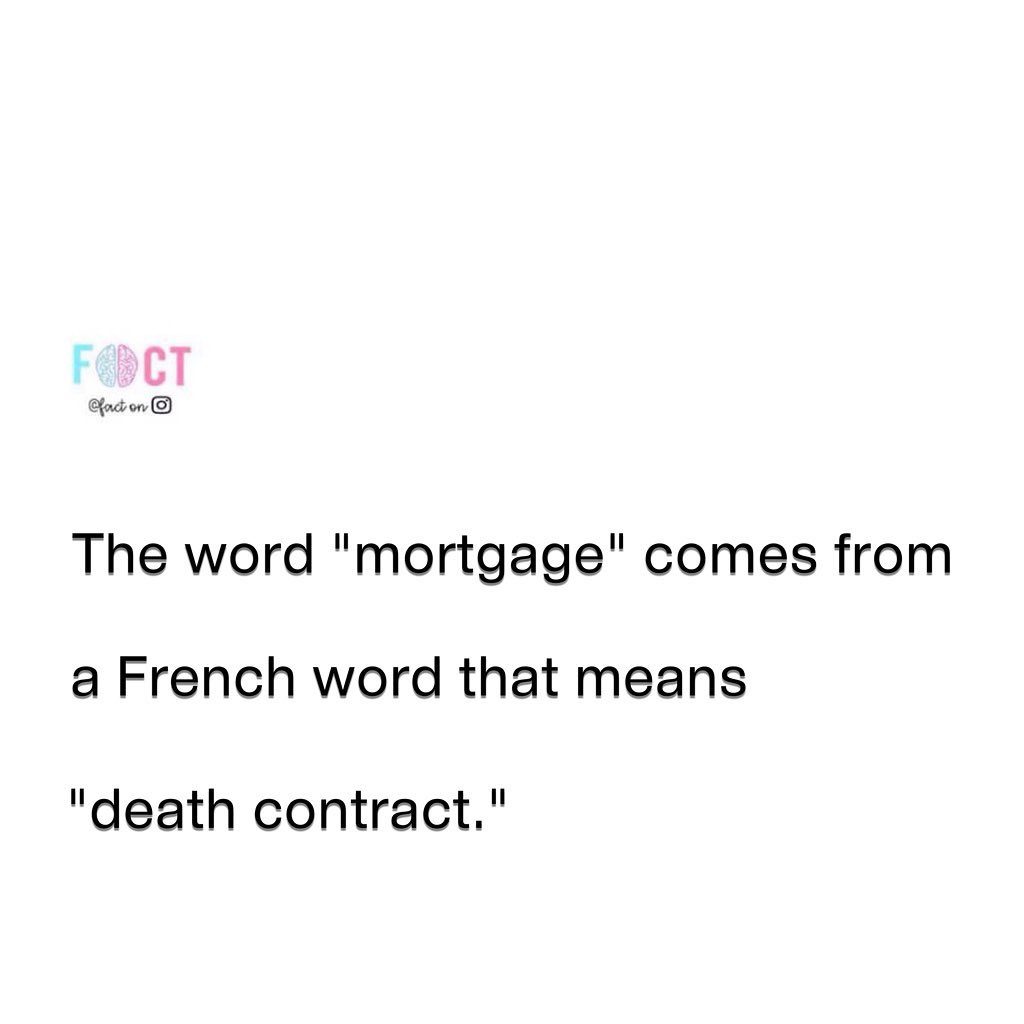
The word "mortgage" originates from Middle English, but its roots trace back to French. The term comes from the Old French word mort gaige. This phrase is a contraction of two Latin words, mors and cautio. One might not intuitively connect a financial term with death, so let's delve into the deeper meaning.
Mort means "death," while gaige (or gage in modern French) translates to "pledge." Together, mort gaige literally means a "dead pledge." This term originated in feudal times, particularly in medieval France.
Historical context
In medieval France, if a person borrowed money to purchase a property, they would sign a contract called a mortgage. If the borrower failed to repay the loan, the property would be permanently forfeited to the lender. This "dead" aspect was because, unlike modern mortgages, the borrower could not reclaim the property by paying off the debt after the forfeiture period had passed. The pledge, or security, was essentially dead—hence the term mortgage.
The concept is distinct from modern mortgage agreements, where the borrower typically retains the right to redeem the property by paying off the debt. The historical context of the term reflects a much stricter and less flexible financial system.
Evolution of the term
As legal and financial systems evolved, so did the concept of a mortgage. The strict "dead pledge" terminology softened over time, and the term mortgage became more flexible. In modern legal systems, a mortgage is a conditional pledge that allows the borrower to reclaim the property by repaying the loan.
In these modern systems, if a borrower defaults on the loan, the lender can seize the property through a process called foreclosure. However, the borrower generally has options to redeem the property even after default, which was not the case in medieval times.
Modern usage
Today, mortgages are a cornerstone of the real estate market. They enable individuals and families to purchase homes by spreading the cost over many years. The term mortgage remains in use despite its historical connotations, reflecting the enduring influence of medieval legal concepts on modern finance.
Practical tips
Understanding the etymology of "mortgage" can provide valuable insights for anyone involved in real estate or finance. It can help clarify the legal and historical context of mortgages, making it easier to navigate the complexities of modern mortgage agreements. Here are a few practical tips:
- Research Historical Context: Knowing the origins of the term can help you understand how mortgage laws have evolved.
- Legal Consultation: Always consult with a legal professional when dealing with mortgage agreements to understand the current legal implications.
- Financial Education: Learn about different types of mortgages and their terms to make informed decisions.
- Historical Comparisons: Compare modern mortgage practices with historical ones to appreciate the advancements in financial and legal systems.
Important takeaways
The term "mortgage" has a rich history that dates back to medieval France. Its origins reflect a much stricter and less flexible financial system, where mortgages were essentially "dead pledges." Understanding this etymology can provide valuable insights into the evolution of financial and legal practices, making it easier to navigate modern mortgage agreements.
Conclusion
The word "mortgage" may seem straightforward, but its historical roots are intricate and revealing. From its origins as a "death contract" to its modern usage in real estate, the term has undergone significant transformations. By understanding its etymology, individuals can gain a deeper appreciation for the legal and financial systems that shape modern mortgage agreements. This knowledge can be invaluable for anyone involved in real estate or finance, providing a clearer perspective on the complexities of mortgage transactions.
Watch the Reel
Questions readers ask
What does the term 'mortgage' mean in its original French context?
In its original French context, 'mortgage' comes from the term 'mort gaige,' which translates to 'dead pledge.' This reflects a historical practice where a borrower would lose their property permanently if they failed to repay the loan.
How did the word 'mortgage' evolve from French to English?
The word 'mortgage' was adopted into Middle English from Old French. It originated from a legal concept in medieval France where a pledge was considered 'dead' or forfeit if the loan was not repaid. This term found its way into English as the financial practices evolved and became more complex.
Why is it significant that 'mortgage' comes from French?
The French origin of the term 'mortgage' helps us understand the historical roots of modern financial practices. It shows how legal and financial concepts have evolved from medieval times to the present day, offering a glimpse into the development of property law and lending practices.
What were the implications of a 'dead pledge' in medieval France?
In medieval France, a 'dead pledge' meant that if a borrower defaulted on a loan, the property used as collateral would be permanently forfeited. This harsh consequence underscores the seriousness of financial agreements and the permanent nature of the pledge.
How has the meaning of 'mortgage' changed from its original French definition?
While the original French term 'mort gaige' implied a permanent loss of property, the modern definition of 'mortgage' involves a more nuanced legal agreement. Today, a mortgage typically allows the borrower to regain full ownership of the property once the loan is repaid, reflecting changes in financial and property laws over time.
Are there any other legal terms that have a similar French origin?
Yes, many legal and financial terms have French origins, reflecting the historical influence of French law and language on English legal systems. For example, 'lien' and 'chattel' are other terms with French roots, showcasing how legal concepts have been adapted and evolved over time.
How does understanding the French origin of 'mortgage' help in modern real estate transactions?
Understanding the French origin of the term 'mortgage' can provide a deeper appreciation for the historical context of property transactions. It highlights the serious implications of financial agreements and the importance of adhering to repayment terms, even though modern practices have evolved to be more borrower-friendly.
Related deep dives
Similar reads based on topic and creator.



Recent articles
Fresh deep dives from the latest Reels we unpacked.




Comments
Be the first to comment.