Supplement Timing Guide
Taking vitamin and mineral supplements has become a common practice to support overall health and wellness. However, the optimal timing for taking these supplements can significantly impact their absorption and effectiveness. The right timing depends on various factors, including your health, diet, and any medications you might be taking.
Why This Matters
Understanding the best time to take your supplements ensures you get the most out of them. Proper timing can enhance absorption, reduce side effects, and maximize the benefits of each supplement. This guide focuses on common nutritional supplements, providing practical advice on when to take them for optimal results.
Main Discussion
Iron
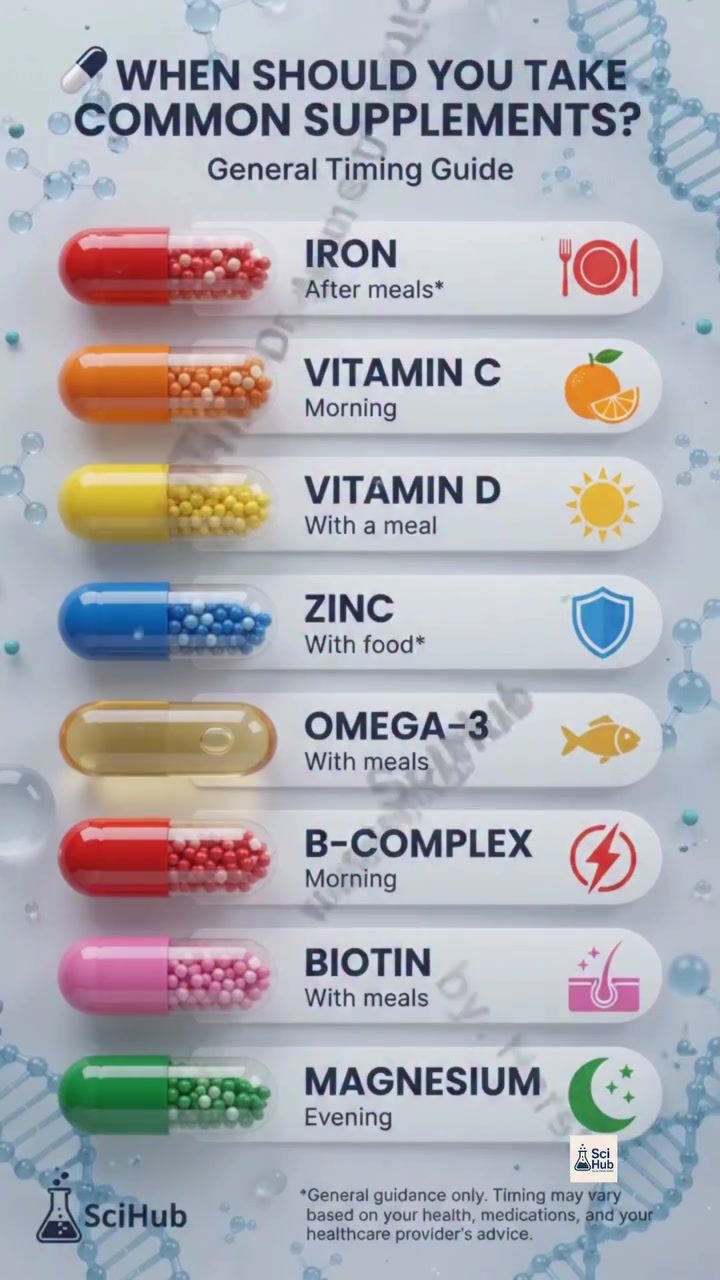
Iron is a crucial mineral for maintaining healthy red blood cells and preventing anemia. It is often best absorbed on an empty stomach, but many people find it more comfortable to take with or after a meal. This can help reduce potential stomach upset. If you take iron, avoid consuming it with tea, coffee, or calcium-rich foods, as these can interfere with absorption. Iron supplements are typically best taken in the morning or afternoon.
Vitamin C
Vitamin C is a potent antioxidant that supports immune function and collagen production. It can be taken at any time of day, but taking it in the morning or with meals can be beneficial. Vitamin C also enhances the absorption of iron, so taking them together can be advantageous, especially for those with iron deficiencies.
Vitamin D
Vitamin D is essential for bone health, immune function, and mood regulation. As a fat-soluble vitamin, it is best absorbed when taken with a meal containing healthy fats, such as avocados, nuts, or olive oil. Vitamin D supplements are often recommended to be taken with the largest meal of the day, usually dinner or lunch, for better absorption.
Zinc
Zinc plays a vital role in immune function, wound healing, and protein synthesis. It is typically taken with food to reduce the risk of nausea and stomach upset. Avoid taking high-dose calcium or iron supplements at the same time as zinc, unless advised by a healthcare provider, as they can interfere with zinc absorption. Zinc supplements are often best taken with a midday meal.
Omega-3
Omega-3 fatty acids are beneficial for heart health, brain function, and reducing inflammation. They are best absorbed when taken with meals, especially those containing fat, as this enhances their bioavailability. Taking omega-3 supplements with lunch or dinner can be particularly effective.
B-Complex
B-complex vitamins are crucial for energy metabolism, nerve function, and DNA synthesis. They are often taken in the morning, as B vitamins can support normal energy levels throughout the day. Taking B-complex vitamins in the morning can help you feel more energized and focused.
Biotin
Biotin, also known as vitamin B7, supports healthy hair, skin, and nails, as well as energy metabolism. It can be taken at any time of day, with or without food. Biotin supplements are versatile and can be easily incorporated into your daily routine.
Magnesium
Magnesium is essential for muscle and nerve function, blood sugar control, and blood pressure regulation. Many people prefer taking magnesium in the evening or before bedtime. Some forms of magnesium, such as magnesium glycinate, can promote relaxation and improve sleep quality. Taking magnesium before bed can help you wake up feeling refreshed.
Practical Tips
-
Consult a Healthcare Provider: Always consult with a healthcare provider before starting any new supplement regimen. They can provide personalized advice based on your health status, medications, and dietary needs.
-
Follow the Guidelines: Use the general guidelines provided as a starting point, but be open to adjusting based on how your body responds and any specific advice from your healthcare provider.
-
Stay Consistent: Consistency is key when it comes to supplement benefits. Try to take your supplements at the same time each day to maintain steady levels in your body.
-
Monitor for Interactions: Some supplements can interact with medications or other supplements. Be aware of potential interactions and adjust your timing accordingly.
Important Takeaways
- Timing Matters: The best time to take a supplement can vary based on the type of supplement and your individual needs.
- Consult a Professional: Always follow the guidance of a healthcare provider, as general recommendations may not apply to everyone.
- Pay Attention to Your Body: Notice how your body responds to different timing and adjust as needed.
Conclusion
Optimizing the timing of your vitamin and mineral supplements can significantly enhance their effectiveness and absorption. By following these guidelines and consulting with a healthcare provider, you can make the most of your supplement regimen and support your overall health and wellness.
Watch the Reel
Questions readers ask
When is the best time to take an iron supplement?
For optimal absorption, take iron supplements on an empty stomach, ideally in the morning. If you experience stomach upset, take them with a small amount of food or drink. Avoid taking iron with coffee or tea, as these can inhibit absorption.
Should I take vitamin C all at once, or spread it out through the day?
You can take vitamin C at any time of the day, but it's best to spread out your intake. Aim for 200-300mg every 2-3 hours, or as advised by a health professional. This ensures consistent levels of vitamin C in your body throughout the day.
Why is it recommended to take vitamin D in the morning?
Taking vitamin D in the morning can help regulate your sleep-wake cycle. It also allows your body to synthesize vitamin D throughout the day, which is a necessary process. Additionally, it ensures that you have a consistent intake.
What is the best time to take a zinc supplement?
Zinc can be taken any time of the day, but it's best to take it with food to avoid stomach upset. If you're taking zinc for its immune-boosting properties, consider taking it in the morning or early afternoon to support your body's immune function throughout the day.
Is it a good idea to take biotin with a meal?
Yes, it's recommended to take biotin with a meal. This helps to enhance the absorption of biotin, and it reduces the chances of digestive discomfort.
When should I take magnesium supplements for better sleep?
For better sleep, take magnesium supplements about 1-2 hours before bedtime. This allows the magnesium to be absorbed and used by your body to support sleep and relaxation. It can also help to minimize the likelihood of stomach upset.
Can I take all of my supplements at once, or should I spread them throughout the day?
It's generally best to spread out your supplement intake throughout the day. This ensures that your body can absorb and utilize the supplements more effectively. Some supplements may interact with each other, so it's important to follow the specific timing guidelines for each supplement.
Related deep dives
Similar reads based on topic and creator.


Recent articles
Fresh deep dives from the latest Reels we unpacked.




Comments
Be the first to comment.