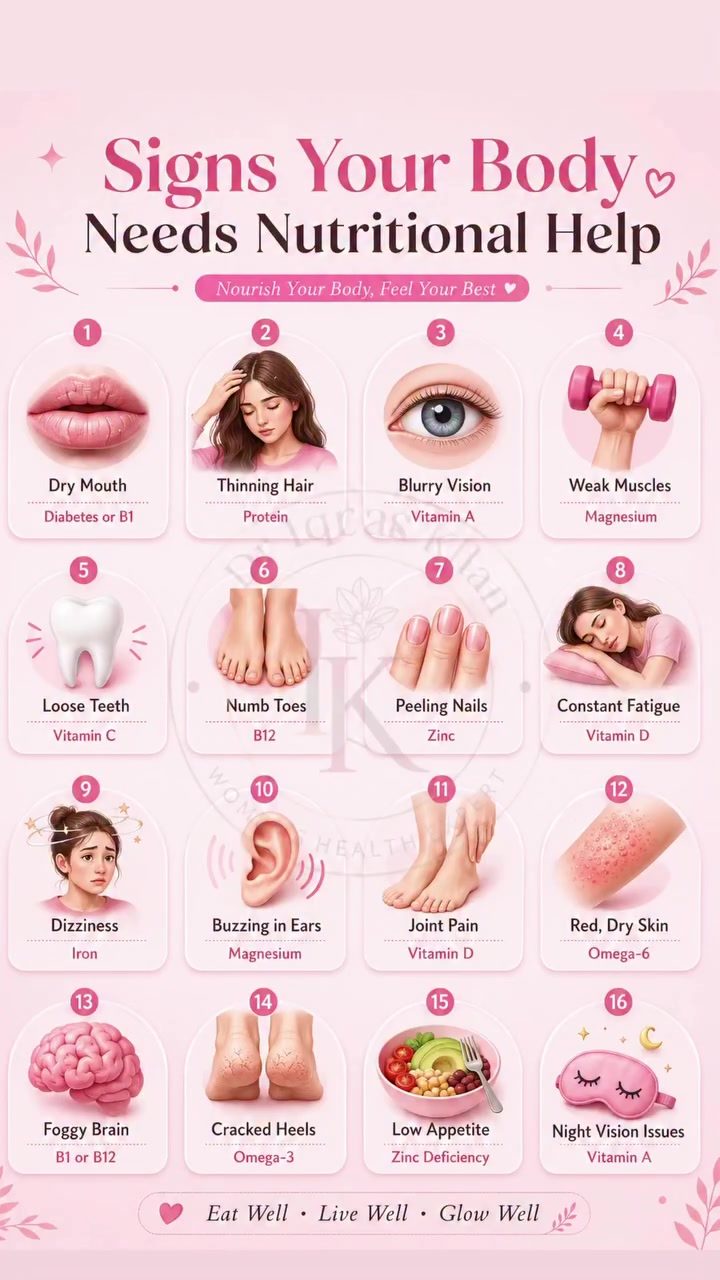
Nutritional Deficiency Signs
Nutritional deficiencies can manifest in various ways, and recognizing these signs can help you address potential issues before they become more serious. Understanding the subtle cues your body provides is essential for maintaining overall health and well-being. Here is a comprehensive guide to some of the most common signs that your body may need nutritional help.
Why This Matters
A balanced diet is crucial for optimal health, but even with a nutritious eating plan, deficiencies can occur. Factors such as poor absorption, increased nutrient needs, or specific health conditions can lead to deficiencies. Identifying these signs early can help prevent more significant health issues and improve your quality of life.
Common Nutritional Deficiency Signs
Dry Mouth
Dry mouth can be an early indicator of several health issues, including diabetes or a Vitamin B1 deficiency. Adequate hydration and proper diet can help alleviate this symptom, but persistent dry mouth should be evaluated by a healthcare professional.
Thinning Hair
Thinning hair is often associated with a protein deficiency. Protein is essential for hair health, and a lack of it can lead to hair loss and thinning. Ensuring a diet rich in protein, such as lean meats, fish, eggs, and legumes, can help maintain hair health.
Blurry Vision
Blurry vision can be a sign of Vitamin A deficiency. Vitamin A is crucial for eye health, and its absence can lead to night blindness and other vision problems. Incorporating foods rich in Vitamin A, such as carrots, sweet potatoes, and leafy greens, can help support eye health.
Weak Muscles
Weak muscles can indicate a magnesium deficiency. Magnesium is essential for muscle function and overall energy levels. Foods like nuts, seeds, and leafy greens are good sources of magnesium and can help alleviate muscle weakness.
Loose Teeth
Loose teeth may signal a Vitamin C deficiency. Vitamin C is vital for collagen production, which is necessary for maintaining healthy gums and teeth. Eating citrus fruits, strawberries, and bell peppers can help boost your Vitamin C intake.
Numb Toes
Numbness in the toes can be a sign of Vitamin B12 deficiency. Vitamin B12 is crucial for nerve function, and its deficiency can lead to neurological symptoms. Foods like meat, fish, eggs, and fortified cereals are good sources of Vitamin B12.
Peeling Nails
Peeling nails often point to a zinc deficiency. Zinc is essential for maintaining healthy nails and skin. Incorporating foods rich in zinc, such as oysters, beef, and pumpkin seeds, can help improve nail health.
Constant Fatigue
Constant fatigue can be a sign of a Vitamin D deficiency. Vitamin D is crucial for energy levels and overall well-being. Getting enough sunlight and consuming foods like fatty fish, fortified dairy, and egg yolks can help maintain adequate Vitamin D levels.
Dizziness
Dizziness can indicate an iron deficiency. Iron is essential for producing red blood cells, and its deficiency can lead to anemia, causing dizziness and fatigue. Eating foods rich in iron, such as red meat, poultry, and spinach, can help boost iron levels.
Buzzing Ears
Buzzing ears can be a sign of magnesium deficiency. Magnesium helps regulate muscle and nerve function, and its deficiency can cause various symptoms, including tinnitus. Foods like leafy greens, nuts, and whole grains are good sources of magnesium.
Joint Pain
Joint pain can be related to a Vitamin D deficiency. Vitamin D is crucial for bone health, and its deficiency can lead to joint pain and other musculoskeletal issues. Getting enough sunlight and consuming foods like fatty fish, fortified dairy, and egg yolks can help maintain adequate Vitamin D levels.
Red, Dry Skin
Red, dry skin can indicate an Omega-6 deficiency. Omega-6 fatty acids are essential for healthy skin, and their deficiency can lead to dryness and irritation. Foods like nuts, seeds, and vegetable oils are good sources of Omega-6.
Foggy Brain
A foggy brain can be a sign of Vitamin B1 or B12 deficiency. These vitamins are crucial for brain function, and their deficiency can lead to cognitive impairment. Foods rich in B vitamins, such as meat, fish, eggs, and leafy greens, can help support brain health.
Cracked Heels
Cracked heels can indicate an Omega-3 deficiency. Omega-3 fatty acids are essential for skin health, and their deficiency can lead to dryness and cracking. Foods like fatty fish, flaxseeds, and walnuts are good sources of Omega-3.
Low Appetite
A low appetite can be a sign of a zinc deficiency. Zinc is essential for a healthy appetite and digestion. Incorporating foods rich in zinc, such as oysters, beef, and pumpkin seeds, can help improve your appetite.
Night Vision Issues
Night vision issues can be related to a Vitamin A deficiency. Vitamin A is crucial for eye health, and its deficiency can lead to night blindness and other vision problems. Eating foods rich in Vitamin A, such as carrots, sweet potatoes, and leafy greens, can help support eye health.
Practical Tips
Maintain a Balanced Diet
Eating a variety of nutrient-dense foods is the best way to ensure you get all the essential vitamins and minerals. Include fruits, vegetables, lean proteins, and whole grains in your diet to cover a wide range of nutritional needs.
Stay Hydrated
Proper hydration is crucial for overall health. Drink plenty of water throughout the day to support your body's functions and maintain optimal health.
Seek Professional Advice
If you notice any of these signs, it's important to seek professional advice. A healthcare provider can conduct the necessary tests and provide a proper evaluation to determine if a nutritional deficiency is the cause of your symptoms.
Consider Supplements
In some cases, supplements may be necessary to address specific deficiencies. However, always consult a healthcare provider before starting any supplement regimen to ensure it's safe and appropriate for your needs.
Important Takeaways
- Recognizing the signs of nutritional deficiencies can help you address potential issues early.
- A balanced diet and proper hydration are essential for maintaining overall health.
- Seeking professional advice is crucial for a proper evaluation and treatment of symptoms.
- In some cases, supplements may be necessary to address specific deficiencies.
Conclusion
Your body provides subtle cues when something may be missing, and recognizing these signs can help you take proactive steps towards better health. Whether it's dry mouth, thinning hair, or joint pain, understanding the potential nutritional deficiencies behind these symptoms can guide you towards a more balanced and healthier lifestyle. Eating a balanced diet, staying hydrated, and seeking professional advice when needed are key to maintaining optimal health and well-being.
Watch the Reel
Questions readers ask
What are some subtle signs of nutritional deficiency?
Some subtle signs of nutritional deficiency include dry mouth, thinning hair, and weak muscles. Other indicators may involve changes in vision, such as blurred or impaired vision. Recognizing these signs early can help address potential health issues before they escalate.
How can dry mouth indicate a nutritional deficiency?
A dry mouth can be a sign of vitamin B12 deficiency, which is crucial for nerve function and blood formation. Ensuring adequate intake of vitamin B12 through diet or supplementation can help alleviate this symptom and improve overall health.
What nutritional deficiencies can cause thinning hair?
Thinning hair can be a result of deficiencies in essential nutrients such as iron, zinc, and vitamin D. It is important to consult with a healthcare provider to identify the specific deficiency and develop a targeted nutritional plan.
Why might I experience weak muscles due to nutritional deficiencies?
Magnesium, calcium and potassium deficiencies can result in weak muscles due to their roles in muscle contraction and relaxation. Addressing these deficiencies through a balanced diet or supplementation can help improve muscle strength and overall physical performance.
Can vision problems be a sign of nutritional deficiency?
Yes, vision problems such as night blindness or blurred vision can indicate vitamin A deficiency. Ensuring adequate intake of vitamin A through foods like carrots, sweet potatoes, and leafy greens, or through supplementation can help maintain good eye health and overall well-being.
What should I do if I notice any of these subtle signs?
If you notice any of these subtle signs, it is important to consult with a healthcare provider for an accurate diagnosis. They can help determine the underlying cause and develop a suitable nutritional plan to address the deficiency, improving your overall health and well-being.
How can I ensure I am meeting my nutritional needs?
To ensure you are meeting your nutritional needs, focus on a balanced diet rich in fruits, vegetables, lean proteins, and whole grains. Regularly consuming a variety of nutrient-dense foods can help prevent deficiencies and support optimal health. If necessary, supplements can be added to your diet under the guidance of a healthcare provider.
Recent articles
Fresh deep dives from the latest Reels we unpacked.




Comments
Be the first to comment.