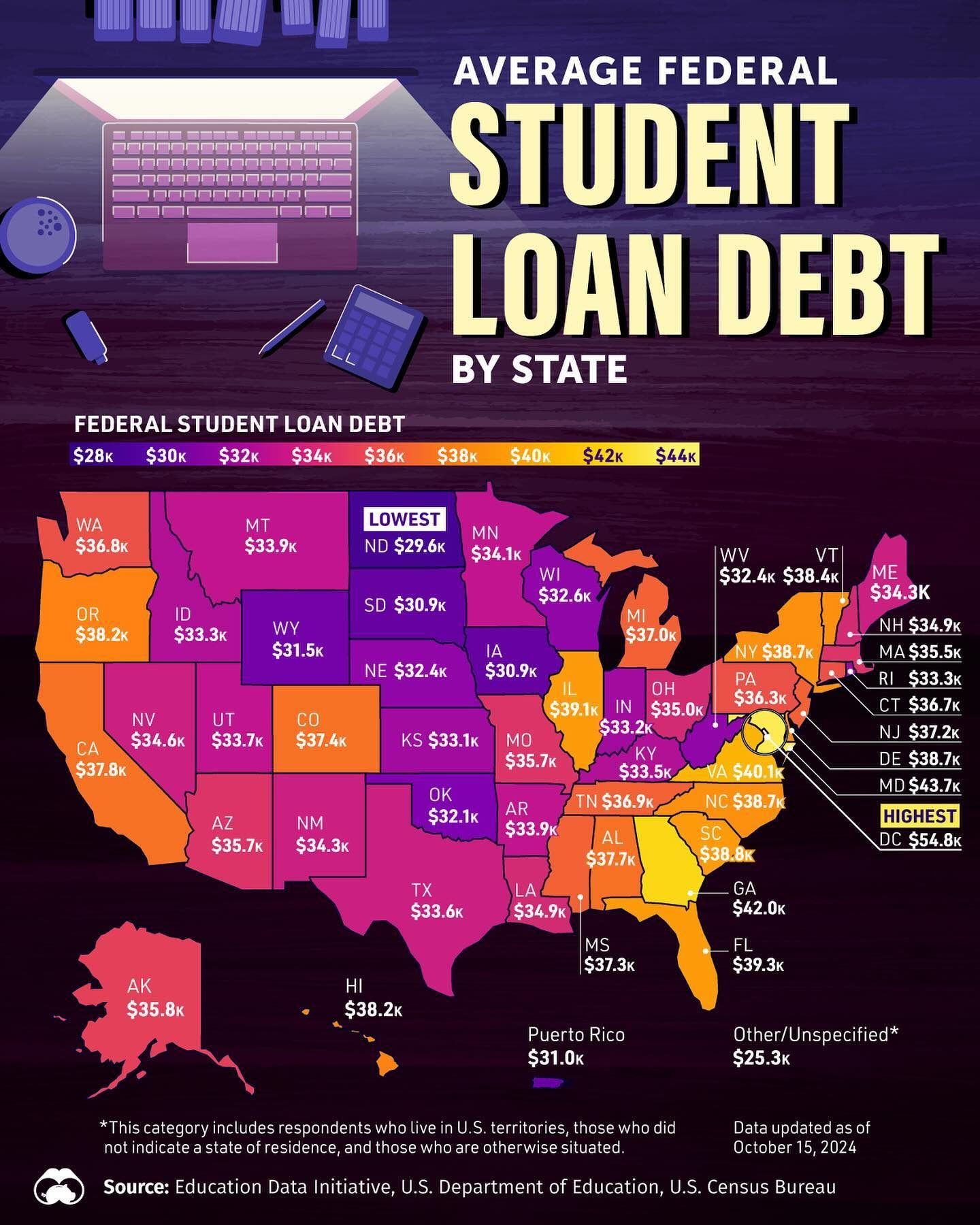
Student Loan Debt by State
Federal student loan debt varies significantly across the United States, with Washington, D.C. leading the nation with an average debt of $54,795 per borrower. On the other end of the spectrum, North Dakota boasts the lowest average student loan debt, at $29,647, making it the only state with an average debt under $30,000. These figures highlight the stark disparities in educational financing burdens faced by borrowers across different regions.
Why This Matters
Understanding the distribution of student loan debt by state is crucial for several reasons. It provides insights into the economic and educational policies that affect different regions. It also sheds light on the financial challenges graduates face when entering the workforce. Moreover, this data can inform policymakers and institutions about the need for targeted financial aid and debt relief programs.
Main Discussion
Geographic Disparities
The data reveals a wide range of average federal student loan debt amounts across the country. States like Washington, D.C., Georgia, and Arkansas have some of the highest average debts, while North Dakota, South Dakota, and Wyoming have the lowest. These disparities can be attributed to various factors, including the cost of tuition, the availability of in-state tuition rates, and the economic conditions in each state.
High-Debt States
-
Washington, D.C.
- Average Debt: $54,795
- Washington, D.C. tops the list with the highest average student loan debt. This can be linked to the high cost of living and the presence of prestigious but expensive educational institutions in the area.
-
Georgia
- Average Debt: $42,000
- Georgia follows closely with a significant debt burden. This could be due to the combination of in-state and out-of-state tuition costs, as well as the need for additional financial aid.
Low-Debt States
-
North Dakota
- Average Debt: $29,647
- North Dakota stands out with the lowest average debt. This is likely due to lower tuition costs at public universities and a lower cost of living compared to other states.
-
South Dakota
- Average Debt: $30,900
- Similar to North Dakota, South Dakota benefits from lower tuition fees and a more affordable living environment, which helps keep student loan debt lower.
Factors Influencing Debt
Several factors contribute to the variations in student loan debt across states:
- Cost of Living: States with higher costs of living often have higher tuition fees and living expenses, leading to greater debt.
- Tuition Costs: Public universities in some states may have lower tuition fees, especially for in-state residents, which can significantly impact the debt burden.
- Economic Conditions: States with robust economies may offer more job opportunities for graduates, potentially reducing the need for large loans.
- Financial Aid: The availability and generosity of state and federal financial aid programs can also influence the amount of debt students accumulate.
The Role of Public and Private Universities
Public universities often offer lower tuition rates for in-state students, which can help mitigate the debt burden. Conversely, private universities and out-of-state tuition at public institutions can drive up costs. Understanding the mix of public and private institutions in a state can provide further context for the debt figures.
Federal and State Policies
Federal and state policies play a pivotal role in shaping the student loan landscape. Federal grants, work-study programs, and loan forgiveness initiatives can alleviate some of the debt burden. State-specific policies, such as tuition-free programs for certain demographics, can also make a substantial difference.
Data Sources and Accuracy
The data, sourced from the Education Data Initiative, U.S. Department of Education, and U.S. Census Bureau, is comprehensive and up-to-date as of October 15, 2024. This ensures that the figures presented are reliable and reflective of current trends in student loan debt.
Practical Tips
For students and graduates navigating the complexities of student loan debt, several practical tips can be helpful:
- Explore Federal Aid: Maximize federal grants and loans, which often have lower interest rates and more flexible repayment terms.
- In-State Tuition: If possible, attend in-state public universities to benefit from lower tuition rates.
- Scholarships and Grants: Actively seek scholarships and grants to reduce the amount of loans needed.
- Budgeting: Create a detailed budget to manage living expenses and avoid additional debt.
- Loan Forgiveness Programs: Look into federal and state loan forgiveness programs, especially if you work in public service or certain high-need fields.
Important Takeaways
- Regional Disparities: Student loan debt varies significantly by state, with Washington, D.C., having the highest average debt and North Dakota the lowest.
- Cost Factors: The cost of living, tuition fees, and economic conditions play crucial roles in determining the debt burden.
- Policy Impact: Federal and state policies can alleviate the debt burden through various financial aid and loan forgiveness programs.
- Data Reliability: The data from the Education Data Initiative and U.S. Census Bureau provide a reliable snapshot of the current situation.
Conclusion
Federal student loan debt is a multifaceted issue influenced by a range of economic, educational, and policy factors. By understanding the geographic disparities and the underlying causes, policymakers, educators, and students can work towards more equitable and manageable financial solutions.
Watch the Reel
Questions readers ask
Which state has the highest average federal student loan debt per borrower?
Washington, D.C. has the highest average federal student loan debt per borrower, with a staggering amount of $54,795. This figure is significantly higher than the national average, reflecting the unique economic and policy environment of the district.
What factors contribute to the variations in student loan debt across different states?
Multiple factors contribute to these variations, including the cost of living, tuition fees, state funding for higher institutions, and economic opportunities. Additionally, state policies on financial aid and scholarships play a significant role in determining the amount of debt graduates accumulate.
How does North Dakota's student loan debt compare to the rest of the nation?
North Dakota has the lowest average student loan debt in the nation, at $29,647. This makes it the only state with an average debt under $30,000, and it is significantly lower than the national average. This can be attributed to factors like lower tuition costs and robust financial aid programs in the state.
Why is it important to compare student loan debt by state?
Comparing student loan debt by state reveals crucial insights into the economic and policy landscapes that shape graduates' financial burdens. It highlights disparities in educational financing and the challenges graduates face when entering the workforce, allowing for a better understanding of regional differences in financial assistance and economic opportunities.
What is the significance of Washington, D.C.'s high student loan debt?
Washington, D.C.'s high student loan debt is significant because it indicates the substantial financial burden graduates face in this region. This can be attributed to factors such as higher tuition fees and the cost of living. Understanding this can help policymakers and institutions implement more effective strategies to reduce the debt burden.
How can understanding student loan debt statistics help graduates and policymakers?
Understanding student loan debt statistics can help graduates make informed decisions about their financial futures and career paths. For policymakers, these statistics are vital for developing targeted policies and initiatives aimed at reducing the debt burden. They also provide a basis for advocating for more supportive financial aid programs and economic policies.
What role do state policies play in determining student loan debt levels?
State policies play a crucial role in determining student loan debt levels. Policies that provide substantial financial aid, scholarships, and grants can significantly reduce the amount of debt students accumulate. Conversely, states with limited financial support may see higher levels of student loan debt, as students rely more on loans to fund their studies.
Related deep dives
Similar reads based on topic and creator.

Recent articles
Fresh deep dives from the latest Reels we unpacked.




Comments
Be the first to comment.