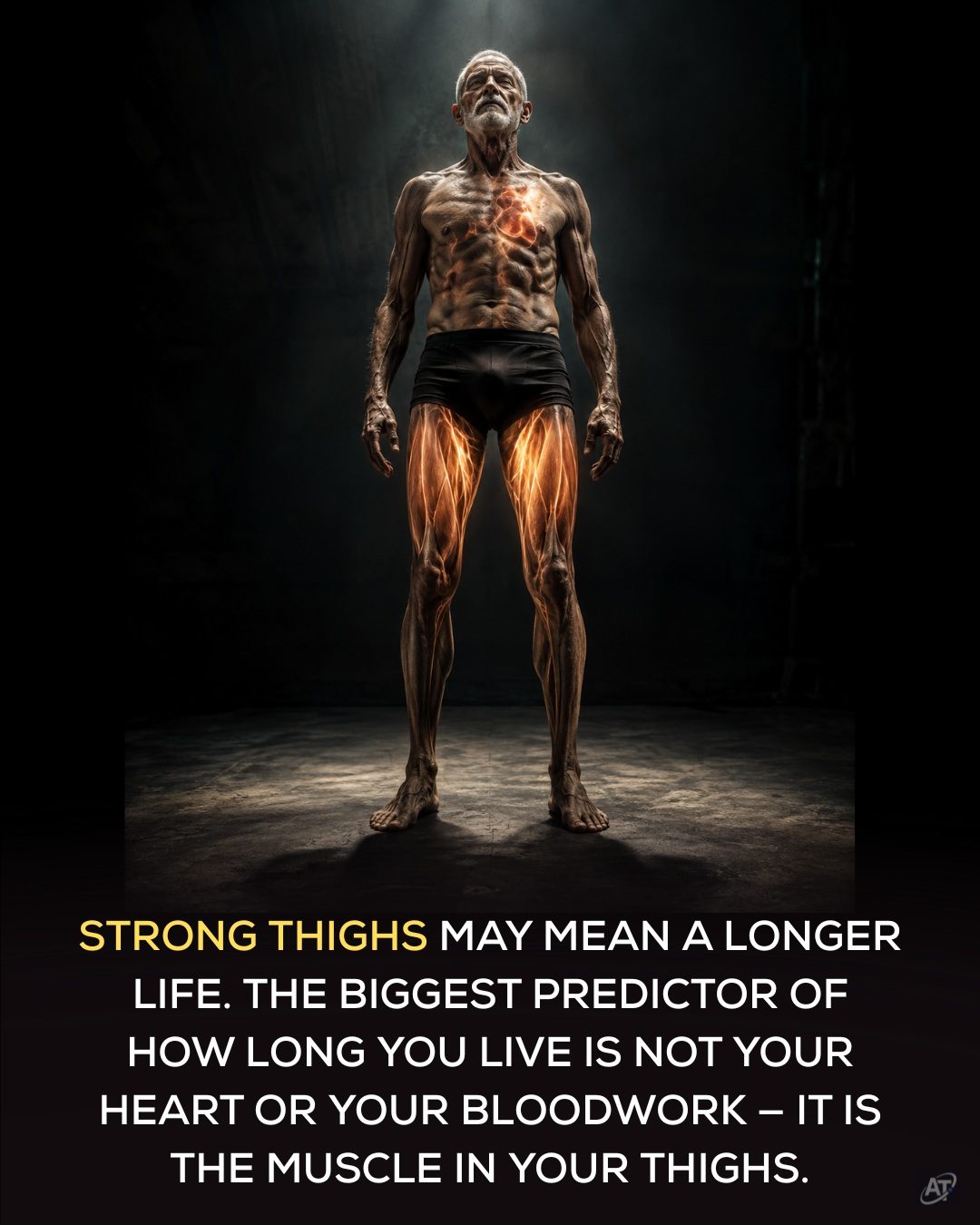
Muscle Health and Longevity
The condition of your legs, particularly the strength and mass of your thighs, can offer profound insights into how well you are aging. Research has consistently shown that greater muscle mass and strength in the lower body are linked to a lower risk of early death. While this doesn't mean your thighs can predict your exact lifespan or that they are more critical than other health indicators like heart health and bloodwork, they do provide a valuable window into your mobility, metabolic health, and overall physical independence.
Context / Why This Matters
Your legs contain some of the body’s largest muscles, which play a crucial role in various physiological functions. Skeletal muscle is essential for managing blood sugar levels through insulin-stimulated glucose disposal. Additionally, when muscles contract, they release signaling molecules called myokines. These molecules communicate with other organs, influencing metabolism and inflammation.
The connection between strong legs and overall health extends beyond physical mobility. A 10-year study of female twins found that greater leg power at the beginning of the study was associated with healthier cognitive aging and more favorable differences in brain structure years later. While strong legs do not guarantee protection from dementia, they may reflect the physical activity, circulation, and overall health that support the aging brain.
Main Discussion
The Role of Leg Muscles in Health
The muscles in your legs, particularly the quadriceps, are not only vital for movement but also for maintaining metabolic health. These muscles are responsible for insulin-stimulated glucose disposal, which helps regulate blood sugar levels. Proper regulation of blood sugar is crucial for preventing conditions like type 2 diabetes and metabolic syndrome.
Muscles in the legs also play a role in releasing myokines, which are signaling molecules that communicate with other organs and influence metabolism and inflammation. This means that strong leg muscles can have a positive impact on your overall health, beyond just mobility.
Leg Strength and Cognitive Health
Research has shown that there is a connection between leg strength and cognitive health. A 10-year study of female twins found that greater leg power at the beginning of the study was associated with healthier cognitive aging and more favorable differences in brain structure years later. While strong legs do not guarantee protection from dementia, they may reflect the physical activity, circulation, and overall health that support the aging brain.
Muscle Decline with Age
Muscle mass and strength can begin to decline gradually from middle age, and inactivity can exacerbate this loss. The quadriceps are among the muscle groups that appear particularly vulnerable. Many people do not notice the change until everyday activities like climbing stairs, getting out of a chair, or carrying items become more challenging. This decline in strength is often attributed to "just getting older," but it is, in part, a loss of muscle strength.
Practical Tips
Strengthening Your Legs
The good news is that muscle remains trainable after 40—and even much later in life. Progressive resistance training can improve lower-body strength, muscle size, and physical function in older adults. Here are some practical tips to help you maintain and improve your leg strength:
- Incorporate Weight Training: Focus on exercises that target your quadriceps, such as squats, lunges, and leg presses. These exercises can help build muscle mass and strength.
- Stay Active: Engage in activities that keep you moving, such as walking, cycling, or swimming. Regular physical activity can help prevent muscle decline and improve overall health.
- Maintain a Balanced Diet: A balanced diet rich in protein can help support muscle growth and repair. Include foods like lean meats, fish, eggs, and legumes in your diet.
- Stay Hydrated: Proper hydration is essential for muscle function and recovery. Aim to drink plenty of water throughout the day.
Progressive Resistance Training
Progressive resistance training involves gradually increasing the weight or resistance during exercises. This type of training can help build muscle mass and strength, even in older adults. Some effective exercises for progressive resistance training include:
- Squats: Stand with your feet shoulder-width apart and lower your body as if sitting in a chair. Push through your heels to stand back up.
- Lunges: Stand with your feet hip-width apart and take a large step forward with one foot. Lower your body until your front knee is at a 90-degree angle. Push through your front heel to return to the starting position.
- Leg Presses: Use a leg press machine to push weight away from your body with your legs.
Important Takeaways
- Stronger thighs may be a predictor of a longer, healthier life.
- Leg muscles play a crucial role in metabolic health and cognitive function.
- Muscle mass and strength can decline with age, but progressive resistance training can help maintain and improve them.
- Incorporating weight training, staying active, and maintaining a balanced diet can support muscle health and overall well-being.
Conclusion
Maintaining strong leg muscles is essential for longevity and overall health. The muscles in your legs are not only vital for mobility but also play a crucial role in metabolic health and cognitive function. By incorporating progressive resistance training, staying active, and maintaining a balanced diet, you can support your muscle health and improve your overall well-being.
Watch the Reel
Recent articles
Fresh deep dives from the latest Reels we unpacked.




Comments
Be the first to comment.