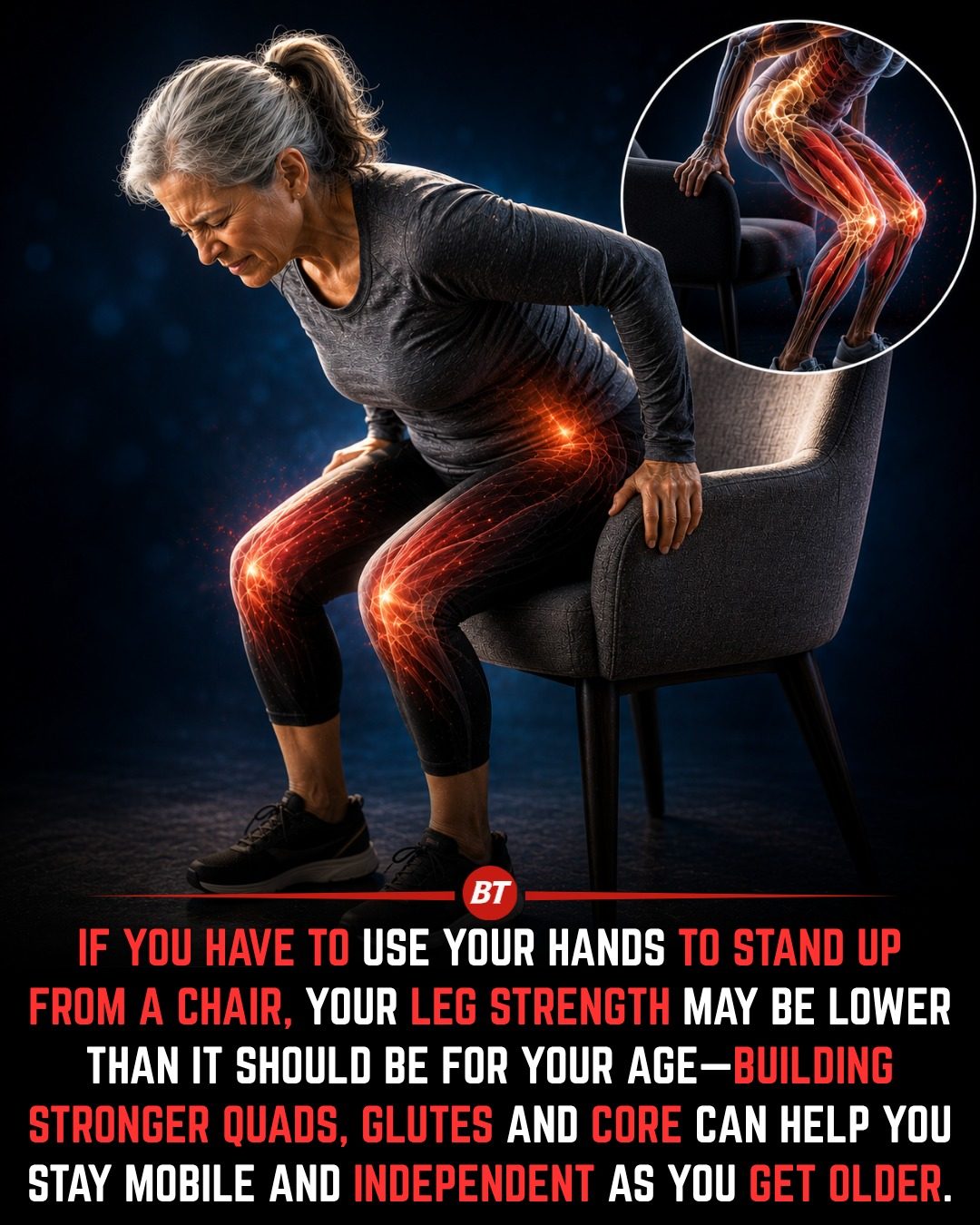
Leg Strength and Mobility: How to Stand Strong and Move with Confidence
Leg strength and mobility are often overlooked, yet they are critical for maintaining independence and quality of life as we age. The ability to stand up from a chair without assistance is a fundamental skill that can indicate overall lower-body strength. But why is this movement so important, and what can you do to improve it?
Why This Matters
The simple act of standing up from a chair requires a significant amount of muscle force to lift your entire body against gravity. This movement primarily relies on the quadriceps, glutes, and core muscles working in unison. As we age, these muscles naturally lose strength and size, a process known as sarcopenia. When this happens, everyday activities like getting out of a chair, climbing stairs, or carrying groceries become more challenging, and the risk of falls and loss of independence increases.
Healthcare professionals often use the 30-Second Chair Stand Test to assess lower-body strength in older adults. Research published in the Journal of Aging and Physical Activity and recommendations from the Centers for Disease Control and Prevention (CDC) show that poorer performance on this simple test is associated with reduced mobility, increased fall risk, and lower physical function.
Understanding Leg Strength and Mobility
The Role of Key Muscles
The primary muscles involved in standing up from a chair are:
- Quadriceps: These are the muscles at the front of your thighs. They are crucial for extending your knees and lifting your body weight.
- Glutes: Your gluteal muscles, particularly the gluteus maximus, are essential for hip extension and providing stability.
- Core: The muscles in your core, including your abdominals and lower back, work to stabilize your spine and transfer energy from your lower body to your upper body.
The Impact of Sarcopenia
Sarcopenia is the age-related loss of muscle mass and strength. It affects everyone as they get older, but the rate and extent can vary. This decline can make it harder to perform daily activities and increase the risk of falls. Sarcopenia is a natural part of aging, but it can be mitigated with consistent exercise and proper nutrition.
How to Assess and Improve Your Leg Strength
The 30-Second Chair Stand Test
The 30-Second Chair Stand Test is a simple yet effective way to assess your lower-body strength. Here’s how it works:
- Sit on a sturdy chair with your back straight and feet flat on the floor.
- Stand up completely, then sit back down without using your hands.
- Repeat this movement for 30 seconds.
- Count the number of times you complete the full stand-up and sit-down movement.
The goal is to complete at least 12 repetitions in 30 seconds. If you struggle to reach this number, it may indicate that your leg strength is lower than it should be for your age.
Strengthening Exercises
Resistance exercises that target the quadriceps, glutes, and core can significantly improve your leg strength and overall mobility. Here are some effective exercises to try:
- Sit-to-Stands: This movement mimics the action of standing up from a chair and is an excellent way to build strength in your quads, glutes, and core. Start by standing up and sitting down 8–12 times without using your hands if you can do so safely. Gradually progress by adding resistance or increasing repetitions as your strength improves.
- Squats: Squats are a compound movement that targets multiple muscle groups, including the quadriceps, glutes, and core. Start with bodyweight squats and gradually add resistance with dumbbells or a barbell as you get stronger.
- Lunges: Lunges work the quadriceps, glutes, and hamstrings. They also improve balance and stability. Start with forward lunges and progress to walking lunges or reverse lunges as your strength improves.
- Glute Bridges: This exercise targets the gluteus muscles and helps improve hip extension. Lie on your back with your knees bent and feet flat on the floor. Lift your hips off the ground until your body forms a straight line from your shoulders to your knees. Hold for a second, then lower your hips back down.
- Planks: Planks are an excellent way to strengthen your core muscles. Lie face down with your forearms and toes on the ground. Keep your body in a straight line from your head to your heels. Hold this position for 20-60 seconds, depending on your fitness level.
Practical Tips
- Consistency is Key: Aim to perform resistance exercises 2–3 times per week. Consistency is more important than intensity, especially when starting out.
- Start Slowly: Begin with bodyweight exercises and gradually add resistance as your strength improves. This approach helps prevent injuries and ensures you are using proper form.
- Focus on Form: Proper form is crucial for getting the most out of your exercises and preventing injuries. If you’re unsure about your form, consider working with a fitness professional or using instructional videos.
- Listen to Your Body: Pay attention to how your body feels during and after your workouts. If you experience pain or discomfort, take a break and consult a healthcare professional if necessary.
- Incorporate Variety: Mix up your exercises to keep your workouts interesting and challenging. Variety also helps prevent boredom and ensures you are working all the necessary muscle groups.
Important Takeaways
- Leg strength and mobility are essential for maintaining independence and quality of life as we age.
- The ability to stand up from a chair without assistance is a good indicator of overall lower-body strength.
- Key muscles involved in standing up include the quadriceps, glutes, and core.
- Sarcopenia, the age-related loss of muscle mass and strength, can make daily activities more challenging and increase the risk of falls.
- The 30-Second Chair Stand Test is a simple way to assess your lower-body strength.
- Resistance exercises that target the quadriceps, glutes, and core can significantly improve leg strength and overall mobility.
Conclusion
Maintaining leg strength and mobility is crucial for staying active and independent as you age. By understanding the importance of key muscles and incorporating strength-building exercises into your routine, you can improve your ability to perform daily activities and reduce the risk of falls. Consistency, proper form, and listening to your body are key to achieving meaningful results. Whether you're just starting or looking to enhance your current fitness level, these practical tips and exercises can help you stand strong and move with confidence.
Watch the Reel
Questions readers ask
Which muscles are primarily involved when standing up from a chair?
The primary muscles involved when standing up from a chair are the quadriceps, glutes, and core muscles. These muscles work together to lift your body against gravity, making this movement a key indicator of overall lower-body strength.
How does leg strength impact the ability to stand up independently?
Leg strength is crucial for standing up independently as it provides the power needed to lift your body from a seated position. Weak leg muscles can make this task challenging, potentially leading to a loss of independence and increased fall risk.
What are some simple leg exercises to improve standing ability?
Simple leg exercises that can improve standing ability include chair squats, wall sits, and calf raises. These exercises target key muscles like the quadriceps, glutes, and core, helping to build strength and stability.
Why is it important to strengthen the core for standing and balance?
A strong core is essential for maintaining balance and stability during standing movements. It supports the spine and helps transfer forces between the upper and lower body, reducing the risk of falls and enhancing overall mobility.
How can improving leg strength and mobility benefit elderly individuals?
Improving leg strength and mobility can significantly benefit elderly individuals by enhancing their ability to perform daily activities with ease, reducing the risk of falls, and promoting independence. This can lead to a better quality of life and increased confidence in movement.
What is sarcopenia and how does it affect standing ability?
Sarcopenia is the natural loss of muscle strength and size that occurs with aging. It can significantly impact standing ability by weakening the muscles required for this movement, making it more challenging to stand up from a seated position.
Are there specific exercises to target the quadriceps and glutes for better standing ability?
Yes, exercises like lunges, step-ups, and leg press specifically target the quadriceps and glutes. Incorporating these exercises into your routine can help strengthen these key muscles, improving your ability to stand up from a chair with ease.
Related deep dives
Similar reads based on topic and creator.




Recent articles
Fresh deep dives from the latest Reels we unpacked.




Comments
Be the first to comment.