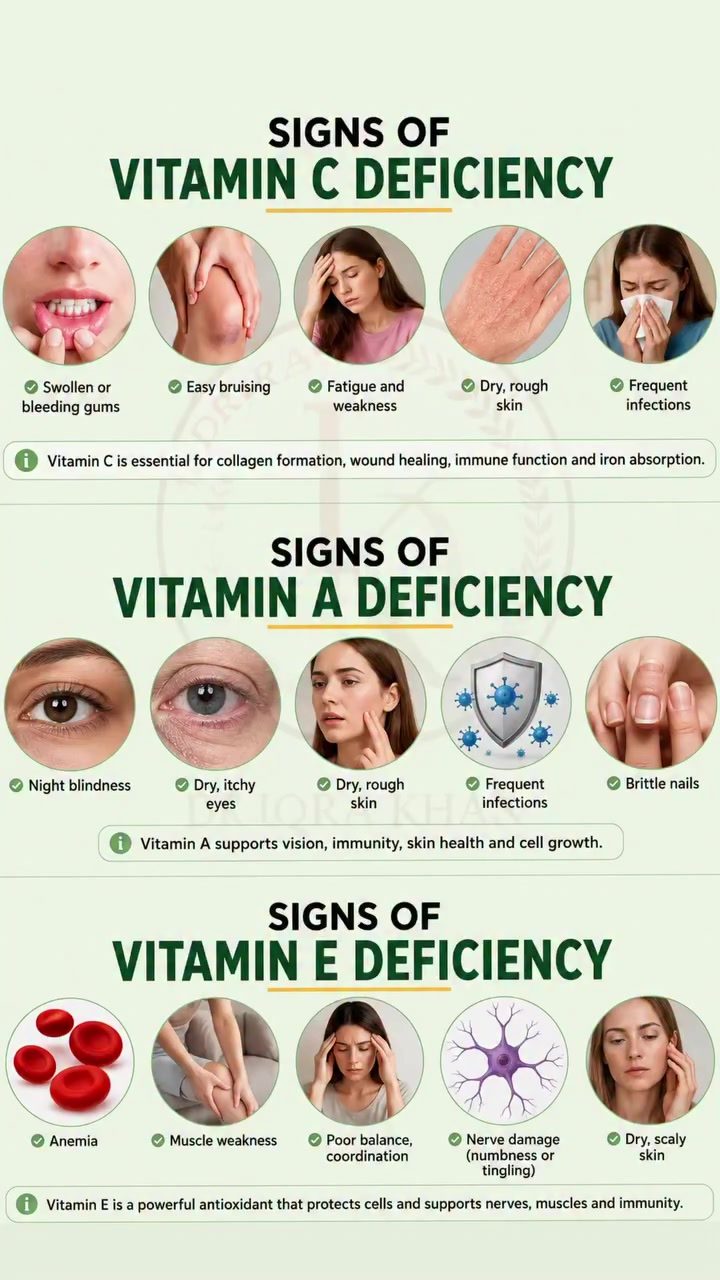
Vitamin Deficiency Signs You Shouldn’t Ignore
Vitamin deficiencies can manifest in various ways, often providing subtle clues that something is amiss. Understanding these signs is crucial for maintaining overall health and well-being. This guide will explore the key indicators of deficiencies in Vitamins C, A, and E, and offer practical advice on prevention and management.
Why This Matters
Identifying vitamin deficiencies early can prevent more serious health issues. While symptoms alone cannot confirm a diagnosis, recognizing them can prompt further investigation and appropriate testing. Always consult a healthcare professional for persistent symptoms.
Key Vitamin Deficiencies and Their Signs
Vitamin C Deficiency
Vitamin C is essential for a multitude of bodily functions, including collagen formation, wound healing, and immune support. Deficiency in this vitamin can lead to several noticeable symptoms:
- Bleeding or swollen gums: One of the earliest signs of Vitamin C deficiency is gum health deterioration. Gums may become swollen, tender, or even bleed easily.
- Easy bruising: Increased bruising can indicate a problem with collagen formation, a key function of Vitamin C.
- Fatigue: Persistent fatigue and weakness can be linked to Vitamin C deficiency, as it affects energy levels and immune function.
- Dry, rough skin: Vitamin C plays a crucial role in skin health. Deficiency can lead to dry, rough, and dull skin.
- Frequent infections: A compromised immune system due to Vitamin C deficiency makes the body more susceptible to infections.
- Slow wound healing: Vitamin C is vital for tissue repair and wound healing. A deficiency can result in prolonged healing times.
Vitamin A Deficiency
Vitamin A is critical for vision, immunity, and skin health. Insufficient Vitamin A can lead to:
- Night blindness: Difficulty seeing in low light is one of the first signs of Vitamin A deficiency.
- Dry, itchy eyes: Inadequate Vitamin A can cause dryness and irritation in the eyes.
- Dry, rough skin: Similar to Vitamin C, Vitamin A deficiency can affect skin health, leading to dryness and roughness.
- Frequent infections: Vitamin A supports immune function, and a deficiency can increase susceptibility to infections.
- Brittle nails: Weak and brittle nails can be an indicator of Vitamin A deficiency.
- Poor growth (in children): Inadequate Vitamin A can affect growth and development, particularly in children.
Vitamin E Deficiency
Vitamin E is a powerful antioxidant that protects cells and supports the nervous system, muscles, and immunity. A deficiency can manifest as:
- Anemia: Vitamin E aids in the formation of red blood cells, and a deficiency can lead to anemia.
- Muscle weakness: This vitamin is essential for muscle health. Deficiency can cause weakness and fatigue.
- Numbness or tingling: Nerve damage, often presenting as numbness or tingling, can be a sign of Vitamin E deficiency.
- Poor balance and coordination: Vitamin E supports nerve function, and a deficiency can affect balance and coordination.
- Dry, scaly skin: Like Vitamins C and A, Vitamin E is important for skin health, and a deficiency can lead to dryness and scaling.
- Vision problems (in severe cases): Severe Vitamin E deficiency can affect vision, particularly in individuals with underlying health conditions.
Practical Tips for Prevention
Preventing vitamin deficiencies involves maintaining a balanced diet rich in essential nutrients. Here are some practical tips:
Dietary Sources
- Vitamin C: Foods rich in Vitamin C include citrus fruits, strawberries, bell peppers, broccoli, and Brussels sprouts.
- Vitamin A: Foods high in Vitamin A include carrots, sweet potatoes, spinach, kale, and liver.
- Vitamin E: Foods rich in Vitamin E include almonds, spinach, avocados, sunflower seeds, and vegetable oils.
Balanced Diet
Maintaining a balanced diet is key to preventing deficiencies. Aim for a diet that includes:
- Fruits and vegetables: A variety of colorful fruits and vegetables ensures a wide range of vitamins and minerals.
- Whole grains: Foods like brown rice, quinoa, and whole-grain bread provide essential B vitamins and fiber.
- Healthy fats: Include sources of healthy fats such as avocados, nuts, and seeds.
- Lean proteins: Incorporate lean proteins like fish, poultry, beans, and lentils.
Supplementation
In some cases, supplementation may be necessary, especially for individuals with specific dietary restrictions or health conditions. Always consult a healthcare professional before starting any supplement regimen.
Important Takeaways
- Be aware of the signs of Vitamin C, A, and E deficiencies. Early detection can prevent more serious health issues.
- Maintain a balanced diet rich in vitamins and minerals to prevent deficiencies.
- Consult a healthcare professional for persistent symptoms and consider appropriate testing.
- Supplementation can be beneficial in certain cases, but always under professional guidance.
Conclusion
Vitamin deficiencies can have a significant impact on overall health. Recognizing the signs of Vitamin C, A, and E deficiencies and taking proactive steps to prevent them can help maintain well-being. Always consult a healthcare professional for persistent symptoms and consider appropriate testing and dietary adjustments.
Watch the Reel
Questions readers ask
What are the early signs of Vitamin C deficiency that I should look out for?
Early signs of Vitamin C deficiency can include bleeding gums, easy bruising, and frequent infections. You may also experience fatigue, muscle weakness, and joint pain. If you notice any of these symptoms, it's important to consult with a healthcare professional.
How does Vitamin A deficiency affect vision and what should I do if I experience these symptoms?
Vitamin A deficiency can lead to night blindness and poor vision, especially in low light conditions. If you experience these symptoms, schedule an appointment with your doctor. They can perform tests to determine if a Vitamin A deficiency is the cause and recommend appropriate treatment.
What are some key signs of Vitamin E deficiency to be aware of?
Vitamin E deficiency can manifest as muscle weakness, poor coordination, and vision problems. It can also cause neurological issues, such as numbness and tingling in the hands and feet. If you experience these symptoms, consult a healthcare professional for further evaluation.
Can Vitamin C deficiency cause frequent infections and is there a way to prevent it?
Yes, Vitamin C deficiency can weaken the immune system, leading to frequent infections. To prevent this, ensure you consume a balanced diet rich in Vitamin C, including citrus fruits, berries, and leafy greens. If you suspect a deficiency, consult a healthcare professional for advice tailored to your needs.
How is night blindness related to Vitamin A deficiency and what can I do about it?
Night blindness is one of the earliest signs of Vitamin A deficiency. It occurs because Vitamin A is crucial for maintaining healthy vision, especially in low light. If you experience night blindness, it's important to have your Vitamin A levels checked by a healthcare professional and take the necessary steps to boost your intake.
What are some common causes of easy bruising and how are they linked to vitamin deficiencies?
Easy bruising can be a sign of Vitamin C deficiency, as Vitamin C plays a crucial role in collagen production and blood vessel health. If you bruise easily, it's a good idea to review your diet and consider speaking with a healthcare provider to rule out any underlying issues.
How can dry skin be an indicator of vitamin deficiency and what should I do?
Dry skin can be a sign of deficiencies in various vitamins, including Vitamin A and Vitamin E. These vitamins are essential for maintaining healthy skin. If you experience persistent dryness, consult a healthcare professional to determine the underlying cause and receive appropriate recommendations.
Recent articles
Fresh deep dives from the latest Reels we unpacked.




Comments
Be the first to comment.