US GDP Growth by State
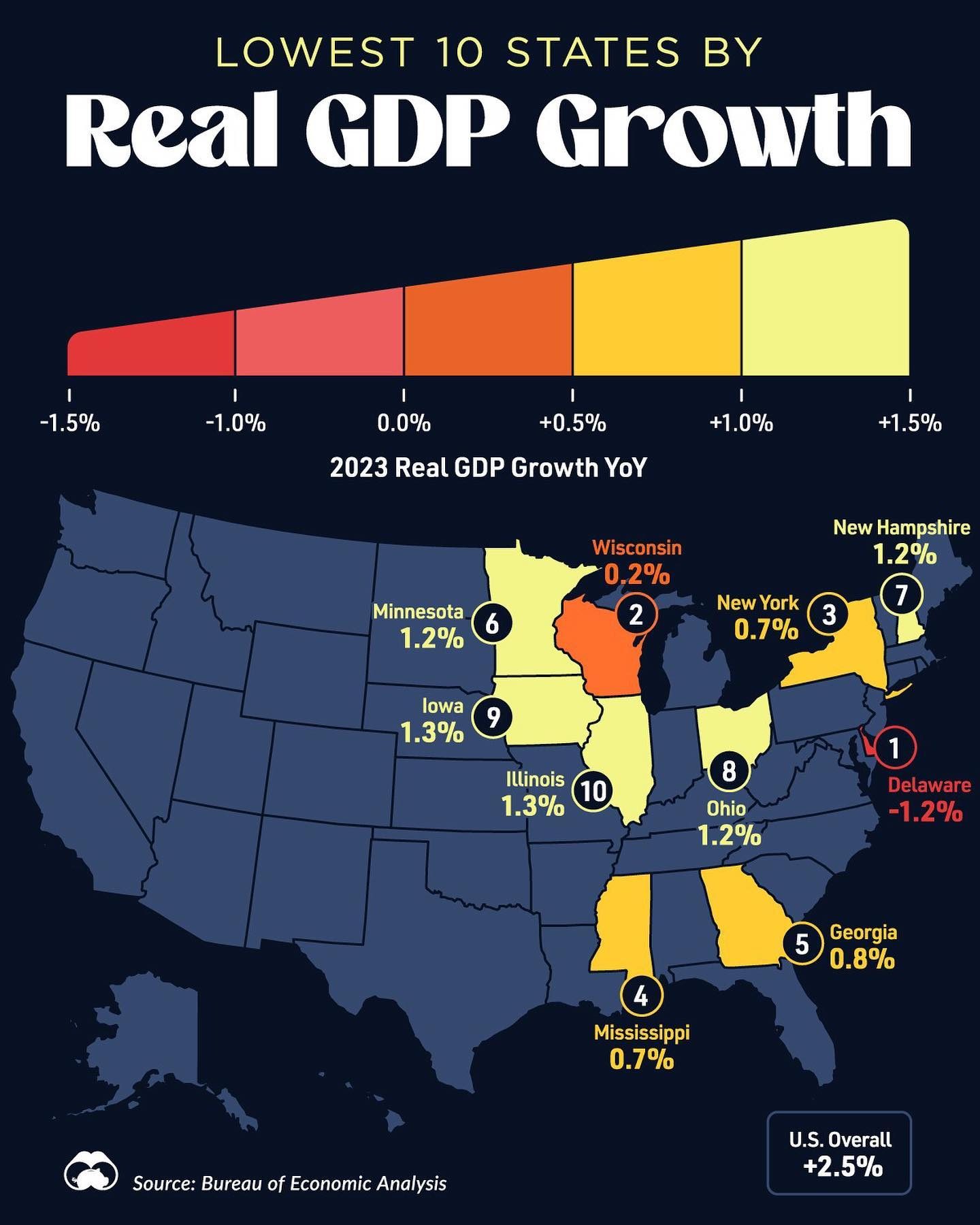
The United States has seen varied economic performance across its states, with some faring better than others. In 2023, ten states experienced the lowest GDP growth, with Delaware taking the hardest hit, experiencing a real GDP shrinkage of -1.2%. This decline was largely attributed to high interest rates, particularly affecting sectors like manufacturing and finance.
Why This Matters
Tracking GDP growth by state provides valuable insights into the economic health and performance of different regions. Understanding which states are struggling can help policymakers allocate resources more effectively and implement targeted measures to stimulate growth. It also highlights the impact of macroeconomic factors, such as interest rates, on local economies.
Main Discussion
The Impact of High Interest Rates
High interest rates have been a significant factor in the economic performance of several states. Delaware, Wisconsin, and New York, in particular, have felt the brunt of these rates, especially in sectors like manufacturing and finance. High interest rates increase the cost of borrowing, making it more expensive for businesses to invest in expansion and for consumers to purchase goods and services. This can lead to a slowdown in economic activity and, consequently, a decrease in GDP growth.
States Most Affected
Delaware
Delaware experienced the most significant decline in GDP growth, with a -1.2% shrinkage. This drop highlights the state's vulnerability to economic headwinds, particularly in sectors sensitive to interest rates.
Wisconsin
Wisconsin also faced notable economic challenges, with its GDP growth ranking among the lowest in the nation. The state's manufacturing sector, a key driver of its economy, was particularly affected by high interest rates, leading to reduced investment and slower growth.
New York
New York, known for its robust finance sector, also suffered from the high interest rate environment. The finance industry, which relies heavily on borrowing and lending, saw diminished activity, contributing to the state's lower GDP growth.
States with Marginal Growth
While some states experienced negative growth, others managed to maintain marginal growth despite the economic challenges. States like New Hampshire, with a 1.2% growth, and Ohio, with a 1.2% growth, illustrate that economic resilience can still be achieved even in a challenging environment. These states may have diversified economies or effective policies that helped mitigate the impact of high interest rates.
Overall US Growth
The U.S. overall GDP growth stood at +2.5% for 2023, suggesting that while some states struggled, the national economy continued to grow. This disparity highlights the importance of regional economic policies and the need for targeted interventions to support struggling states.
Practical Tips
For Policymakers
-
Targeted Interventions: Implement policies that specifically address the needs of states most affected by high interest rates. This could include tax incentives for businesses in manufacturing and finance sectors or subsidies for key industries.
-
Diversification: Encourage economic diversification to reduce reliance on interest-rate-sensitive sectors. Promoting sectors like technology, healthcare, and renewable energy can provide alternative growth opportunities.
-
Infrastructure Investment: Invest in infrastructure projects that can create jobs and stimulate economic activity. This can help offset the negative effects of high interest rates.
For Businesses
-
Financial Planning: Businesses should review their financial plans to adjust for higher borrowing costs. This might involve seeking alternative financing options or optimizing cash flow to reduce reliance on borrowed funds.
-
Explore New Markets: Diversify revenue streams by exploring new markets or expanding product offerings. This can help insulate businesses from the impacts of economic downturns in specific sectors.
-
Cost Management: Implement cost management strategies to improve operational efficiency. This can help businesses maintain profitability even in a high-interest-rate environment.
Important Takeaways
-
Interest Rates Matter: High interest rates can have a profound impact on economic growth, particularly in sectors like manufacturing and finance.
-
Regional Disparities: Economic performance can vary significantly across states, highlighting the need for tailored policies to address regional challenges.
-
Economic Resilience: States with diversified economies or effective policies can achieve growth even in challenging economic conditions.
-
National Growth: Despite regional struggles, the overall U.S. economy continued to grow, indicating a mixed economic landscape.
Conclusion
The economic performance of states in 2023 was marked by significant disparities, with some states experiencing notable declines in GDP growth. Understanding the factors driving these differences, such as high interest rates, can inform targeted interventions and policies to support struggling economies. By addressing these challenges head-on, policymakers and businesses can work towards fostering a more resilient and inclusive economic environment.
Watch the Reel
Questions readers ask
Which states had the lowest GDP growth in 2023 besides Delaware?
Besides Delaware, nine other states experienced the lowest GDP growth in 2023. These states include New Mexico, Wyoming, Maine, Mississippi, Louisiana, Connecticut, North Dakota, West Virginia, and Kansas. These states were also significantly affected by high interest rates.
How did high interest rates impact Delaware's GDP growth?
High interest rates in 2023 dramatically affected Delaware's GDP growth. They slowed down the manufacturing and finance sectors, leading to a real GDP shrinkage of -1.2%. This decline highlighted the sensitivity of these industries to changes in interest rates.
What are some factors that contributed to the economic slowdown in manufacturing across the states in 2023?
The economic slowdown in manufacturing across several states in 2023 was primarily due to high interest rates. These rates increased the cost of borrowing, making it more challenging for manufacturing companies to invest in expansion or maintain operations, leading to a reduction in output and GDP.
Who can benefit from analyzing the GDP growth of states in 2023?
Analyzing the GDP growth of states in 2023 can benefit policymakers, economists, and investors. It provides insights into regional economic performance, aids in strategic resource allocation, and helps identify areas that may require targeted measures to stimulate growth and financial stability.
Which sectors were most affected by the economic slowdown in 2023?
The sectors most affected by the economic slowdown in 2023 were manufacturing and finance. These industries are particularly sensitive to interest rate changes, which influenced their performance and contributed to the overall GDP decline in states like Delaware.
How can understanding state-specific economic performances help policymakers?
Understanding state-specific economic performances can help policymakers in targeted intervention and resource allocation. By identifying states with low GDP growth, policymakers can implement measures tailored to address the specific issues in these regions, such as providing incentives for growth in struggling industries.
Which state had the highest GDP growth in 2023?
The article does not specify which state had the highest GDP growth in 2023, as it focuses on the ten states with the lowest GDP growth. For information on states with the highest GDP growth, it would be beneficial to consult additional resources or reports that provide a comprehensive analysis of all states' economic performances.
Recent articles
Fresh deep dives from the latest Reels we unpacked.




Comments
Be the first to comment.