State Tax Changes: A Deep Dive into U.S. Income Tax Rate Fluctuations
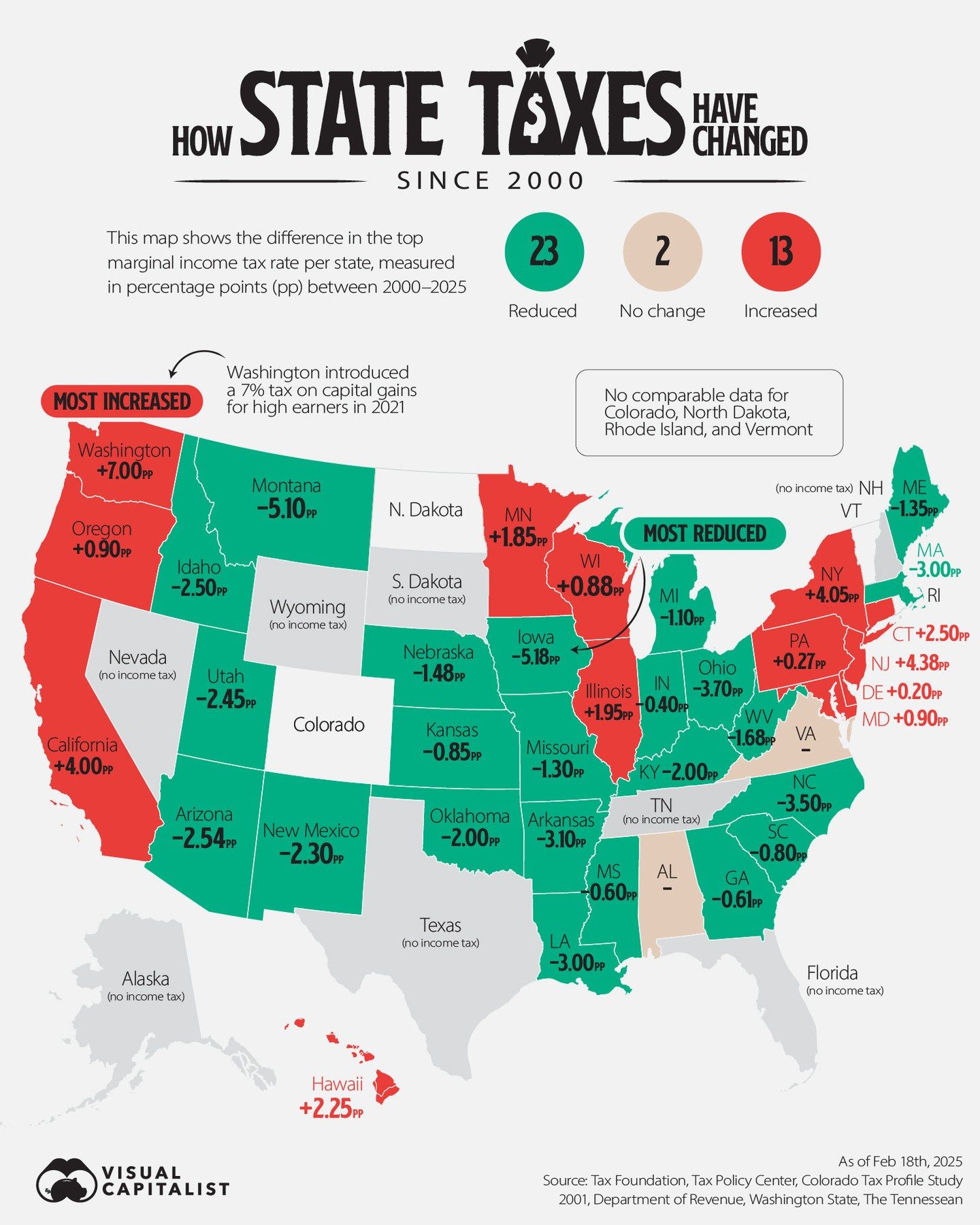
State income tax rates have undergone significant changes across the United States since 2000. This shift has been driven by a mix of economic factors and policy decisions. By 2025, 23 states have lowered their top marginal income tax rates, with Iowa leading the way by reducing its rate by 5.18 percentage points. Tennessee and New Hampshire have even eliminated income taxes entirely. These changes highlight a broader trend of states adjusting their tax policies to remain competitive and attract residents and businesses.
Context: The Landscape of State Taxes
The shift in state tax policies is part of a broader trend. Since 2000, 23 U.S. states have made notable reductions in their top income tax rates. In contrast, some states have raised their rates, and others have kept them steady. These changes are influenced by various factors, including economic growth, fiscal policy goals, and the need to attract or retain residents and businesses.
Why Tax Rates Matter
State income tax rates can significantly impact personal finances and business decisions. They influence where people choose to live, work, and invest, hence driving economic activity and growth. Lower tax rates can make a state more attractive to businesses, potentially leading to job creation and economic development. Conversely, higher taxes can provide more revenue for state services and infrastructure, but they may also deter economic activity.
The Role of Income Tax
Income tax is a critical component of state revenue. It funds essential services such as education, healthcare, and infrastructure. The changes in tax rates reflect a balance between the need for revenue and the desire to remain competitive in an increasingly mobile economy. Understanding these changes can help individuals and businesses make informed decisions about where to live, work, and invest.
State-by-State Analysis
States with Significant Rate Reductions
Iowa: Led the way with a 5.18 percentage point reduction. This substantial cut reflects Iowa's efforts to make the state more competitive for businesses and residents.
Kansas, Kentucky, Minnesota, and Oklahoma: These states have also made notable reductions, with Kansas lowering its rate by 0.85 percentage points, Kentucky by 2.00 percentage points, Minnesota by 1.10 percentage points. These changes highlight a broader trend of states seeking to lower their tax burdens.
North Carolina, Maine, and Washington: These states have seen significant increases in their top income tax rates. North Carolina increased by 3.50 percentage points, Maine by 1.35 percentage points, and Washington by 7.00 percentage points. These increases reflect different policy goals, such as funding state services or addressing budget deficits.
States with No Income Tax
Several states have notably eliminated income taxes altogether. Tennessee and New Hampshire stand out for having done so, making them attractive options for residents seeking to minimize their tax burdens. Other states without income tax include Alaska, Florida, Nevada, New Hampshire, South Dakota, Texas, Washington, and Wyoming.
States with Modest Changes
Many states have seen modest changes in their top marginal income tax rates. Montana, California, and Oregon: These states have increased their rates by 7.00 percentage points, 4.00 percentage points, and 0.90 percentage points, respectively. Conversely, Arizona, New Mexico, and Colorado have seen reductions of 2.54 percentage points, 2.30 percentage points, and 0.85 percentage points, respectively.
Practical Tips
Understanding Tax Implications
When making personal or business decisions, it's crucial to understand the tax implications. Consider the following:
- Residency Rules: Understand the residency rules of different states, as they can impact your tax liability.
- Tax Brackets: Be aware of the tax brackets and how your income will be taxed.
- Tax Credits and Deductions: Look for tax credits and deductions that can help reduce your tax burden.
Staying Informed
Tax policies are subject to change, so staying informed is essential. Regularly review state tax laws and consult with a tax professional to ensure you are compliant and taking advantage of available benefits.
Planning for Future Changes
Given the dynamic nature of state tax policies, it's wise to plan for potential future changes. Consider the following strategies:
- Flexible Financial Planning: Develop a flexible financial plan that can adapt to changes in tax rates.
- Diversify Investments: Diversify your investments across different states to mitigate the impact of tax changes.
- Consult Experts: Work with tax experts who can provide tailored advice based on your specific circumstances.
Important Takeaways
State income tax rates have undergone significant changes since 2000, with 23 states reducing their top marginal rates and others increasing or eliminating them entirely. These changes reflect broader economic and policy goals and can significantly impact personal and business decisions. Understanding these trends and their implications is crucial for making informed choices about where to live, work, and invest.
Conclusion
The landscape of state income taxes in the U.S. is complex and ever-changing. Since 2000, numerous states have adjusted their tax policies, with some making significant reductions and others eliminating income taxes altogether. These changes reflect a broader trend of states seeking to balance revenue needs with the desire to remain competitive. Whether you're an individual or a business, staying informed about these changes and their implications can help you make better decisions and navigate the tax landscape more effectively.
Watch the Reel
Questions readers ask
Which states have eliminated income tax altogether?
Since 2000, Tennessee and New Hampshire have completely eliminated state income tax, making them attractive options for residents and businesses seeking to minimize their tax burden.
How many states have lowered their top marginal income tax rates since 2000?
By 2025, 23 states have reduced their top marginal income tax rates, reflecting a significant shift in state tax policies aimed at enhancing competitiveness.
Which state has seen the largest reduction in its top marginal income tax rate?
Iowa has experienced the most substantial reduction, lowering its top marginal income tax rate by 5.18 percentage points, making it a notable example of state tax rate shifts since 2000.
How have state tax changes influenced personal and business decisions?
State tax changes since 2000 have significantly impacted where people choose to live and work, as well as business strategies, due to the varying tax burdens across different states.
What factors have driven state income tax changes?
The adjustments in state income tax rates have been influenced by a combination of economic factors and policy decisions, with states aiming to attract residents and businesses by reducing their tax burdens.
What is the significance of the shift in state tax policies?
The changes in state tax policies reflect a broader trend of states seeking to remain competitive, often through reducing their top income tax rates. This trend is evident in the numerous adjustments made since 2000 and continues to impact the financial landscape of the US.
Recent articles
Fresh deep dives from the latest Reels we unpacked.




Comments
Be the first to comment.