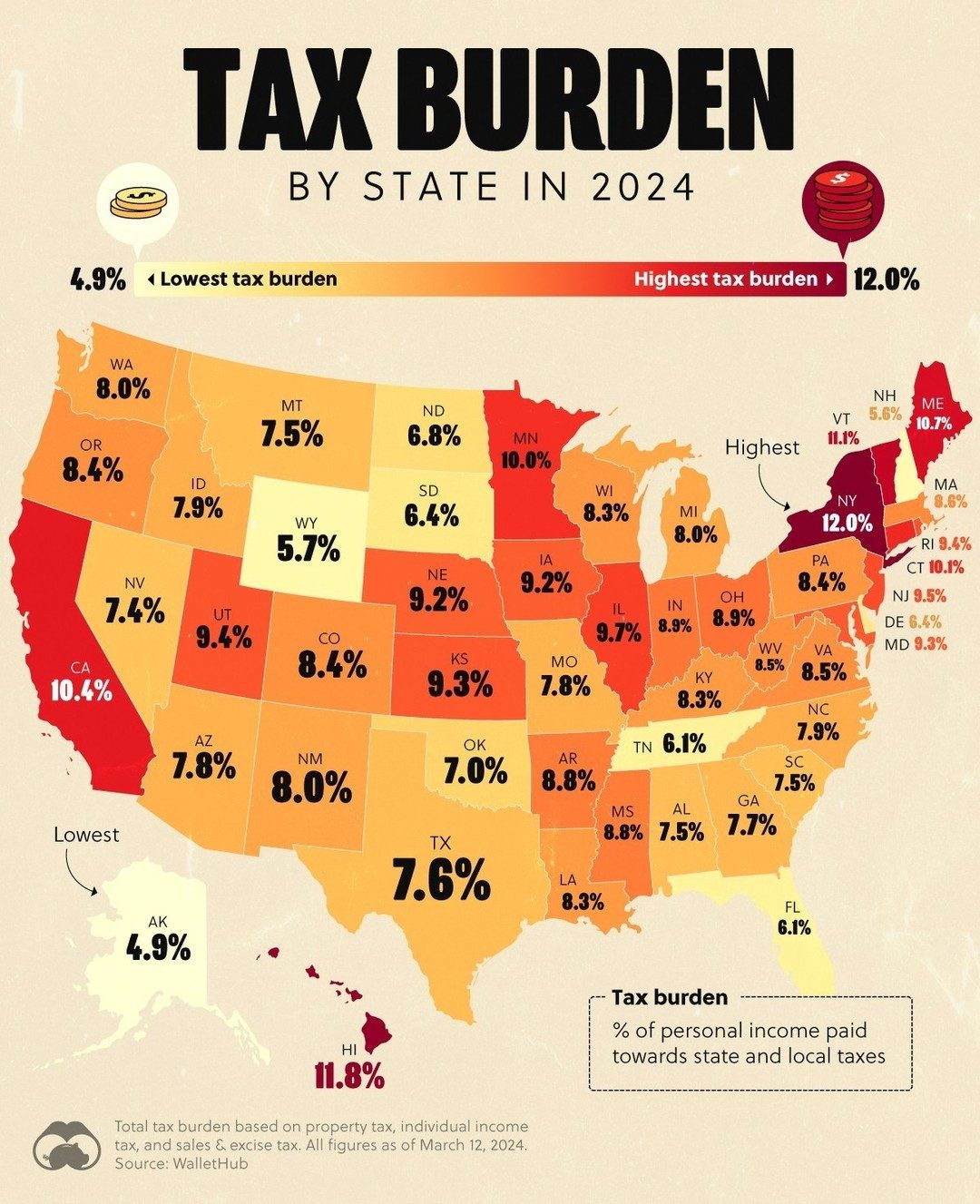
Tax Burden by State
The tax burden imposed by each state in the U.S. varies widely, impacting the amount of personal income that residents pay towards state and local taxes. In 2024, residents in New York bear the highest tax burden, paying an average of 12% of their income to the state. On the other end of the spectrum, Alaska has the lowest tax burden, with residents paying only 4.9% of their income in state and local taxes.
Why This Matters
Understanding the tax burden by state is crucial for several reasons. It affects financial planning, housing decisions, and overall quality of life. Knowing how much of your income goes towards taxes can help individuals and families make informed decisions about where to live, work, and invest. Additionally, it provides insights into the financial health and policies of each state, highlighting how resources are allocated and managed.
State-by-State Breakdown
High Tax Burden States
New Hampshire, New York, and New Jersey lead the pack with the highest tax burdens. Residents in these states pay a significant portion of their income towards state and local taxes. For instance, New Hampshire has the highest tax burden at 12.0%, followed closely by New York at 12.0% and New Jersey at 9.5%. These states have higher property taxes and individual income taxes, contributing to their overall high tax burden.
- New Hampshire: 12.0%
- New York: 12.0%
- New Jersey: 9.5%
Low Tax Burden States
Alaska and Washington stand out as having the lowest tax burdens, with residents paying 4.9% and 6.4% of their income, respectively. These states have lower property taxes, individual income taxes, and sales and excise taxes, making them more tax-friendly for residents. Other low-tax burden states include South Dakota, Tennessee, and Florida, each with a tax burden under 7.5%.
- Alaska: 4.9%
- Washington: 6.4%
Mid-Range Tax Burden States
Several states fall in the mid-range of tax burdens, typically between 7.0% and 10.0%. These states, such as California, Colorado, and Missouri, have moderate tax burdens, balancing the need for public services with the financial burden on residents. For example, California has a tax burden of 7.0%, while Missouri's is 8.9%.
- California: 7.0%
- Colorado: 8.4%
- Missouri: 8.9%
Factors Influencing Tax Burden
Various factors contribute to the tax burden in each state, including:
Property Taxes
Property taxes are a significant component of the overall tax burden. States with higher property values and tax rates, like New Jersey and Massachusetts, tend to have higher tax burdens. Conversely, states with lower property values and tax rates, such as Alaska and Louisiana, have lower tax burdens.
Individual Income Tax
The structure and rates of individual income tax vary widely across states. Some states have progressive income tax systems, where higher-income individuals pay a higher percentage of their income in taxes. Other states have flat or regressive tax systems, where everyone pays the same rate or lower-income individuals pay a higher percentage of their income.
Sales and Excise Taxes
Sales and excise taxes also play a role in the total tax burden. States with higher sales tax rates, like California and Tennessee, may have a higher tax burden, even if their property and income taxes are lower. Conversely, states with lower sales tax rates, such as Alaska and Oregon, may have a lower overall tax burden.
Practical Tips for Managing Tax Burden
Understand Your State's Tax System
Knowing how your state's tax system works can help you make informed financial decisions. Research the tax rates and structures for property, income, and sales taxes in your state to understand how much of your income you will be paying in taxes.
Consider Relocating
If your current state has a high tax burden and you have the flexibility to relocate, consider moving to a state with a lower tax burden. This can significantly reduce your overall tax liability and improve your financial situation.
Take Advantage of Tax Breaks and Credits
Many states offer tax breaks, credits, and deductions that can help lower your tax burden. These can include deductions for charitable contributions, mortgage interest, or energy-efficient home improvements. Research and take advantage of all available tax breaks to minimize your tax liability.
Plan for Future Tax Changes
Tax laws and rates can change over time, so it's important to stay informed about potential changes in your state's tax policies. Staying updated can help you plan and prepare for any upcoming changes that may affect your tax burden.
Important Takeaways
- New York and New Hampshire have the highest tax burdens, while Alaska and Washington have the lowest.
- The tax burden is influenced by property taxes, individual income taxes, and sales and excise taxes.
- Understanding your state's tax system and planning accordingly can help manage your tax burden.
Knowing the tax burden in your state can empower you to make better financial decisions and plan for your future more effectively. Whether you're considering a move, planning your taxes, or just curious about how your state stacks up, understanding the tax burden is a crucial piece of financial knowledge.
Conclusion
The tax burden by state in 2024 shows a wide range of percentages, with residents in New York paying the highest at 12% and those in Alaska paying the lowest at 4.9%. These figures, compiled by WalletHub, provide valuable insights into the financial landscape of each state. By understanding the factors that contribute to the tax burden and taking practical steps to manage it, individuals and families can make informed decisions and improve their financial well-being.
Watch the Reel
Questions readers ask
What states impose the highest tax burden in 2024?
In 2024, New York leads with a 12% tax burden. Other states with high tax burdens include New Jersey, Connecticut, and California. These states have higher property, sales, and income taxes that contribute to their high rankings.
Which states have the lowest tax burdens in 2024?
Alaska has the lowest tax burden in 2024, at 4.9%. Other states with low tax burdens include Delaware, Montana, and Wyoming. These states have lower property, sales, and income taxes compared to the national average.
What factors contribute to a state's tax burden?
A state's tax burden is determined by the combination of income, property, and sales taxes. States with higher tax rates and more diverse tax structures generally have higher tax burdens. Conversely, states with lower tax rates or fewer tax types tend to have lower tax burdens.
How can understanding state tax burdens help with financial planning?
Knowing the tax burden of a state can help individuals and families make informed decisions about where to live, work, and invest. For instance, those in high-tax states might consider moving to lower-tax states to save on taxes. Additionally, understanding state tax burdens can help in budgeting and long-term financial goal setting.
What are some ways to reduce state tax burden?
To reduce state tax burden, consider tax planning strategies such as taking advantage of state-specific tax credits and deductions. Additionally, contributing to tax-advantaged savings accounts, like 529 plans for education, can lower taxable income. Taxpayers may also consider relocating to a state with a lower tax burden, depending on personal circumstances.
How does the tax burden in New York compare to the national average?
New York's tax burden is significantly higher than the national average. In 2024, residents of New York pay approximately 12% of their income in state and local taxes, while the national average is around 9.9%. This makes New York one of the highest tax burden states in the country.
How does Alaska achieve such a low tax burden?
Alaska's low tax burden is largely due to its reliance on oil revenues, which fund a significant portion of the state's budget. As a result, Alaska can maintain lower income, property, and sales taxes. Additionally, Alaska's Permanent Fund Dividend, which provides annual payments to residents, further reduces the tax burden.
Recent articles
Fresh deep dives from the latest Reels we unpacked.




Comments
Be the first to comment.