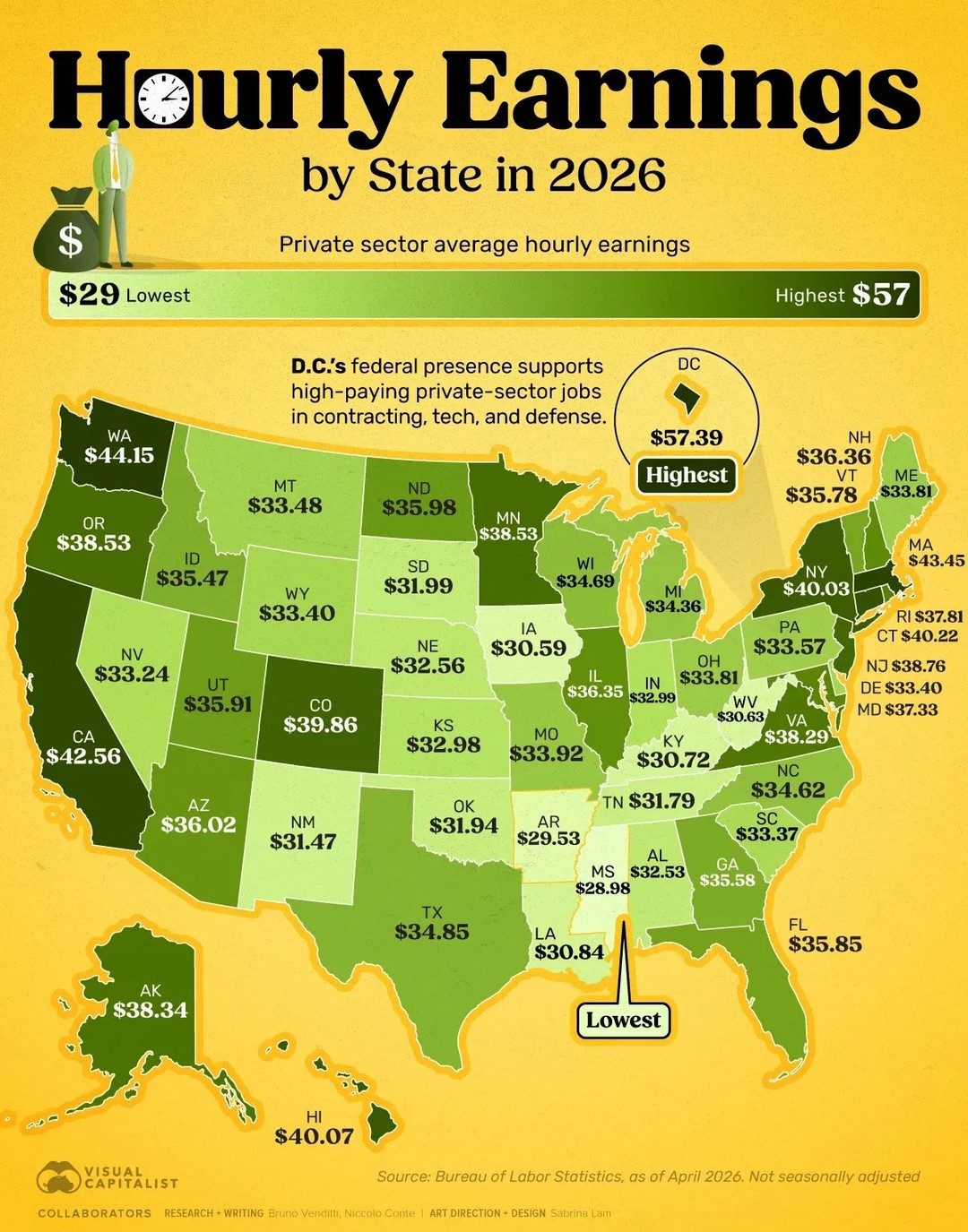
State Hourly Earnings in 2026
The average private sector hourly earnings in the United States vary significantly by state, with Washington, D.C. leading the way at $57.39 per hour. This stark difference highlights the economic disparities across the nation. Only seven states report average hourly earnings above $40, with most of these high-earning states located along the coasts.
Why This Matters
Understanding state-by-state hourly earnings provides valuable insights into the economic health and competitiveness of different regions. It influences where people choose to live and work, affects business decisions, and shapes public policy. This data is crucial for policymakers, job seekers, and businesses looking to expand or relocate.
Main Discussion
High-Earning States
Washington, D.C. stands out with the highest average hourly earnings, at $57.39. This is largely due to the federal presence, which supports high-paying private-sector jobs. Other top-earning states include:
- New York: Known for its robust financial sector and high cost of living, New York offers an average hourly earnings of $42.56.
- California: With a strong tech and entertainment industry, California earns $42.56 an hour on average.
These states benefit from strong economies, high demand for skilled labor, and a variety of high-paying industries.
Mid-Range Earning States
Several states fall into the mid-range, with average hourly earnings between $35 and $45. These include:
- Oregon: At $38.53, Oregon benefits from a diverse economy that includes tech, healthcare, and agriculture.
- Washington: With an average of $44.15, Washington State boasts a thriving tech sector and robust manufacturing.
- New Jersey: At $38.76, New Jersey has a solid healthcare and financial services sector.
Lower-Earning States
On the lower end, several states report average hourly earnings below $30. These states often face economic challenges, including lower demand for skilled labor and fewer high-paying industries. Notable examples include:
- Mississippi: With the lowest average of $29, Mississippi struggles with a lower cost of living and fewer high-paying job opportunities.
- Kentucky: At $30.63, Kentucky has a primarily rural economy with limited high-paying jobs.
- West Virginia: At $33.37, West Virginia also faces economic challenges, though it has a thriving healthcare sector in some areas.
Regional Trends
The distribution of hourly earnings reveals distinct regional trends. For example:
- Coastal vs. Central States: Coastal states like California, New York, and Washington tend to have higher earnings due to their large urban centers and diverse economies. In contrast, central states often have lower earnings, reflecting a more rural and less diversified economic landscape.
- Federal Influence: D.C.’s high earnings are directly linked to its federal presence, highlighting the significant role that government and related private-sector jobs play in the local economy.
Practical Tips
For job seekers and businesses, understanding these trends can be immensely beneficial. Whether you're looking to relocate for better job prospects or expand your business, here are some practical tips:
For Job Seekers
- Research State Trends: Look for states with high average hourly earnings that align with your skill set and industry. This can help you find better-paying opportunities.
- Consider Cost of Living: Even if a state has high earnings, the cost of living might be equally high. Balance your earnings potential with the cost of living to ensure financial stability.
- Explore Government Jobs: In states with significant federal presence, government and related jobs can offer stable, high-paying opportunities.
For Businesses
- Assess Market Demand: Identify states where your industry thrives and where demand for your products or services is high. This can help you tap into a more profitable market.
- Evaluate Talent Pool: Look for states with a strong talent pool in your industry. This can help you attract and retain skilled employees.
- Consider Economic Incentives: Some states offer incentives for businesses to relocate or expand, which can significantly impact your bottom line.
Important Takeaways
The data on state hourly earnings provides a snapshot of the economic landscape in the U.S. Key takeaways include:
- D.C. Leads the Way: Washington, D.C. remains the top earner, highlighting the impact of federal presence on private-sector job growth.
- Coastal vs. Central: There's a clear divide between coastal and central states, with the former generally offering higher earnings.
- Industry Influence: States with strong, diverse economies and high demand for skilled labor tend to have higher earnings.
- Economic Disparities: The wide range of hourly earnings across states underscores the economic disparities and challenges different regions face.
Conclusion
The landscape of state hourly earnings in 2026 paints a picture of economic opportunities and challenges across the United States. By understanding these trends, job seekers and businesses can make more informed decisions about where to live, work, and invest. Whether you're looking to move to a state with higher earnings or expand your business, this data offers valuable insights to guide your decisions.
Watch the Reel
Questions readers ask
Which state has the highest average private sector hourly earnings in 2026?
Washington, D.C. tops the list with an average private sector hourly earning of $57.39. This is the highest in the nation and significantly higher than most other states.
Why are coastal states among the highest earners in 2026?
Coastal states often have higher concentrations of industries that pay well, such as technology, finance, and healthcare. Additionally, the cost of living in these areas is typically higher, which can drive wages up as well.
How do hourly earnings in 2026 compare between coastal and inland states?
Coastal states generally have higher hourly earnings compared to inland states. In 2026, only seven states report average hourly earnings above $40, and most of these are coastal. This trend highlights the economic disparities between coastal and inland regions.
What factors influence the variation in state hourly earnings in 2026?
Several factors contribute to the variation in state hourly earnings, including the types of industries present, the cost of living, and local economic policies. States with thriving sectors like technology, finance, and healthcare tend to have higher wages, while states with a lower cost of living may have lower wages overall.
Which states are expected to have the highest wages in 2026?
Washington, D.C. leads the nation in 2026 with the highest private sector hourly earnings. In addition, states along the East and West coasts, such as Massachusetts, California, and New York, are expected to have some of the highest hourly wages in the country.
How does understanding state hourly earnings benefit job seekers and businesses?
For job seekers, knowing the average hourly earnings in different states can help them make informed decisions about where to live and work. For businesses, this data is crucial for expansion and relocation strategies, as it provides insights into labor costs and potential markets.
What insights can be gained from comparing state earnings in 2026?
Comparing state earnings can reveal economic health and competitiveness. The data can shed light on regional economic disparities, help inform public policies, and influence business decisions. States with higher earnings often attract more investment and talent, while those with lower earnings may need to focus on economic development strategies.
Recent articles
Fresh deep dives from the latest Reels we unpacked.




Comments
Be the first to comment.