Stablecoin Market Growth
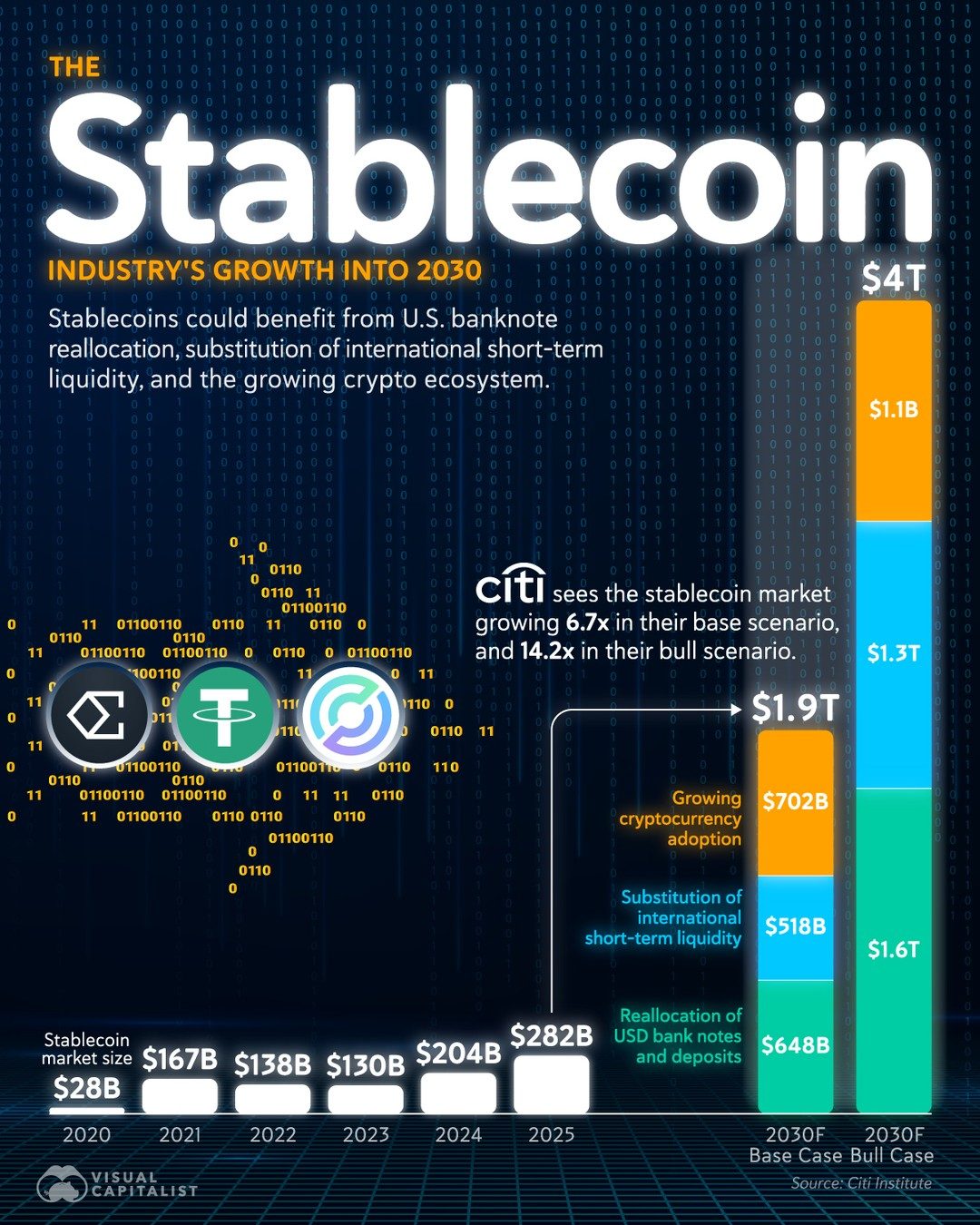
Stablecoins have rapidly evolved from niche crypto assets to a significant and fast-growing segment in the financial market. The stablecoin market is projected to reach approximately $282 billion by 2025, with potential for even greater expansion by 2030.
Why This Matters
Understanding the growth trajectory of stablecoins is crucial for investors, financial institutions, and anyone involved in the digital assets sector. Stablecoins offer a stable store of value and efficient medium of exchange, making them attractive for various financial transactions. Their rapid growth reflects broader trends in the adoption of digital currencies and the increasing demand for stable, reliable financial instruments in the crypto space.
Main Discussion
Market Projections
The stablecoin market has seen substantial growth since 2020. According to projections, the market size was around $167 billion in 2020, and it is expected to grow significantly over the next few years. By 2025, the market is estimated to reach $282 billion, with varying scenarios for 2030. The Base Case scenario projects a market size of $1.3 trillion, while the Bull Case scenario anticipates a market size of $4 trillion.
Factors Driving Growth
Several key factors are driving the growth of the stablecoin market. One of the most significant is the substitution of international short-term liquidity. As traditional financial instruments face increased scrutiny and regulatory challenges, stablecoins offer a more flexible and efficient alternative for managing short-term liquidity needs.
Another important factor is the reallocation of market notes and deposits. As investors seek more secure and stable assets, stablecoins provide an attractive option. This reallocation is driven by the need for stability and the growing trust in digital assets.
Growing cryptocurrency adoption is also a major factor in the expansion of the stablecoin market. As more people and institutions enter the crypto space, there is an increasing demand for stable assets that can be used for transactions and as a store of value. This adoption is fuelled by the expanding use cases for cryptocurrencies, including payments, remittances, and decentralized finance (DeFi) applications.
Market Dynamics
The stablecoin market is influenced by various dynamics, including regulatory developments, technological advancements, and market trends. Regulatory clarity and support can significantly boost the adoption of stablecoins, as seen in countries that have embraced digital assets. Technological innovations, such as improved blockchain infrastructure and increased security measures, also play a crucial role in enhancing the reliability and usability of stablecoins.
Market trends, such as the growing interest in DeFi and the increasing acceptance of cryptocurrencies by traditional financial institutions, further drive the demand for stablecoins. As more traditional financial services integrate with crypto assets, stablecoins become an essential component of the financial ecosystem.
Practical Tips
For those looking to navigate the stablecoin market, here are some practical tips:
-
Stay Informed: Keep up-to-date with the latest developments in the stablecoin market, including regulatory changes and technological advancements. This will help you make informed decisions and adapt to market changes.
-
Diversify Your Portfolio: Consider diversifying your portfolio to include a mix of stablecoins. This can help mitigate risks and take advantage of the growth potential in different segments of the market.
-
Understand the Risks: While stablecoins offer stability, they are not risk-free. Be aware of the potential risks, such as regulatory uncertainties and market volatility, and take appropriate measures to manage them.
-
Explore Use Cases: Familiarize yourself with the various use cases for stablecoins, including payments, remittances, and DeFi applications. This can help you identify opportunities for leveraging stablecoins in your financial activities.
-
Choose Reputable Providers: When selecting stablecoins, choose reputable providers with a strong track record and robust security measures. This can help ensure the stability and reliability of your investments.
Important Takeaways
-
Growth Potential: The stablecoin market has significant growth potential, with projections reaching $282 billion by 2025 and potentially $4 trillion by 2030 in the Bull Case scenario.
-
Key Drivers: Key factors driving the growth include substitution of international short-term liquidity, reallocation of market notes and deposits, and growing cryptocurrency adoption.
-
Market Dynamics: The market is influenced by regulatory developments, technological advancements, and market trends, all of which contribute to its dynamic and evolving nature.
-
Importance for Investors: Investors and financial institutions should stay informed about market developments, diversify their portfolios, understand the risks, and explore use cases to navigate the stablecoin market effectively.
Conclusion
The stablecoin market is poised for significant growth, driven by various factors and market dynamics. Understanding these trends and factors is essential for anyone involved in the financial sector, whether as an investor, financial institution, or individual looking to leverage the benefits of stablecoins. By staying informed, diversifying portfolios, managing risks, and exploring use cases, one can effectively navigate the stablecoin market and take advantage of its growth potential.
Watch the Reel
Questions readers ask
What is a stablecoin and how does it differ from other cryptocurrencies?
A stablecoin is a type of cryptocurrency designed to maintain a stable value, often pegged to a reserve asset like the U.S. dollar. Unlike other cryptocurrencies, such as Bitcoin, which are known for their price volatility, stablecoins aim to provide a consistent store of value and efficient medium of exchange. This stability makes them particularly attractive for everyday transactions and as a safe haven in the crypto market.
Why is the stablecoin market projected to grow significantly by 2025?
The stablecoin market is expected to reach $282 billion by 2025 due to its utility as a stable store of value and its efficiency in financial transactions. The increasing adoption of digital currencies and the need for reliable financial instruments in the volatile crypto space are driving this growth, making stablecoins an appealing option for investors and financial institutions alike.
What factors contribute to the short-term growth of the stablecoin market?
Several factors contribute to the short-term growth of the stablecoin market, including the increasing demand for stable, reliable financial instruments, the need for liquidity in the crypto market, and the gradual shift of traditional financial activities to digital platforms. Additionally, regulatory clarity and institutional adoption have further fueled the upward trend of stablecoin usage in finance.
How does the base currency affect the stability of a stablecoin?
The base currency to which a stablecoin is pegged plays a crucial role in its stability. For instance, stablecoins pegged to the U.S. dollar benefit from the dollar's status as a global reserve currency, which provides a stable reference point. However, the stability of the base currency itself, as well as the mechanisms used to maintain the peg, can impact the stablecoin's value and reliability.
What trends are expected to shape the stablecoin market by 2030?
By 2030, the stablecoin market is expected to be shaped by several key trends, including increased institutional adoption, advancements in blockchain technology, regulatory developments, and the expansion of use cases beyond simple transactions. Additionally, the potential for widespread adoption of central bank digital currencies (CBDCs) could also influence the stablecoin market.
How did the stablecoin market evolve from its inception to 2020?
The stablecoin market has evolved significantly from its inception, with rapid growth and increasing adoption. Initially considered a niche asset, stablecoins have grown into a significant segment of the financial market. By 2020, the market had expanded considerably, driven by the need for stability in the crypto space and the increasing demand for reliable financial instruments. This growth reflects the growing acceptance and integration of stablecoins into the broader financial ecosystem.
What are some common use cases for stablecoins in finance?
Stablecoins are used in a variety of financial applications, including cross-border payments, remittances, and as a means of storing value during periods of market volatility. They are also used for lending and borrowing on decentralized finance (DeFi) platforms, as well as for paying salaries and invoices in the digital asset sector, due to their stability and efficiency.
Related deep dives
Similar reads based on topic and creator.


Recent articles
Fresh deep dives from the latest Reels we unpacked.




Comments
Be the first to comment.