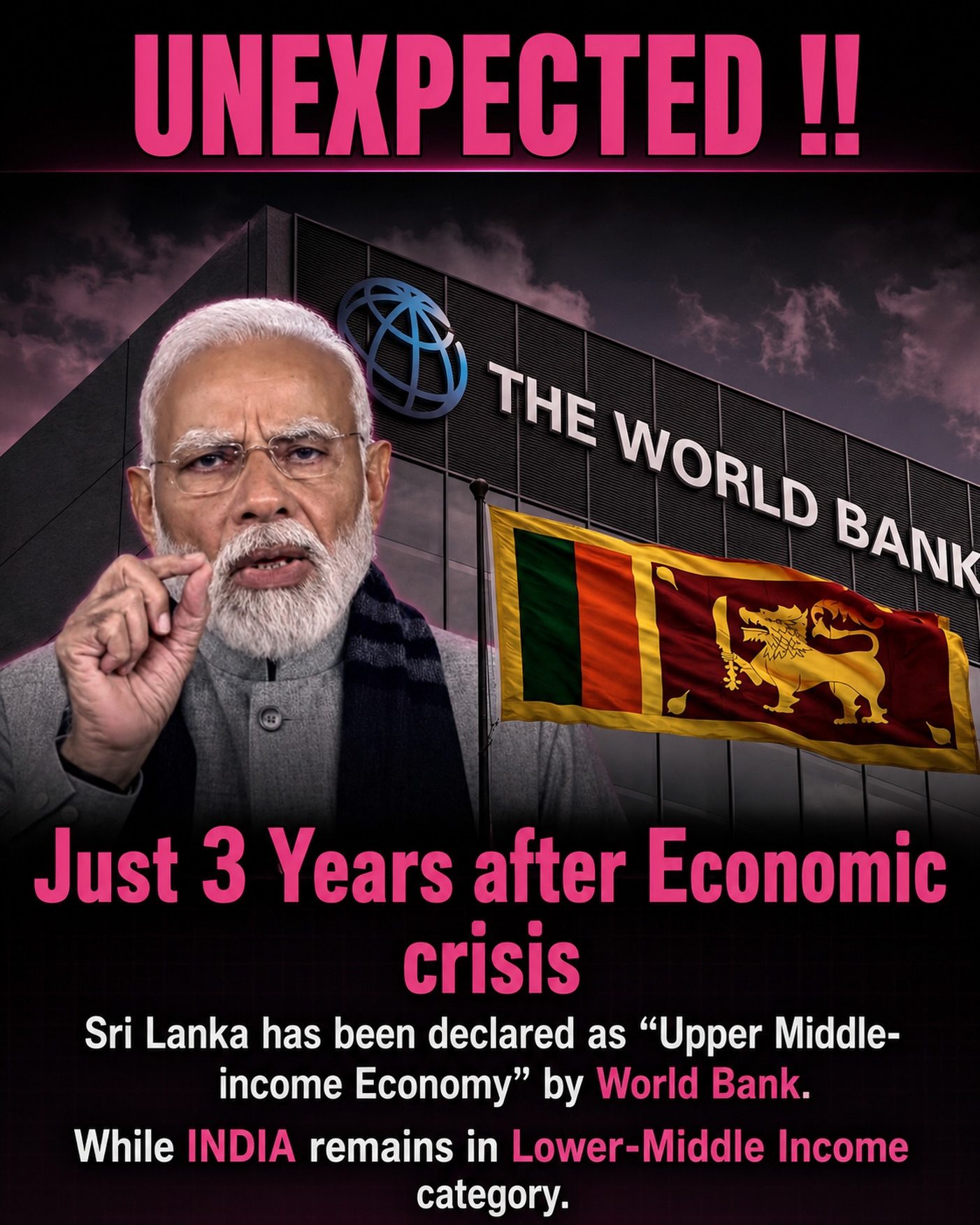
The Economic Shift: Sri Lanka and India's New Income Classifications
The World Bank's recent reclassification of Sri Lanka and India's economic statuses has sparked significant attention. Sri Lanka, which has faced one of its gravest economic crises in recent years, has been upgraded to an Upper-Middle Income Economy, while India remains in the Lower-Middle Income category. To understand the implications, let’s delve into the details of these classifications and what they mean for both countries.
Context / Why This Matters
The World Bank’s income classification system is a vital tool for understanding the economic development of nations. This system categorizes countries based on their Gross National Income (GNI) per capita. The classifications are as follows:
- Low-Income Economy: Countries with a GNI per capita of $1,066 or less.
- Lower-Middle-Income Economy: Countries with a GNI per capita between $1,066 and $4,095.
- Upper-Middle-Income Economy: Countries with a GNI per capita between $4,096 and $12,695.
- High-Income Economy: Countries with a GNI per capita of $12,696 or more.
These classifications do not reflect the overall size or strength of a country's economy but rather the average income per person. This distinction is crucial for understanding that a country’s income category does not tell the full story of its economic health.
Main Discussion
Sri Lanka's Economic Turnaround
Sri Lanka's reclassification to an Upper-Middle Income Economy is a testament to its economic resilience. Despite facing severe economic challenges, the country has managed to stabilize and grow its economy. This reclassification signifies several significant developments:
- Improved Per Capita Income: The average income per person in Sri Lanka has risen significantly, pushing the country into the Upper-Middle Income category.
- Economic Stability: Sri Lanka's economy has shown signs of stability, which is essential for attracting foreign investment and fostering long-term growth.
- Policy Reforms: The government’s implementation of economic reforms and austerity measures has played a crucial role in achieving this milestone.
India's Economic Position
India, on the other hand, continues to be classified as a Lower-Middle Income Economy. This classification underscores several key aspects of India’s economic landscape:
- Large Population: India has a vast population, which can be both an asset and a challenge. While the overall economic size is significant, the per capita income remains relatively low.
- Economic Growth: Despite being one of the fastest-growing major economies, India's per capita income has not yet reached the threshold for an Upper-Middle Income Economy.
- Inequality: India faces significant income inequality, where a large portion of the population lives on relatively low incomes, affecting the average.
Comparing Sri Lanka and India
Comparing the two countries, it is clear that Sri Lanka's achievement is a testament to its ability to turn around a critical economic crisis within a short period. However, it is essential to consider that India's economic scenario is more complex due to its large and diverse population.
The World Bank’s Role
The World Bank plays a pivotal role in determining these classifications. Its analysis and reports provide valuable insights into the economic health of nations. For countries like Sri Lanka and India, these classifications serve as benchmarks for economic policies and strategies.
Practical Tips
For Policymakers
When assessing a country's economic health, it is crucial to consider both per capita income and overall economic growth. Policies should aim to balance both aspects to achieve sustainable development. Here are some practical tips:
- Focus on Per Capita Income: Implement policies that target improving the average income of the population, such as job creation and wage growth initiatives.
- Promote Economic Growth: Foster an environment conducive to economic growth through investments, innovation, and entrepreneurship.
For Investors
For investors, understanding these classifications can guide investment decisions. For example:
- Upper-Middle Income Economies: These countries often have a more stable economic environment, making them attractive for long-term investments.
- Lower-Middle Income Economies: These countries may offer higher growth potential but come with increased risks.
Important Takeaways
- Per Capita Income vs. Total Economic Growth: While per capita income is a critical factor, it is equally important to consider the overall economic growth and stability of a country.
- Policy Reforms: Economic reforms and austerity measures can significantly impact a country's economic classification.
- World Bank’s Role: The World Bank's classifications provide a valuable framework for understanding the economic health of nations.
Conclusion
The reclassification of Sri Lanka as an Upper-Middle Income Economy and India's continued status as a Lower-Middle Income Economy highlight the complexities of economic development. While per capita income is a crucial metric, it is only one piece of the puzzle. Understanding the broader economic context and the role of policy reforms is essential for a comprehensive view. As these countries continue to navigate their economic landscapes, these classifications will serve as important benchmarks for their future growth and development.
Watch the Reel
Questions readers ask
What does it mean for Sri Lanka to be classified as an Upper-Middle Income Economy by the World Bank?
This classification means that Sri Lanka's Gross National Income (GNI) per capita has risen significantly, placing it in the category of countries with a GNI per capita between $4,096 and $12,695. This shift indicates a notable improvement in the country's economic standing and a rise in the average income of its citizens.
How did Sri Lanka achieve this economic recovery?
Sri Lanka's economic recovery can be attributed to a combination of factors, including government policies aimed at stabilizing the economy, increased foreign investment, and a focus on key sectors such as tourism and exports. The country has also implemented reforms to improve its fiscal management and reduce its debt burden.
What are the implications of Sri Lanka's new income classification for its citizens?
For Sri Lankan citizens, this new classification can mean improved access to better services, infrastructure, and opportunities. However, it's important to note that while the classification is based on average income, income distribution may still be unequal, and some citizens may not experience the same level of improvement in their living standards.
How does Sri Lanka's economic status compare to India's?
Despite both countries facing economic challenges, Sri Lanka has been reclassified as an Upper-Middle Income Economy, while India remains in the Lower-Middle Income category. This difference is due to Sri Lanka's significant rise in per capita income, which has outpaced India's in recent years.
What are the benefits of being classified as an Upper-Middle Income Economy?
Countries in this category often have better access to international markets, increased investor confidence, and improved opportunities for trade and commerce. Additionally, they may also have more resources to invest in public services and infrastructure, which can further drive economic growth and improve the quality of life for their citizens.
What challenges might Sri Lanka face despite this positive change?
Even with this positive change, Sri Lanka may still face challenges such as income inequality, infrastructure development, and maintaining sustainable economic growth. It will be crucial for the country to address these issues to ensure that the benefits of its economic recovery are widely shared among its citizens.
Related deep dives
Similar reads based on topic and creator.


Recent articles
Fresh deep dives from the latest Reels we unpacked.




Comments
Be the first to comment.