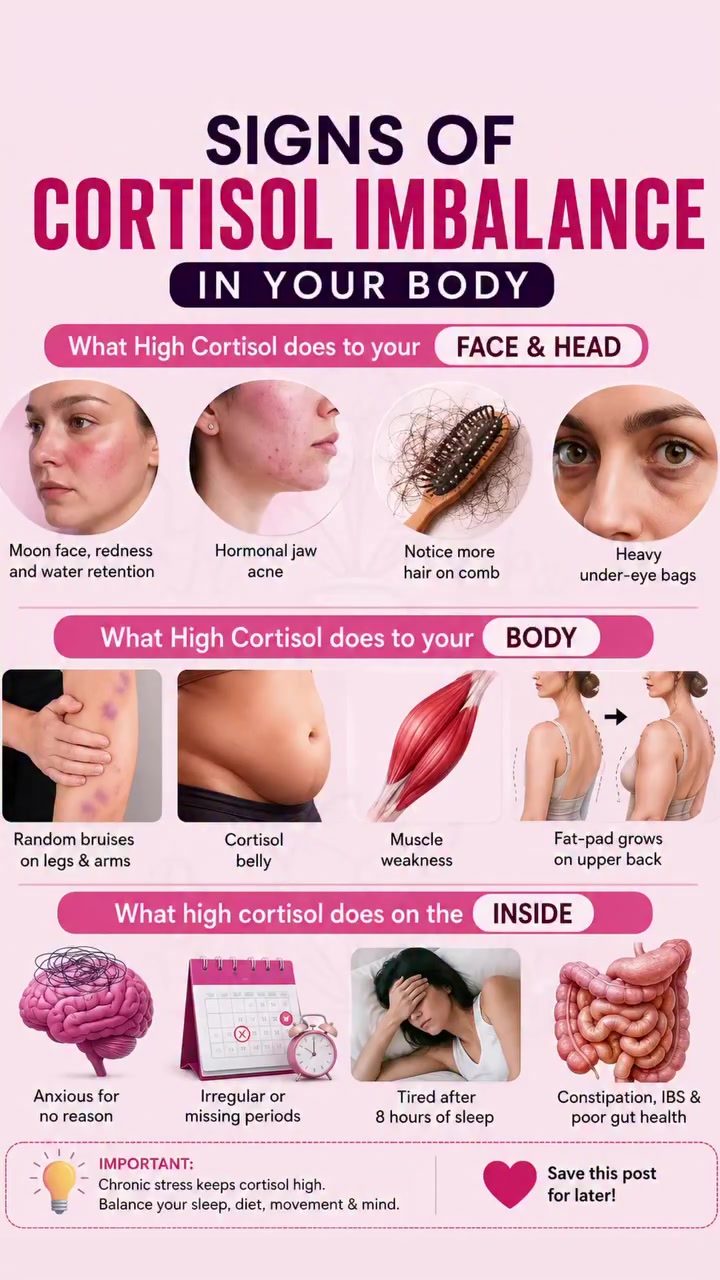
Signs of Cortisol Imbalance
Cortisol, a hormone produced by the adrenal glands, plays a crucial role in managing stress and regulating various bodily functions. However, when cortisol levels become imbalanced, it can lead to a variety of physical and mental symptoms.
Why This Matters
Cortisol imbalance can affect your entire body, not just your mind. Elevated cortisol levels over a prolonged period can contribute to a range of issues, from weight gain to digestive problems. Understanding the signs of cortisol imbalance is essential for early detection and management.
Main Discussion
Cortisol imbalance can manifest in various ways, affecting different parts of the body. Here are the key areas to watch out for:
Signs on the Face and Head
Moon Face and Redness
One of the most visible signs of high cortisol levels is a "moon face," characterized by a rounded, puffy appearance. This is often accompanied by redness and water retention, giving the face a puffy, flushed look. These changes can make the face appear less defined and more rounded.
Hormonal Jaw Acne
Hormonal imbalances, including those caused by high cortisol, can lead to acne breakouts, particularly around the jawline. This type of acne is often more persistent and deeper than typical acne, making it more challenging to manage.
Heavy Under-Eye Bags
Chronic stress and elevated cortisol levels can also result in heavy under-eye bags. These bags are often a sign of poor sleep and fatigue, which are common in individuals with cortisol imbalances.
Signs on the Body
Random Bruises
High cortisol levels can make the skin more fragile, leading to random bruises on the legs and arms. These bruises may appear suddenly and can be a sign of underlying stress and hormonal imbalance.
Cortisol Belly
One of the most noticeable physical changes is the development of a "cortisol belly." This refers to weight gain around the abdomen, often resulting in a rounded, protruding belly. This type of weight gain is particularly stubborn and resistant to diet and exercise changes.
Muscle Weakness
Chronic stress and high cortisol levels can also lead to muscle weakness. This weakness can affect various muscle groups and make daily activities more challenging, further exacerbating the stress and fatigue cycle.
Internal Symptoms
Anxiety
Elevated cortisol levels can contribute to feelings of anxiety and restlessness. This anxiety can be persistent and may not have an obvious trigger, making it particularly challenging to manage.
Irregular Periods
For women, cortisol imbalance can lead to irregular or missing periods. This disruption in the menstrual cycle can have various causes, but it is often linked to hormonal imbalances, including high cortisol levels.
Fatigue
Chronic stress and high cortisol levels can lead to persistent fatigue. This fatigue can be debilitating, making it difficult to function normally, even after getting a full night's sleep.
Digestive Issues
Chronic stress and elevated cortisol levels can also affect gut health, leading to constipation, irritable bowel syndrome (IBS), and other digestive issues. These problems can significantly impact overall well-being and quality of life.
Practical Tips
Managing cortisol levels involves a holistic approach that includes lifestyle adjustments. Here are some practical tips to help balance cortisol and reduce stress:
Sleep
Quality sleep is essential for managing cortisol levels. Aim for 7-9 hours of uninterrupted sleep each night. Establish a consistent sleep schedule and create a relaxing bedtime routine to improve sleep quality.
Diet
A balanced diet rich in whole foods, fruits, vegetables, and lean proteins can help stabilize cortisol levels. Avoid processed foods, sugary snacks, and excessive caffeine, as these can exacerbate stress and cortisol imbalances.
Movement
Regular exercise can help reduce cortisol levels and manage stress. Aim for a mix of aerobic exercise and strength training. Even gentle activities like yoga or walking can be beneficial.
Mindfulness
Practices such as meditation, deep breathing, and relaxation techniques can help lower cortisol levels and promote overall well-being. Incorporate mindfulness practices into your daily routine to manage stress more effectively.
Important Takeaways
- Cortisol imbalance can affect various parts of the body, from the face and head to internal organs.
- Symptoms of cortisol imbalance can include weight gain, acne, muscle weakness, fatigue, and digestive issues.
- Managing cortisol levels involves a holistic approach, including quality sleep, a balanced diet, regular exercise, and relaxation techniques.
- Always consult a healthcare provider for proper evaluation and treatment.
Conclusion
Cortisol imbalance is a complex issue that can affect various aspects of your health. By understanding the signs and taking proactive steps to manage cortisol levels, you can improve your overall well-being and quality of life.
Watch the Reel
Questions readers ask
What are the common physical symptoms of cortisol imbalance?
Common physical symptoms of cortisol imbalance include weight gain, particularly around the midsection, skin changes like acne or increased facial hair, and muscle weakness. Other signs may include frequent bruising, thinning skin, and bone loss.
How does cortisol imbalance affect mental health?
Cortisol imbalance can lead to mental health struggles, including increased anxiety, irritability, and depression. It can also cause difficulty concentrating, memory lapses, and mood swings.
What role does cortisol play in sleep and how does an imbalance affect it?
Cortisol naturally follows a diurnal pattern, peaking in the morning to help you wake up and tapering off at night to promote sleep. An imbalance can disrupt this rhythm, leading to insomnia or disturbed sleep.
Can cortisol imbalance cause changes in menstrual cycles?
Yes, cortisol imbalance can lead to irregular periods. High cortisol levels can interfere with the hypothalamic-pituitary-ovarian axis, which regulates menstruation, causing cycles to become irregular or even stop.
What should I do if I suspect I have a cortisol imbalance?
If you suspect a cortisol imbalance, it's important to consult with a healthcare provider. They can perform tests to measure your cortisol levels and help you develop a plan to manage the imbalance, which may include lifestyle changes, stress reduction techniques, and possibly medication.
How does cortisol imbalance contribute to weight gain?
Cortisol imbalance, particularly when cortisol levels are high, can contribute to weight gain by increasing appetite and promoting fat storage, especially around the midsection. High cortisol levels can also lead to cravings for high-calorie foods.
What are some lifestyle changes that can help manage cortisol imbalance?
Lifestyle changes that can help manage cortisol imbalance include reducing stress through techniques like meditation or yoga, maintaining a consistent sleep schedule, engaging in regular exercise, and eating a balanced diet. Limiting caffeine and sugar intake can also be beneficial.
Recent articles
Fresh deep dives from the latest Reels we unpacked.




Comments
Be the first to comment.